Key Points:
- TPO roofing is highly wind-resistant due to its flexible design, strong heat-welded seams, and robust attachment methods, exceeding industry standards.
- Proper installation, including critical fastening patterns and edge details, is essential for maximizing TPO’s wind uplift resistance and long-term durability.
- TPO consistently outperforms other single-ply roofing options like EPDM and PVC in wind uplift testing, offering superior protection against severe weather.
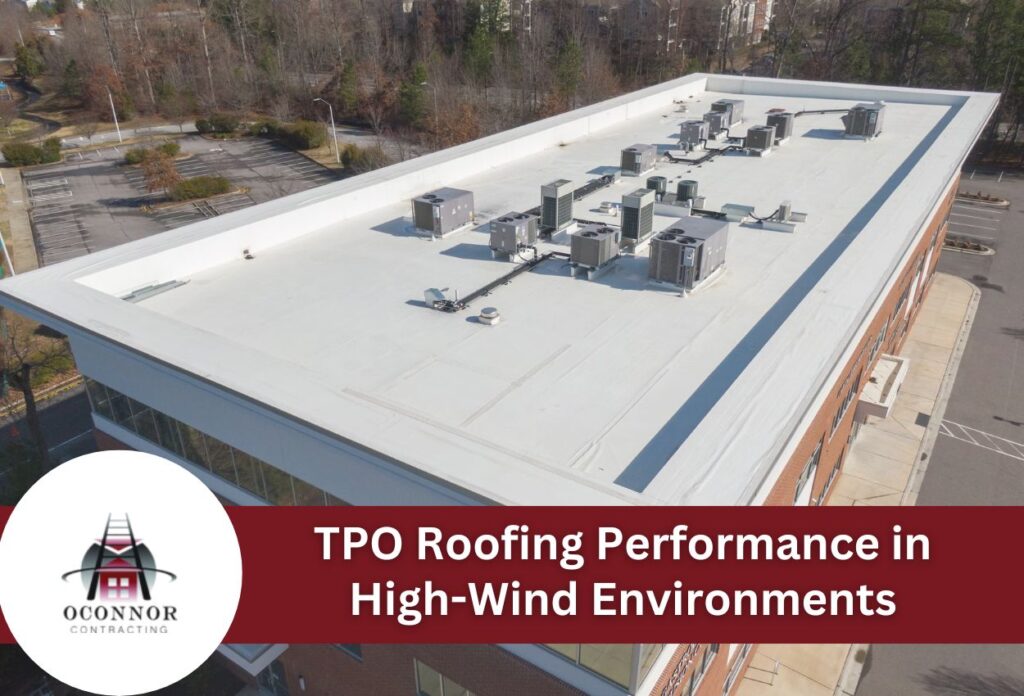
TPO roofing systems have exceptional wind resistance through their engineered membrane technology and advanced attachment methods. These single-ply roofing membranes offer superior wind uplift resistance compared to traditional roofing materials, making them an ideal choice for commercial and residential buildings in wind-prone areas.
The membrane’s flexible design allows it to respond effectively to wind pressure and uplift forces without compromising its structural integrity. The durability of a TPO roof stems from the material’s ability to flex and move with wind rather than resist it rigidly, which often leads to failure in other roofing systems.
TPO membranes consistently exceed industry standards, with properly installed systems capable of withstanding significant wind speeds. The performance of single-ply roofing membranes in high winds relies on heat-welded seams that create barriers against wind infiltration. These seamless connections eliminate weak points where wind damage typically begins, providing wind damage prevention across the entire roof surface.
Understanding Wind Uplift Ratings for TPO Systems
Wind rating for a TPO membrane follows standardized testing protocols established by ASTM and FM Approvals to determine wind uplift resistance capabilities. These laboratory tests subject TPO roofing systems to controlled pressure conditions that simulate real-world wind forces, measuring the point at which membrane failure occurs.
Industry wind uplift testing standards evaluate TPO roof wind uplift resistance through progressive pressure applications, with top-performing systems achieving ratings of 120 pounds per square foot or higher. These ratings translate to wind speeds exceeding 150 mph in actual conditions, providing exceptional protection against severe weather.
The wind performance of single-ply roofing membrane systems depends heavily on proper installation techniques and preparation of the roof deck. The durability of a TPO roof under high-wind conditions requires the appropriate fastening patterns, the right insulation, and a properly sealed perimeter to achieve the maximum rated performance of the system.
Real-world applications demonstrate that properly installed TPO systems consistently withstand wind speeds between 90 to 120 mph without membrane failure. These thresholds provide significant protection against wind damage, keeping the building and its contents safe during severe storms while maintaining long-term weatherproofing.
Installation Methods That Maximize Wind Resistance
Proper TPO installation techniques directly impact the system’s ability to resist wind uplift forces and maintain structural integrity during severe weather. Mechanical fastening patterns serve as the foundation for TPO roof wind uplift resistance, requiring precise spacing and fastener depths to achieve the best performance ratings.
Attachment methods include strategically placed fasteners at the edges of the membrane, open areas, and seam locations to distribute wind pressure evenly across the surface of the roof. TPO wind ratings depend on consistent fastener placement, with corner and perimeter zones requiring increased density to counteract higher uplift pressures in these vulnerable areas.
Heat-welded seam construction creates continuous membrane barriers that prevent wind-driven leaks while maintaining flexibility under dynamic loading conditions. The performance of single-ply roofing membrane systems relies on properly executed edge fasteners, including mechanically attached termination bars and fully adhered transitions that eliminate potential failure points.
Adhesive applications in hybrid attachment systems provide additional security against uplift forces while allowing controlled membrane movement. These installation practices enhance TPO roof durability by creating redundant attachment systems that maintain performance even if individual fastening points experience stress.
How Cover Boards and Insulation Improve Wind Uplift Performance
Cover boards and insulation layers play an important role in how TPO roofing systems respond to sustained wind pressure. While membrane attachment and fastening patterns receive the most attention, the materials directly beneath the membrane influence how wind gusts are distributed across the roof’s assembly. High-density cover boards approved for commercial roofing applications help spread uplift forces over a wider surface area, reducing concentrated stress at individual fastener locations.
Insulation selection also affects wind performance, as compressive strength determines how well the roof assembly resists movement under pressure. Insulation with inadequate strength can compress during high winds, allowing fasteners to loosen over time and reducing overall uplift resistance. When insulation and cover boards are properly matched to the system design, the roof assembly is better able to perform at or near its tested wind uplift rating. These layers improve system stability without limiting membrane flexibility or compromising seam performance.
TPO Durability Factors Beyond Wind Resistance
TPO roof durability goes past the initial wind resistance through the thickness of the membrane, reinforced fasteners, and material composition that enhance long-term performance under repeated wind stress. Standard TPO membranes range from 45 to 80 mils in thickness, with heavier membranes providing increased resistance to punctures and tears during high winds.
These internal reinforcements maintain TPO roof wind uplift resistance throughout the system’s lifespan by preserving membrane elasticity and tear strength under cyclical loading.
The composition of the material affects its UV resistance, thermal cycling tolerance, and chemical stability, all contributing to sustained wind performance over time. Premium TPO formula resists degrading from exposure to the environment, maintaining flexibility and the structural integrity of the seams throughout the warranty period.
Proper maintenance practices, including regular inspections, debris removal, and quick repairs, preserve wind resistance capabilities by addressing minor issues before they compromise the performance of the entire system. The wind resistance of membrane systems depends on maintaining clean surfaces, secure fasteners, and intact seam welds to ensure continued TPO roof wind damage prevention throughout the roof’s operational life.
Comparing TPO Wind Performance to Other Single-Ply Options
TPO roofing systems consistently outperform EPDM and PVC membranes in standardized wind uplift testing, achieving higher pressure ratings through superior seam strength and membrane flexibility. Laboratory testing shows TPO wind uplift resistance exceeding 120 pounds per square foot, while comparable EPDM systems typically achieve 90 to 105 pounds per square foot under similar conditions.
EPDM membranes rely on adhesive-bonded seams that create potential failure points during extreme wind, whereas TPO’s heat-welded seams form continuous barriers. PVC systems offer similar heat-welding capabilities, but have reduced flexibility at temperature extremes, affecting their long-term wind resistance compared to TPO.
Field performance data reveals TPO roof durability advantages in wind-prone regions, with fewer insurance claims and maintenance requirements compared to alternative single-ply systems. The wind performance of single-ply roofing membrane options varies significantly, with TPO systems maintaining structural integrity at high wind speeds where EPDM systems experience seam failures and membrane lifting.
Signs of Wind Damage and Prevention Strategies
Recognizing the early indicators of wind-related stress on TPO roofing systems allows property owners to address issues before they turn into expensive failures. Membrane billowing, loose fasteners, and separated seams represent common warning signs that resistance to wind uplift has been compromised during severe weather.
Visual inspection should focus on the edges of the roof’s perimeter, corners, and equipment areas where wind forces typically concentrate and cause damage. Membrane punctures, stretched areas around fastening points, and lifted termination bars indicate that wind loads have exceeded the system’s design capacity, requiring immediate professional assessment to prevent water and wind from getting under the system.
Proactive maintenance strategies can enhance the durability of a TPO roofing system by addressing vulnerable components before severe weather arrives. Regular fastener inspections, seam integrity checks, and debris removal maintain optimal wind performance of single-ply roofing membrane systems while extending operational lifespan.
Professional wind resistance upgrades include additional mechanical fasteners in high-stress zones, reinforced edge details, and improved drainage systems that reduce wind-driven water accumulation. These preventive measures strengthen TPO membrane wind ratings and provide comprehensive TPO roof wind damage prevention that protects building investments throughout extended service periods.
Selecting the Right TPO System for Buffalo’s Climate
Buffalo’s harsh winter conditions and severe thunderstorms require specific TPO membrane considerations that address local wind patterns and temperature fluctuations. Regional weather data shows average wind speeds of 10 to 15 mph with storm gusts exceeding 70 mph, demanding TPO roof wind uplift resistance ratings of at least 90 pounds per square foot for adequate protection.
Lake-effect snow combined with rapid temperature changes can create unique conditions that affect the durability of a TPO roof. The flexibility of the membrane is important during freeze-thaw cycles to maintain the wind resistance of the roofing systems against sustained winter winds from the Great Lakes region.
Qualified roofing contractors understand how Buffalo’s microclimate affects TPO membrane wind ratings and system longevity. Professional installation teams evaluate building height, exposure factors, and local wind patterns to determine appropriate fastening densities and edge reinforcement requirements that maximize TPO roof wind damage prevention.
Contractor selection should emphasize experience with high-wind installations and familiarity with local building codes that govern wind resistance requirements. Proper contractor vetting ensures TPO systems receive installation techniques that address Western New York’s specific climate challenges while achieving manufacturer warranty compliance for long-term performance protection.
Protect Your Property with a TPO Roofing System from OConnor Contracting
If you’re located in Buffalo and concerned about the performance of your roof in high-wind conditions, consider the superior wind uplift resistance of TPO roofing systems installed by OConnor Contracting. Our TPO roofs are not only designed to withstand extreme weather but also offer long-term durability and cost-effectiveness compared to other single-ply roofing options.
Don’t wait for the next big storm to test your current roofing system’s limits. Ensure your property is protected with a high-performance TPO system that meets and exceeds local wind uplift requirements. Call us today at (716) 600-7663 to schedule a consultation and learn more about how our TPO roofing solutions can safeguard your building against severe wind conditions.