Roof Weight Capacity for HVAC Installation: What Buffalo Property Owners Need to Know
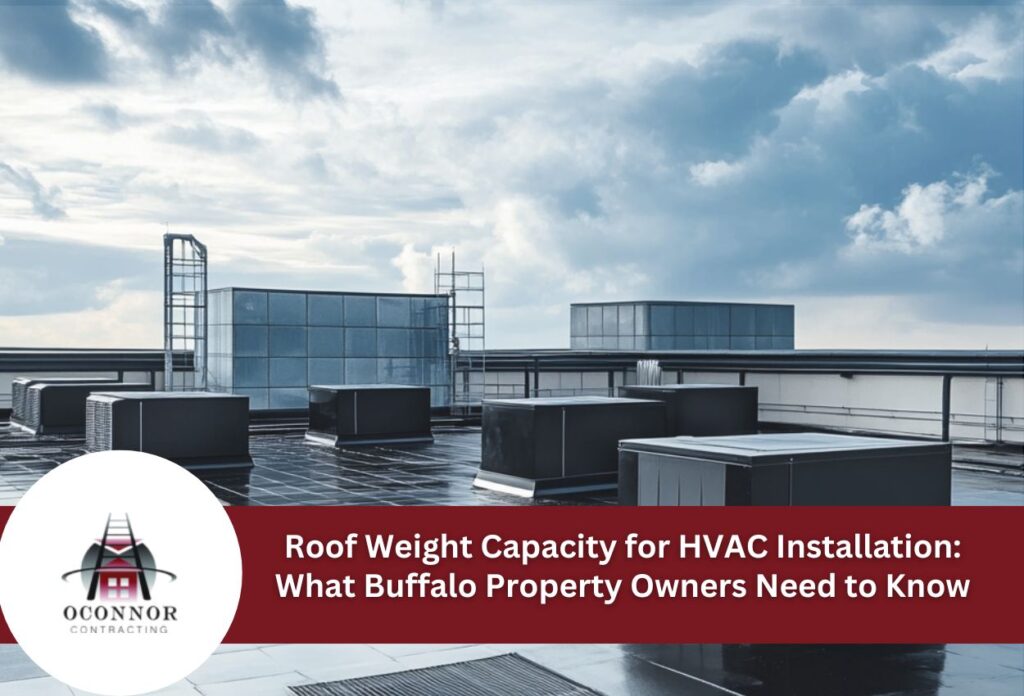

When installing HVAC equipment on your Buffalo property, one factor that is often overlooked is roof weight capacity. The structural requirements for supporting heavy mechanical systems requires a careful assessment, especially in a region where roofs already bear significant snow loads during harsh winters. Understanding your roof’s load-bearing capacity before HVAC installation can prevent structural failures and equipment damage.
Buffalo property owners face several difficulties when it comes to rooftop HVAC installations. The combined weight of commercial or residential HVAC systems plus Western New York’s substantial snow accumulation can stress roof structures beyond their design limits. This additional burden may lead to sagging rooflines, interior ceiling damage, compromised roof membranes, and in extreme cases, catastrophic structural failure, which can contribute to commercial flat roof problems if the roof cannot adequately handle the added load.
Proper evaluation of roof structural requirements for HVAC units involves assessing existing roof support systems, identifying potential reinforcement needs, and determining optimal placement to distribute weight effectively. For commercial buildings with flat roofs, understanding load-bearing capacity becomes even more crucial as these systems tend to be larger and heavier.
Whether you’re planning a new installation or evaluating an existing system, roof reinforcement for air conditioning equipment might be necessary to maintain structural integrity. Professional assessment from qualified roofing contractors familiar with Buffalo’s building codes and climate conditions provides essential guidance for safe, code-compliant HVAC mounting solutions.
Understanding Your Roof’s Load-Bearing Capacity
Buffalo homes and businesses feature several common roof types, each with different weight limitations for HVAC equipment. Flat roofs, popular on commercial buildings throughout Western New York, typically support 15 to 20 pounds per square foot when properly maintained. Pitched roofs found on most Buffalo residences offer varying load capacities depending on their slope and construction materials, generally around 20 pounds per square foot, similar to flat roofs. Metal roofs, gaining popularity for their durability against Buffalo winters, often provide excellent load-bearing capacity but require specialized mounting systems.
Several key factors affect your roof’s ability to support HVAC units. Age significantly impacts structural integrity — older Buffalo buildings may have weakened supports due to decades of harsh seasonal changes. The original construction materials and methods also determine load capacity, with engineered trusses generally offering more reliable support than older rafter systems. Existing loads, including previous equipment installations, solar panels, or accumulated debris, reduce available capacity for new HVAC systems.
Buffalo’s climate creates additional considerations, as seasonal snow must be factored into weight calculations. A roof that adequately supports HVAC equipment during summer might face dangerous strain when winter snow accumulates. A professional structural assessment from a qualified Buffalo roofing contractor is essential before any rooftop HVAC installation to evaluate roof structural requirements and determine if reinforcement is necessary.
Professional Roof Assessment: The Critical First Step
Before installing any HVAC equipment on your roof, a professional structural engineering evaluation is absolutely essential. Engineers examining your Buffalo property will assess the existing roof framing, evaluate connection points, and calculate the specific load capacity based on your building’s construction. They’ll analyze roof member dimensions, spacing, material strength, and existing stress points to determine if your structure can safely accommodate additional HVAC weight.
These assessments are particularly important in Buffalo, where engineers must factor in the region’s significant snow load requirements alongside equipment weight. A proper evaluation considers both dead loads (permanent weight) and live loads (temporary weight from weather, maintenance personnel, etc.) to calculate the total weight your roof can safely support.
Buffalo property owners should be vigilant for warning signs that might indicate your roof lacks adequate support capacity. Watch for visible sagging or dipping along rooflines, particularly after heavy snowfall. Interior ceiling cracks radiating from corners or following joist lines often signal structural strain. Water pooling in new areas suggests deflection in the roof structure, while doors or windows sticking on upper floors can indicate frame distortion from excessive roof weight.
Western New York’s freeze-thaw cycles can accelerate structural weakening, making regular roof inspections crucial for maintaining proper HVAC support. A professional roofing contractor can identify these warning signs before they lead to serious structural compromise or equipment damage.
Commercial Building Considerations for Rooftop HVAC Systems
Commercial buildings in Buffalo face stricter regulations for rooftop HVAC installations compared to residential properties. All commercial HVAC placements must comply with New York State Building Code and Buffalo’s local ordinances, which specify minimum distances from roof edges, proper screening requirements, and noise limitation standards. Commercial property owners must secure permits through the City of Buffalo’s Department of Permit and Inspection Services before installation, a process that typically requires detailed structural analysis documentation.
Strategic placement of heavy commercial HVAC equipment is essential for roof integrity. Rather than concentrating units in one area, dispersing multiple units across the rooftop helps distribute weight more evenly. Whenever possible, units should be positioned directly above structural columns, load-bearing walls, or reinforced sections to minimize stress on the roof deck. For particularly heavy systems, custom-designed structural steel platforms that transfer weight directly to the building’s main support structure offer an effective solution.
Many Buffalo commercial buildings benefit from dedicated equipment curbs — raised platforms that not only distribute HVAC unit weight but also elevate equipment above potential snow accumulation levels. These curbs should have flashing and waterproofing to prevent moisture intrusion while providing stable support for rooftop units. Professional roofing contractors can coordinate with HVAC specialists to ensure optimal placement that meets both structural requirements and mechanical efficiency needs.
Residential Roof Reinforcement Techniques for HVAC Installation
When Buffalo homeowners need to install HVAC equipment on their roofs, proper reinforcement often becomes necessary to ensure structural integrity. Several effective techniques can strengthen existing residential roofs to safely support air conditioning units. Adding supplemental support beams perpendicular to existing joists distributes weight more effectively across the roof structure. For truss systems common in many Buffalo homes, reinforcement collars or gusset plates can be installed at connection points to increase load capacity without major structural modifications.
Installing dedicated load-bearing walls that extend from the foundation through upper floors provides excellent support for heavier rooftop units. For pitched roofs, ridge beam reinforcement strengthens the roof’s highest point, while strategically placed knee walls can transfer weight to load-bearing walls below. Many Buffalo homes benefit from sistering joists — attaching additional lumber alongside existing structural members to effectively double their strength.
When planning roof reinforcement projects, several factors affect overall value. The complexity of accessing your roof structure impacts labor requirements, with finished attics requiring more intensive work than open roof structures. Material selection balances strength requirements with budget considerations, while the scope of reinforcement needed depends on both HVAC unit specifications and your roof’s current condition. A professional engineering assessment, while adding to initial project costs, ultimately provides better value by ensuring appropriate reinforcement without unnecessary overbuilding.
Winterizing Rooftop HVAC Systems in Buffalo’s Climate
Buffalo’s harsh winter conditions can be challenging for rooftop HVAC systems andrequire specialized planning and design considerations. Snow accumulation on commercial and residential roofs can add significant weight to structures already supporting heavy mechanical equipment. On average, one foot of wet snow adds approximately 20 pounds per square foot to your roof load, a critical factor when calculating total weight capacity for HVAC installations in Western New York.
When planning rooftop HVAC installations in Buffalo, engineers must account for maximum potential snow loads in their calculations. This often means designing with a safety factor that exceeds standard requirements in milder climates. The combined weight of HVAC equipment and accumulated snow can easily exceed 40 to 50 pounds per square foot during severe winter events, potentially stressing even well-constructed roof systems beyond their limits.
Elevated equipment platforms offer an effective solution for Buffalo’s winter challenges. These platforms should be designed with adequate height to prevent equipment from becoming buried in snow, typically 18 to 24 inches above the roof surface. The platform structure must be engineered to support both the equipment weight and the seasonal snow that will collect around and sometimes on top of units.
Drainage channels incorporated into platform designs help manage meltwater and prevent ice formation that could add even more weight to the system. For Buffalo property owners, investing in properly engineered winterized mounting systems protects both roof structural integrity and HVAC equipment functionality throughout our challenging winter months.
Maintaining Long-Term Roof Integrity with HVAC Systems
Ensuring the longevity of both your roof and HVAC investment requires a proactive maintenance approach, especially in Buffalo. A well-maintained rooftop HVAC system not only operates efficiently but also minimizes stress on your roof structure throughout the year. Property owners should establish a comprehensive maintenance schedule that addresses both the mechanical components and the supporting roof structure.
For optimal performance and structural safety, schedule professional HVAC system inspections at least two times per year, ideally before summer cooling and winter heating seasons begin. These inspections should examine not only the equipment but also verify the integrity of mounting systems, check for vibration issues that could damage the roof, and ensure proper drainage around equipment pads. The roof structure itself should undergo thorough inspection each spring and fall to identify any potential weakening caused by HVAC weight stress.
Professional roof inspections play a crucial role in preventing weight-related damage. Experienced Buffalo roofing contractors can identify early warning signs of structural strain, such as subtle depressions around equipment mounts or minor membrane damage from equipment movement. These issues, when caught early, can be addressed before they compromise roof load capacity for HVAC units. Regular inspection also ensures that roof reinforcement for air conditioning equipment remains intact despite Buffalo’s freeze-thaw cycles and heavy snow loads.
By maintaining both systems, Buffalo property owners can significantly extend the serviceable life of their rooftop HVAC installation while preserving the structural integrity of their residential or commercial roof support systems. This preventive approach ultimately delivers better value than addressing problems after structural damage has occurred.
Expert Roof Weight Capacity Assessments for HVAC Installation in Buffalo
Are you planning to install an HVAC system but are concerned about your roof’s ability to support the weight? Before taking any steps, it’s essential to ensure that your roof can handle the load, especially in Buffalo’s challenging weather conditions. OConnor Contracting specializes in assessing and reinforcing roofs to safely accommodate HVAC systems, preventing potential damage and expensive repairs. A professional commercial roof inspection can also help identify structural concerns before installation begins.
Don’t wait for visible signs of roof distress that could jeopardize your property and investment. Take a proactive approach by getting a professional roof evaluation from OConnor Contracting. Our team of experts will provide you with a detailed assessment and tailored solutions to ensure your roof is ready for any HVAC installation. Call us today at (716) 600-7663 to schedule your consultation and secure your roofing system.