Don’t wait – secure your home with Buffalo’s leading roofers today!
 716-600-ROOF
×
716-600-ROOF
×
106 Hubbardston Pl, Buffalo NY
Open 24 Hours
Holland sits in the heart of Erie County, where lake-effect snow piles up fast, temperature changes between seasons put serious stress on roofing materials, and humid summers create the right conditions for moss and algae to take hold on your shingles. That combination adds up to a roof that works harder than most. When shingles start curling, granules show up in your gutters, or you notice water stains on your ceiling after a heavy snow, those are signs your roof may be past the point where repairs will keep up. Homes in this region can go 15 to 20 years before needing a full replacement, but once the damage spreads across a large portion of the roof, continued patching stops making sense, and a complete replacement becomes the more practical path forward.
A residential roof replacement done right addresses more than just the shingles you can see. It's an opportunity to look at what's underneath, check the roof decking, and make sure your attic ventilation and insulation are set up to handle what Western New York winters bring. Poor ventilation is one of the main reasons ice dams form and push water back under shingles, causing the kind of interior damage that gets expensive fast. OConnor Contracting understands these local conditions and approaches every replacement with that full picture in mind, not just the surface layer.
One detail that matters specifically in New York: state code limits asphalt shingle installations to two layers. If your home already has a second layer in place, a complete tear-off is required before anything new goes on. That's not a complication, it's just part of doing the job correctly, and it's something every Holland homeowner should know going in.
A residential roof replacement involves several important steps before the finished roof is in place. OConnor Contracting evaluates your existing roof, explains the recommended solution, and manages the installation process through the final walkthrough.
Choosing the right time of year and the right materials for your roof replacement makes a real difference in how well the finished roof performs. Holland's weather patterns leave a fairly clear window for replacement work, and the materials you select should be built to handle what this area throws at a roof year after year.
| Factor | What to Know for Holland, NY |
|---|---|
| Best Timing for Replacement | Spring through fall is the preferred window: September and October offer favorable temperatures and lower contractor demand before winter |
| Winter Installation Risk | Asphalt shingles need temperatures above 40 degrees Fahrenheit to seal properly: cold installations can result in shingles that never bond correctly |
| Shingle Selection | 30-year architectural shingles with Class 4 impact resistance hold up better against heavy snow, debris, and the repeated temperature changes that break down standard shingles faster |
| Ventilation Upgrades | Replacing your roof is the right time to address attic ventilation: proper airflow reduces ice dam risk and extends the life of your new roof |
| Insulation Consideration | Upgrading attic insulation while the roof is open helps meet current energy standards and reduces heat loss that contributes to ice dam formation |
Getting these details right from the start means your new roof is built to last in Holland's conditions, not just installed and forgotten.
New York State code requires ice and water shield membrane to extend at least 24 inches past your exterior walls, and in a lake-effect snow area like Holland, that protection is not optional. This self-adhering membrane is installed along eaves, valleys, and other vulnerable areas before any shingles go on, creating a watertight barrier that holds up when snow backs up and water has nowhere to go.
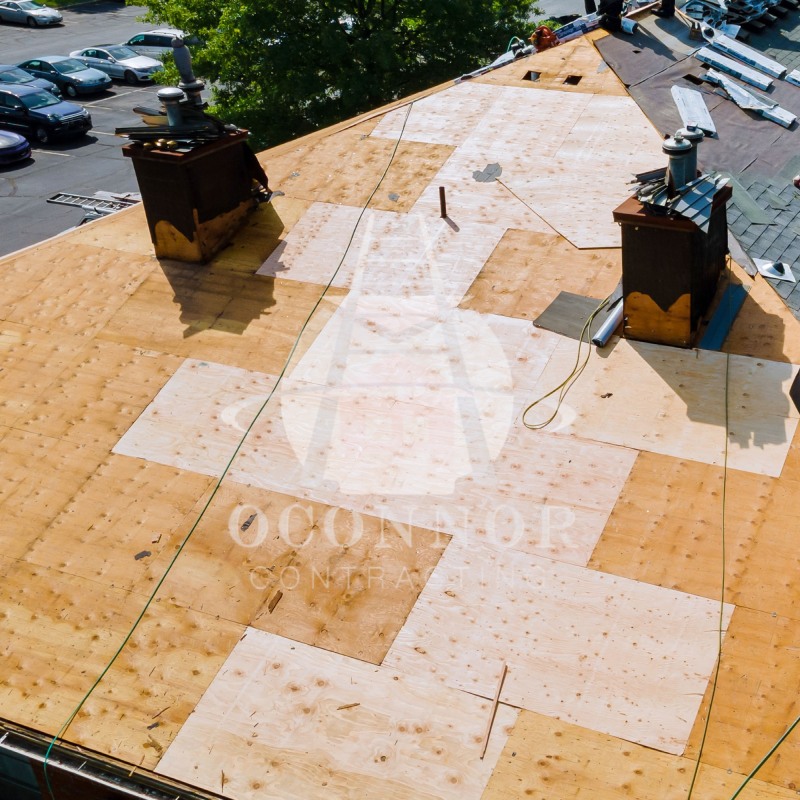
Once the old roofing material comes off, your roof deck gets a thorough look for soft spots, rot, or sections that have taken on moisture over the years. Any damaged roof decking is replaced before installation begins, because putting new shingles over a compromised roof deck shortens the life of your roof and can create structural problems that get expensive to fix later.
Flashing is the metal material that seals the joints where your roof meets chimneys, vent pipes, skylights, and walls, and it’s one of the most common sources of leaks on older roofs. During a full replacement, all existing flashing is inspected and replaced or resealed as needed, so those vulnerable spots do not become the first point of failure on your otherwise brand-new roof.
Drip edge is a metal strip installed along the edges of your roof that directs water away from the fascia board and into your gutters rather than letting it run back under the shingles or soak into the wood behind your gutters. It’s a small detail that protects your roofline from the kind of slow moisture damage that often goes unnoticed until the wood underneath starts to fail.
Winters in this part of Erie County are hard on roofs, and the wear that builds up over years of heavy snowfall, repeated temperature changes, and wet summers tends to add up quietly until it becomes a bigger problem than expected. A full replacement done during the right season, with materials selected for this region, gives your home a solid foundation for the next 20 to 30 years. That kind of durability is worth planning for, and getting ahead of it before conditions get worse is almost always the smarter path for your budget and your property value.
OConnor Contracting works with Holland homeowners through every step of the process, from the initial inspection to the final walkthrough, with straight answers and no pressure along the way. If you are ready to find out where your roof stands, reaching out is a simple first step.
Got questions about your roof? We’ve got answers. From maintenance tips to insurance claims and repair timelines, our FAQ section covers the most common concerns homeowners have. Get informed and make confident decisions about protecting your home.
Repeated ice dam leaks are usually a sign that the underlying cause has not been addressed. The issue is almost always attic ventilation or insulation rather than the shingles themselves. When warm air escapes from your living space into the attic, it melts snow on the surface of the roof, and that water refreezes at the cold eaves and backs up under your shingles. Patching the surface does not fix what is happening underneath, which is why the leaks keep coming back each winter.
Yes, it does. New York State code does not allow a third layer of asphalt shingles, so a complete tear-off is required before any new material goes on. That means additional labor and disposal costs compared to a standard overlay, but it also gives your crew full access to the roof decking so any damaged or rotted sections can be found and replaced before installation begins. Skipping that step would hide problems that will eventually show up as bigger, more expensive issues down the road.
One thing worth knowing is that legitimate contractors working in this region will not install asphalt shingles when temperatures drop below 40 degrees, because the shingles will not seal correctly and the warranty can be voided. If a contractor is willing to push through a job in cold conditions to meet a deadline, that is worth questioning. You should also get a written contract before any work starts and avoid any situation where you are asked to pay the full amount upfront before the project begins.
Don’t wait – secure your home with Buffalo’s leading roofers today!

Affordable
Pricing

Locally Owned & Operated

Quality Roofing Since 2014