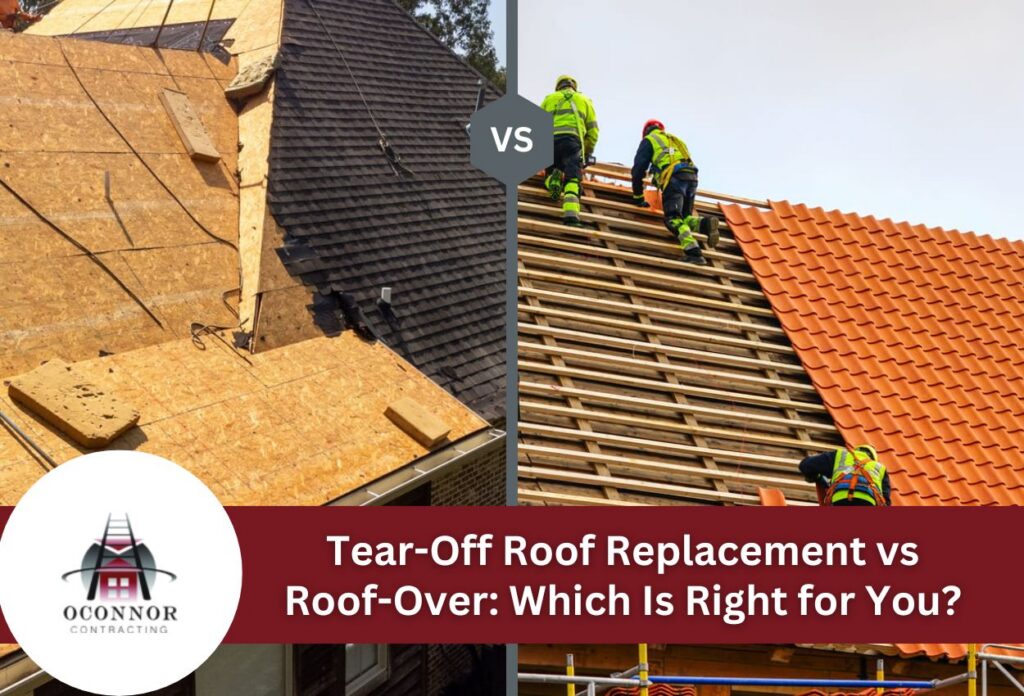

In Buffalo’s climate, where annual snowfall regularly reaches 90 to 100+ inches and repeated temperature changes stress roofing systems year after year, the decision between a tear-off and a roof-over carries more weight than it would in a milder market. Hidden roof deck damage is a common finding on the area’s older wood-frame homes once existing layers come off, and choosing between methods is a real risk factor, not just a cost question.
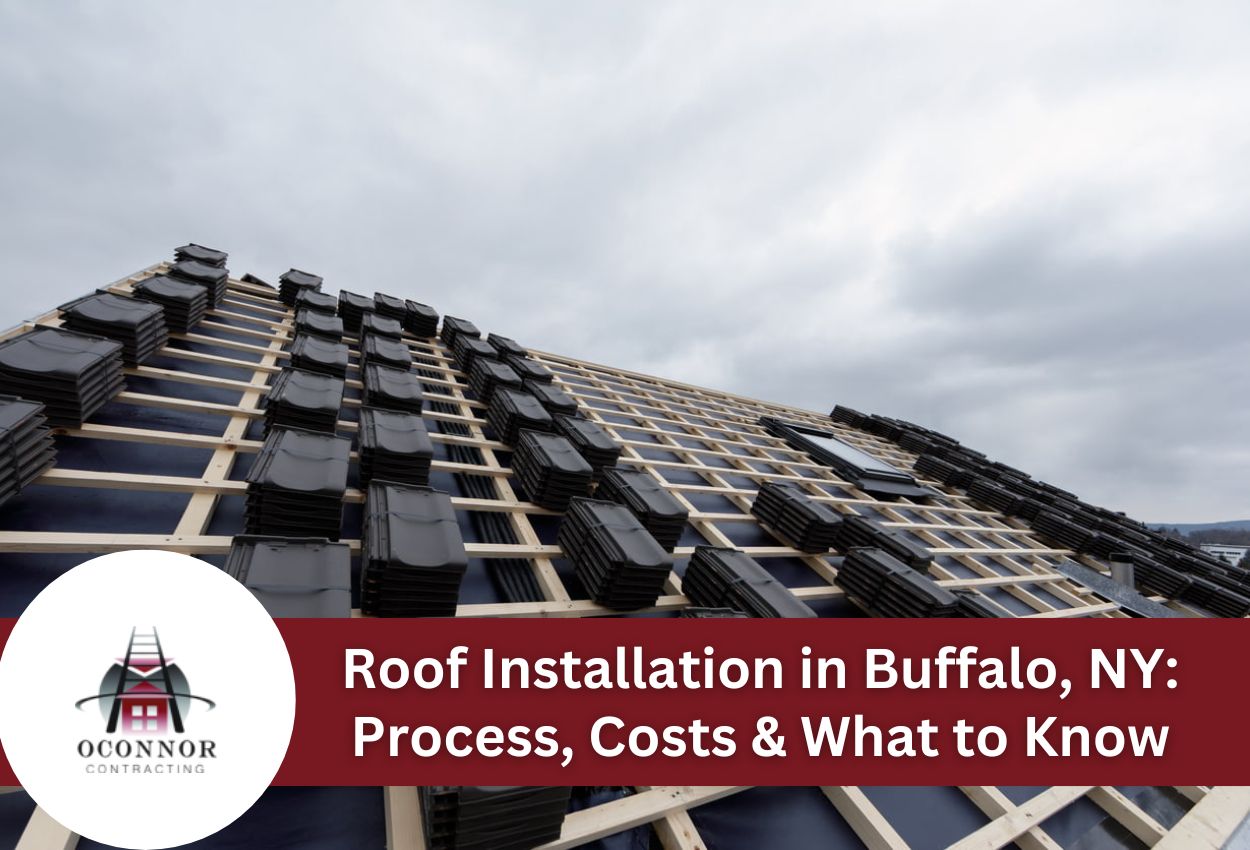
A tear-off removes every existing layer down to the bare roof deck before new shingles go on. A roof-over, sometimes called an overlay, installs new shingles directly on top of the old layer without removing it first.
*Please note, price ranges listed in this article may not reflect the final cost of your project. Prices are subject to change based on various factors such as local labor rates, material quality, and more. All costs established in this article are rough estimates based on average industry rates.
How Many Shingle Layers Do You Already Have, and Why Does It Cap Your Options?
New York State code and most shingle manufacturers cap residential roofs at 2 layers of asphalt shingles. If your home already has 2 layers, a full tear-off is required before any new installation can begin.
Buffalo’s older housing stock makes this a real concern. Pre-1950 homes with plank sheathing frequently turn up with 2 layers or even 3 during inspection. Here’s what every homeowner should know before assuming a roof-over is an option:
- Check your layer count at the rake edge: A roofing contractor can lift a tab or examine the roof edge to count existing layers on-site. Homeowners can also request permit history through the City of Buffalo’s building department to see what prior roof work was recorded.
- Soft or spongy roof decking disqualifies a roof-over immediately: Any roof decking that flexes underfoot or shows depressions signals structural weakness; new shingles cannot be fastened securely over a compromised roof deck.
- Active leaks or saturated underlayment require a full tear-off: Installing over wet or damaged underlayment traps moisture against the deck and accelerates rot, often within 2 to 5 years.
- Shingle cupping or curling greater than 1/4 inch disqualifies an overlay: An uneven surface prevents proper sealing and adhesion on the new layer, shortening its service life.
- Moss or algae growth signals moisture retention: Biological growth indicates the existing system is holding water, a condition that will continue to damage the roof deck even under a new layer.
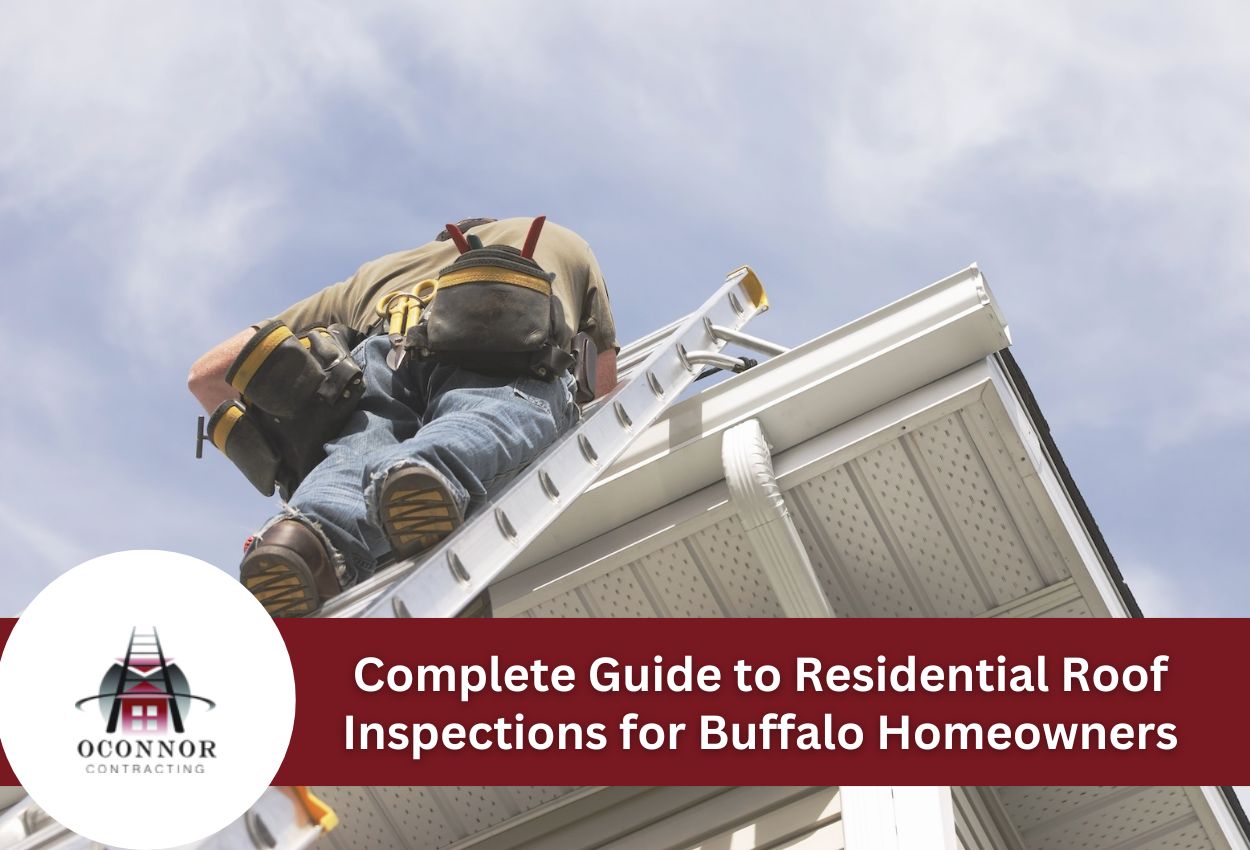
If any of these conditions exist, regardless of layer count, a roof-over is off the table. A thorough residential roof inspection before any contract is signed is the only way to know for certain which method applies to your home.
What Are the Real Pros and Cons of Roofing Over Existing Shingles?
A roof-over saves $1.50 to $3.00 per square foot in total installed cost compared to a full tear-off, encompassing both labor and disposal differences, but those upfront savings come with measurable trade-offs in lifespan, weight, and warranty coverage.
| Factor | Roof-Over (Overlay) | Full Tear-Off |
|---|---|---|
| Upfront Cost Savings | $1.00 to $1.50 per sq ft less in labor and disposal | Baseline cost: no savings |
| Installation Time (2,000 sq ft roof) | 1 to 2 days | 2 to 4 days |
| Added Roof Weight | Approximately 2 to 3 lbs per sq ft added | No added weight, old layer removed |
| Lifespan Impact on New Shingles | 20% to 25% reduction due to heat retention and uneven surface | Full rated lifespan |
In Buffalo, the heat-trapping effect of two shingle layers speeds up ice dam formation and can prevent self-sealing strips from activating properly during cold-weather installs below 40 degrees Fahrenheit. Losing 20% to 25% of a new roof’s lifespan, combined with voided manufacturer warranties, makes a roof-over a poor long-term value in this climate for most homeowners. A roof-over is reasonable in a narrow set of cases: the existing roof has a single layer in sound condition, the homeowner plans to sell within 5 years, and budget is a hard constraint with no flexibility.
How Do Tear-Off and Roof-Over Compare on Total Cost in the Buffalo Area?
For a typical 1,500 sq ft single-story home in the Buffalo area, a full tear-off runs $8,500 to $14,000 total compared to $6,000 to $9,500 for a roof-over, but the lower upfront cost of an overlay does not always mean lower cost over time.
| Cost Category | Full Tear-Off | Roof-Over (Overlay) |
|---|---|---|
| Materials (shingles, underlayment, accessories) | $3,500 to $6,500 | $3,200 to $6,000 |
| Labor | $2,500 to $4,500 | $1,800 to $3,000 |
| Tear-Off and Disposal | $1,200 to $2,500 (includes $300 to $600 Erie County disposal fee) | $0 |
| Permit Fee (Buffalo area) | $75 to $200 | $75 to $200 |
| Estimated Total | $9,200 to $14,000 | $6,000 to $9,500 |
The upfront savings on a roof-over average $2,000 to $4,500 compared to a tear-off. That gap can close fast. If the overlay fails early due to hidden roof deck damage, trapped moisture, or uneven shingle adhesion, the next replacement will require a mandatory tear-off anyway, adding that full disposal and labor cost to a roof that never reached its rated lifespan. Homeowners who factor in a 5- to 8-year premature failure scenario often find the tear-off is the lower-cost option across the full replacement cycle. Buffalo and surrounding municipalities generally require a building permit for full replacements involving roof deck or structural work, and tear-off projects may require an inspection at the roof decking stage, with a budget of $75 to $200 depending on the job scale and municipality.
Is It Better to Tear Off the Old Roof or Roof Over? A Decision Framework for Your Situation
For most Buffalo homeowners, especially those in homes built before 1980, tear-off is the recommended default because contractors in this region commonly find rotted sheathing, failed ice-and-water membrane, and improper ventilation that are only visible once the old layers come off. Those hidden problems cannot be fixed with a roof over.
| Choose Tear-Off If… | Consider Roof-Over If… |
|---|---|
| 2 existing shingle layers are already present | Confirmed single layer in sound condition |
| Roof decking is soft, spongy, or shows moisture staining | No evidence of the roof deck damage was found on inspection |
| Home is 20+ years old with no prior full tear-off on record | Roof slope is 4:12 or greater |
| Planning to stay in the home 10+ years | Budget is constrained, and the sale is planned within 3 to 5 years |
| Want full manufacturer warranty coverage | Full system warranty is not a priority for your situation |
Warranty coverage is a real factor here. Overlay installations typically qualify only for limited materials-only warranties of 20 to 25 years, not lifetime coverage. If long-term warranty protection matters, a roof-over will not deliver it, regardless of how sound the existing layer appears. When in doubt, schedule a deck-level inspection before signing any contract; it is the only way to know which method your home actually supports.
Which Method Delivers Better Long-Term Value for a Buffalo Home?
A full tear-off with 30-year architectural asphalt shingles at an average total cost of $11,000 works out to roughly $367 per year, while a roof-over at an average of $7,500 sounds cheaper upfront, but its reduced lifespan of 15 to 20 years pushes the per-year cost to $375 to $500. The method that costs more on day one often costs less across the full ownership period.
That math shifts even further when resale value enters the picture. A tear-off with a transferable manufacturer’s warranty is a documentable asset during a home sale. Buyers and their inspectors can verify it. An overlay, by contrast, may be flagged during a home inspection, especially if full warranty coverage was voided, and could trigger disclosure requirements or price negotiations that eat into whatever was saved at install time. A transferable warranty from a tear-off is a selling point; an overlay without full coverage can become a liability.
There is also an added cost that many homeowners miss. If a roof-over is installed today and the home needs re-roofing in 15 years, a mandatory tear-off will be required at that point regardless because two layers will already exist. That means paying for disposal and additional labor twice. This is the core reason behind the question of how many layers of shingles are required before tear-off: hitting the two-layer limit does not just end the overlay option; it guarantees the next project costs more. Factoring in that future tear-off, the long-term cost of choosing an overlay today is higher than it first appears.
Ready to Replace Your Roof in Buffalo? Here’s How to Get the Right Answer for Your Home
No online guide can tell you whether your roof deck has soft spots, how many layers are already on your roof, or whether your home qualifies for a full manufacturer’s warranty. Only an on-site inspection can answer those questions with certainty.
Before signing any contract, ask your contractor these three questions: How many shingle layers are currently on my roof? Will I qualify for a full manufacturer’s warranty? What does your inspection of the roof decking show? The answers will tell you everything about which method is right for your home.
OConnor Contracting serves homeowners across the Buffalo, NY area with free on-site residential roof replacement consultations so you know exactly what you’re working with before any work begins.
Schedule your free roof inspection.
Not ready to schedule? Learn more about roof replacement in Buffalo.