Roof Installation in Buffalo, NY: Costs, Materials, Timing & What to Expect
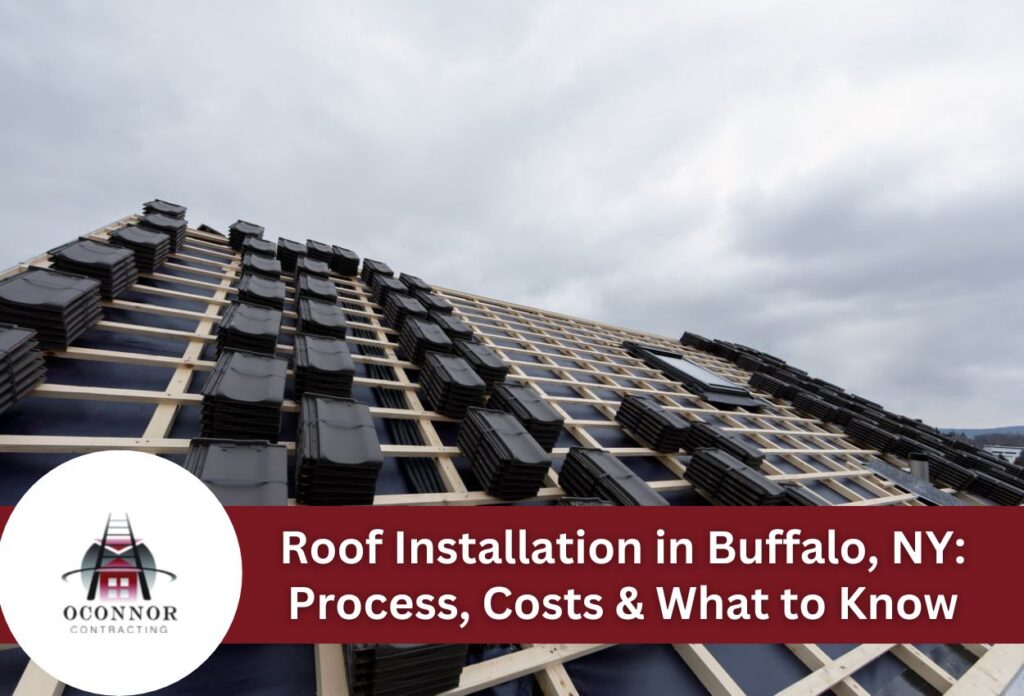
Roof installation in Buffalo, NY is more demanding than in most U.S. cities because local roofs must survive lake-effect snowstorms, ice dams, and temperature swings that can shift more than 50 degrees Fahrenheit within a single season. A roof that works fine in a milder climate may fail quickly here. Buffalo sees roughly 94 inches of snow annually, and those freeze-thaw temperature changes crack materials, lift shingles, and force water under the roof deck in ways that warmer regions rarely see.
This article covers the full roof installation and replacement process from start to finish. Readers will find realistic cost ranges, a breakdown of the best materials for Buffalo’s climate, the right time of year to schedule work, how to choose a reputable contractor, and the red flags that signal a bad deal before it costs thousands of dollars.
Whether the project is a brand-new installation or a full roof replacement, the process and costs are closely related, and both require decisions that carry more weight in Buffalo than almost anywhere else in the Northeast.
*Please note, price ranges listed in this article may not reflect the final cost of your project. Prices are subject to change based on various factors such as local labor rates, material quality, and more. All costs established in this article are rough estimates based on average industry rates.
Why Does Buffalo’s Climate Make Roof Installation So Difficult?
Buffalo’s roofs face more punishment than most: roughly 94 inches of annual snowfall, about 115 days per year below freezing, and temperature swings that can exceed 50 degrees Fahrenheit within a single season, all combining to degrade roofing materials faster than in most U.S. cities. No single factor causes the damage. It is the constant cycle of stress, season after season, that wears systems down.
Lake-effect snow is a major part of the problem. Because Buffalo sits downwind of Lake Erie, storms can dump heavy, wet snow in a matter of hours. That kind of rapid accumulation adds serious weight to roof decks and forces water into every small gap or crack. High winds during these storms can lift shingle edges, break seals, and push moisture under flashing damage that does not always show up until weeks later.
How Ice Dams Form and Why They Are a Design Problem
Ice dams are not just a maintenance headache. They are a signal that the roofing system was not designed correctly for Buffalo’s climate. When heat escapes through a poorly insulated attic, it warms the roof deck and melts the snowpack above. That meltwater runs down toward the cold eaves, where it refreezes into a ridge of ice. Water backs up behind that ridge and seeps under shingles, into the roof deck, and eventually into the home.
Preventing ice dams starts at installation with proper attic insulation and ventilation, not after damage has already appeared. Summer adds a different kind of stress. High humidity accelerates material breakdown, especially on older, wooden roof decks, and occasional high winds create additional uplift risk.
Older Homes Add Another Layer of Complexity
Many Buffalo homes were built in the early to mid-20th century, meaning original roofing systems are long overdue for replacement. Decades-old roof decking, outdated flashing, and buried layers of previous roofing can all complicate installation. A contractor may uncover soft or rotted sheathing once the old material comes off, repairs that add both time and cost. These climate realities make material selection, installation technique, attic ventilation, and insulation far more important here than in milder regions, all of which are covered in the sections ahead.
What Are the Main Roofing Material Options for Buffalo Homes?
Asphalt architectural shingles dominate Buffalo’s roofing market because they balance upfront costs, proven performance in heavy snow, and wide contractor availability better than any other material available today.
| Material Type | Typical Lifespan in Buffalo Climate | Average Cost per Square (installed) | Performance in Snow/Ice | Best Use Case | Key Limitation |
|---|---|---|---|---|---|
| Asphalt Architectural Shingles | 20 to 30 years | $350 to $500 | Good: holds up under heavy snow with proper installation | Most residential steep-slope roofs | Vulnerable to ice dam damage if attic insulation is poor |
| Metal Roofing System (standing seam) | 40 to 70 years | $900 to $1,600 | Excellent: sheds snow quickly, resists ice buildup | Long-term investment homes, steep-slope roofs | Higher upfront cost; fewer local installers |
| Rubber/EPDM | 20 to 30 years | $400 to $700 | Fair: flexible in cold temperatures, but ponding is a risk | Low-slope or flat roofs | Not suitable for steep-slope residential roofs |
| Slate or Synthetic Slate | Natural: 75 to 150 years; Synthetic: 30 to 50 years | Natural: $1,500 to $3,000; Synthetic: $700 to $1,200 | Very good: heavy and durable, minimal temperature-change damage | Historic homes, premium builds | Natural slate requires structural support; both require specialized installers |
| Wood Shake | 15 to 20 years (reduced in Buffalo) | $600 to $900 | Poor: retains moisture, cracks under repeated temperature changes | Dry climates with lower humidity | Not recommended for Buffalo’s wet, snowy winters |
Asphalt architectural shingles make up the majority of Buffalo roofing projects for good reason. They cost far less upfront than metal or slate, most local contractors know how to install them correctly, and impact-resistant versions hold up well under the heavy, wet lake-effect snow Buffalo receives each winter. Metal roofing is gaining ground here because it sheds snow without the manual clearing that other materials require, and its 40- to 70-year lifespan reduces long-term replacement costs.
Wood shake is a different story. Buffalo’s 94 inches of annual snowfall, high humidity, and repeated temperature changes make wood shake one of the worst material choices for this region. Moisture gets trapped in the grain, the wood swells and contracts, and it degrades far faster than it would in a drier climate. Homeowners replacing a wood shake roof should strongly consider switching to a different material entirely rather than installing a new wood shake system.
What Does the Roof Installation Process Look Like Step by Step in Buffalo?
A full roof replacement in Buffalo follows 10 distinct steps, and the process typically takes 1 to 3 days for an average home once work begins, though total project time from first contact to final inspection often runs 2 to 6 weeks. Understanding the roof replacement process step by step in Buffalo helps homeowners plan around the delays that are specific to this region. Weather windows, permit timelines, and storm-season material demand all affect how quickly a project moves.
- Initial inspection and damage assessment: A contractor inspects the roof deck, flashing, gutters, and attic for signs of damage, rot, or inadequate ventilation. In Buffalo, soft roof decking and deteriorated flashing are common findings on homes built before the 1970s.
- Contractor estimate and contract signing: A written estimate details material type, labor, disposal fees, and warranty terms. Get at least 3 estimates before signing.
- Permit acquisition: A building permit is generally required for full roof replacements in Buffalo. Permit review times vary and depend on project complexity and municipal workload.
- Material delivery and staging: Shingles, underlayment, ice-and-water shield, drip edge, and flashing are delivered and staged. During heavy storm seasons, material backorders can add 1 to 3 weeks to this step.
- Tear-off of existing roofing: The New York State Residential Code generally limits asphalt-shingle roof recoveries to no more than 2 existing layers, after which a full tear-off is typically required unless another code exception applies. If a second layer already exists, removal is mandatory before new material goes down.
- Underlayment and ice-and-water shield installation: In Buffalo, ice-and-water shield must extend at least 24 inches past the interior wall line to protect against ice dam damage. This is a non-negotiable requirement in cold climates, not an optional upgrade. Drip edge is installed along eaves and rakes to direct water away from the fascia boards.
- Field shingle or material installation: Shingles or chosen roofing material are installed from the eaves up, following manufacturer specifications for fastener patterns and overlap to meet wind resistance requirements.
- Flashing and ridge cap completion: Step flashing, counter flashing, and valley flashing are sealed around chimneys, skylights, and roof transitions. Ridge cap shingles are installed last to seal the peak.
- Cleanup and debris removal: Crews use magnets to collect nails, haul away old materials, and leave the site clear. Most reputable contractors include dumpster removal in their contract.
- Final inspection: The local building inspector reviews the completed work to ensure it meets code. The homeowner should do a walkthrough before signing off.
Common Reasons Buffalo Roof Projects Get Delayed
Three factors slow down more Buffalo roofing projects than any other:
- Permit processing delays: Storm damage creates surges in permit applications. Processing times that normally run 5 to 15 business days can stretch to 3 to 4 weeks after a major storm.
- Narrow weather windows: The best installation season runs from late June to early September. Spring and fall are workable but unpredictable. Scheduling outside that window risks cold-temperature adhesion failures in shingles.
- Material backorders: After regional storms, demand for asphalt shingles and ice-and-water shield spikes across Western New York simultaneously, sometimes pushing delivery timelines back 1 to 3 weeks.
Booking a contractor early in spring before storm season demand peaks gives homeowners the best chance of hitting the summer installation window without delays.
How Much Does Roof Installation Cost in Buffalo, NY?
The average cost to replace a roof in Buffalo, NY runs between $6,500 and $18,000 for a standard 1,500 to 2,500 square foot home, depending on material choice, roof pitch, story height, and the condition of the existing roof deck underneath.
| Cost Category | Low | Mid | High |
|---|---|---|---|
| Labor (per square) | $75 | $110 | $150 |
| Material Asphalt Shingles (per square) | $100 | $175 | $250 |
| Material Metal Roofing (per square) | $400 | $800 | $1,200 |
| Tear-off and Disposal | $500 | $1,000 | $1,800 |
| Permits and Inspections | $150 | $300 | $500 |
| Ice-and-Water Shield Upgrade | $200 | $450 | $800 |
| Roof Deck Repair (per sheet) | $75 | $100 | $150 |
| Ridge Vent / Ventilation Upgrades | $300 | $600 | $1,200 |
Roof installation cost in Buffalo, NY increases quickly when older roof decks need repair. Many Buffalo homes built in the early to mid-20th century have soft or rotted sheathing that only becomes visible after tear-off. Budgeting for at least a few roof deck repairs upfront is strongly recommended.
| Home Size | Asphalt Low End | Asphalt High End | Metal Low End | Metal High End |
|---|---|---|---|---|
| 1,000 to 1,500 sq ft | $4,500 | $7,500 | $9,000 | $14,000 |
| 1,500 to 2,000 sq ft | $6,500 | $10,000 | $12,000 | $18,000 |
| 2,000 to 2,500 sq ft | $8,500 | $13,000 | $15,000 | $24,000 |
| 2,500+ sq ft | $11,000 | $17,000+ | $20,000 | $32,000+ |
The average cost to replace a roof in Buffalo, NY climbs at the higher end partly because of local code requirements that most other markets don’t face ice-and-water shield coverage, mandatory tear-offs when two shingle layers already exist, and permit fees all add to the total. Metal roofing systems cost 2 to 3 times more than asphalt upfront, but its 40- to 70-year lifespan cuts long-term replacement costs.
For most Buffalo homeowners replacing an asphalt roof on a 1,500 to 2,000 square foot home, budgeting $6,500 to $10,000 is a realistic starting point before any roof deck repairs are factored in. OConnor Contracting provides written estimates that break down every line item so there are no surprises after tear-off begins.
What Factors Drive the Cost of Roof Replacement Up or Down in Buffalo?
At least eight variables can push a Buffalo roof replacement higher or lower than the $6,500 to $18,000 average range, and several of them are specific to this region’s climate and housing stock.
- Roof pitch and complexity: Steeper roofs require extra safety equipment, slower installation, and more labor hours. A roof with a pitch above 6:12 can add 15% to 25% to total labor costs compared to a standard low-slope home.
- Number of stories: Two- and three-story homes take longer to set up, require more fall protection equipment, and increase the time crews spend moving materials, all of which raise labor costs.
- Existing shingle layers: New York State residential code requires a full tear-off once two shingle layers are already present. Tear-off and disposal costs range from $500 to $1,800 depending on roof size and how many layers need to come off.
- Roof decking condition: Rotted or soft sheathing is common in Buffalo homes built before the 1970s, and it only shows up after tear-off begins. Budgeting for roof deck repairs at $75 to $150 per sheet before work starts reduces the chance of a surprise mid-project cost increase.
- Chimney and skylight flashing complexity: Each gap adds labor time and material. Multiple chimneys or skylights with deteriorated counter flashing can add $300 to $800 or more to the total.
- Ventilation upgrades: Homes that don’t meet current ventilation standards may require ridge vent or intake vent additions to pass inspection. Ridge vent and ventilation upgrades run $300 to $1,200 depending on what’s needed.
- Material grade: Entry-level 3-tab shingles cost far less per square than architectural or impact-resistant shingles. The gap between low-end asphalt and premium metal roofing can be $300 to $1,100 per square installed.
- Post-storm surge pricing: After major lake-effect storms, contractor schedules fill fast across Western New York. High demand windows can lead some contractors to charge premium rates. Booking early in spring, before storm season peaks, helps avoid this.
- Combined roofing and insulation work: Homes with deteriorated attic insulation may need upgrades to meet New York State energy code before the project closes. Adding insulation work raises the upfront cost but improves long-term performance and can reduce heating costs during Buffalo’s winters, where average temperatures drop to 26 degrees Fahrenheit.
Several of these variables stack on top of each other quickly. A two-story older Buffalo home with two existing shingle layers, soft decking, and a steep pitch can land at the high end of the cost range before material choice is even factored in. The next section covers ways to reduce those costs without cutting corners on quality.
How Long Does Roof Installation Take in Buffalo, NY?
Most standard residential roof installations in Buffalo take 1 to 3 days once work begins, but the full project timeline from first contact to job completion typically runs 2 to 6 weeks when inspection, permitting, scheduling, and weather are factored in. That gap surprises many homeowners. The physical work is fast. Everything leading up to it takes longer.
| Phase | Typical Timeframe | Buffalo-Specific Variables |
|---|---|---|
| Initial Inspection & Quote | 1 to 3 days | Contractor backlog after storms can push this to 1 to 2 weeks |
| Contract Signing & Permit Application | 3 to 7 days | Storm surges can stretch permit processing from 5 to 15 business days up to 3 to 4 weeks |
| Material Ordering & Scheduling | 1 to 3 weeks | Post-storm demand spikes for asphalt shingles and ice-and-water shield can push delivery back 1 to 3 weeks |
| Installation | 1 to 3 days | Rain, high winds, or temperatures below 40 degrees can pause work mid-project |
| Final Inspection & Cleanup | 1 day | Inspector scheduling can add 2 to 5 business days in busy seasons |
Contractor backlog is highest in late summer and after major storms hit Western New York. Homeowners who book in spring before storm season demand peaks typically get faster scheduling and avoid the post-storm pricing pressure that pushes some contractors to charge premium rates. The best installation window runs from late June to early September, so getting the inspection and permit steps done in April or May puts a project in line for that window.
When Is the Best Time of Year to Schedule Roof Installation in Buffalo?
Late June through early September is the best window for roof installation in Buffalo, a roughly 3.7-month stretch when daily highs consistently stay above 70 degrees Fahrenheit, allowing asphalt shingles to seal properly and adhesive strips to activate the way manufacturers intend. Below that temperature threshold, self-sealing shingles can fail to bond correctly, leaving the roof vulnerable to wind lift and leaks before the first winter storm even arrives.
Shoulder-Season Installation: April to May and September to October
Spring and fall are viable options, but they come with conditions. Temperatures in Buffalo during April and May can swing 30 degrees or more in a single week, and October brings rain and early frost. Experienced Buffalo roofing contractors can work through these conditions using manufacturer-approved cold-weather installation techniques, including hand-sealing tabs, adjusting fastener patterns, and timing work around daily temperature peaks.
Before booking a shoulder-season install, homeowners should ask any contractor directly whether they follow cold-weather manufacturer guidelines, since cutting corners during cooler months is one of the leading causes of early shingle failure. Most reputable contractors will answer this question without hesitation.
Why December Through March Is Generally Off the Table
Buffalo averages about 115 days per year below 32 degrees Fahrenheit, and the coldest months see daily highs stuck in the low 30s. At those temperatures, shingles become brittle, adhesive strips don’t seal, and ice and snow on the roof deck create serious safety risks for crews. Full replacement projects should not be scheduled during this period under normal circumstances.
Emergencies are the exception. If a winter storm damages a Buffalo home, temporary tarping and emergency repairs are appropriate stopgaps that a contractor can perform quickly. Full replacement should be deferred to the next viable season, typically April at the earliest. Insurance claims, however, should be filed immediately regardless of the time of year, since most policies have documentation deadlines that don’t pause for weather.
What Permits and Regulations Apply to Roof Installation in Buffalo, NY?
A building permit is typically required for a full roof replacement in Buffalo, NY, especially when structural components or the roof deck are being altered. Homeowners should confirm exact requirements with the City of Buffalo’s Permit and Inspection Services division before any contractor starts work. Skipping this step can result in failed inspections, fines, or complications when selling the home.
Contractor Registration and Insurance Requirements
New York State does not require a statewide general contractor license, but Buffalo and Erie County may require contractor registration. That distinction matters. A contractor can legally operate in New York without a state license, which makes it the homeowner’s job to verify local registration status.
New York contractors are generally required to maintain workers’ compensation coverage where applicable, and liability insurance requirements depend on the contractor’s licensing, registration, and local requirements. Before signing any contract, request certificates of insurance directly from the contractor. A reputable contractor will hand these over without hesitation, and any resistance is a red flag worth taking seriously.
New York State Energy Code and What It Means for Your Project
New York State’s residential energy code sets minimum standards for attic insulation and ventilation ratios that directly affect roofing projects. Meeting these standards may require more than just swapping shingles. For example, homes that don’t meet current ventilation requirements may need ridge vent additions or intake vent upgrades, costs that, as noted earlier, range from $300 to $1,200 depending on what’s needed. Insulation minimums can also require work that extends the project’s scale beyond the surface of the roof itself. Code compliance is not optional, and a contractor who doesn’t mention it during the estimate may not be accounting for work that’s legally required before final inspection sign-off.
Homeowners should request three documents before work begins: a copy of the permit that was pulled, confirmation of final inspection sign-off, and current insurance certificates. These are standard on any legitimate roofing project in Buffalo. OConnor Contracting walks homeowners through this documentation for every job.
How Do You Choose the Best Roofing Contractor in Buffalo, NY?
Finding the best roofing contractors Buffalo, NY has to offer comes down to one thing: verification. Any contractor can claim quality work. The checklist below separates reputable local roofers from the ones who will be gone before a warranty issue surfaces.
- Verify local registration and insurance: Request certificates of workers’ compensation and general liability insurance before hiring a contractor, and confirm any applicable local registration requirements. While New York does not have a license requirement, local municipalities often do.
- Confirm a physical presence in Western New York: A local business address, a phone number that reaches a real office, and a history of completed projects in the Buffalo area are basic standards. A contractor who can’t point to a verifiable local presence is worth skipping.
- Check reviews on Google, the BBB, and Angi specifically for Buffalo-area projects: Reviews from homeowners in Erie County and Western New York carry more weight than out-of-market testimonials. Look for patterns in complaints, not just star ratings.
- Request a written, itemized estimate: A single lump-sum number tells you nothing. A written estimate should break out labor, materials, tear-off, disposal, permits, and any additional work like ventilation or roof deck repairs. This is also how to validate costs against the ranges covered earlier in this article.
- Ask specifically about cold-climate installation experience: Any experienced Buffalo roofer should be able to describe their approach to ice-and-water shield placement, cold-weather shingle handling, and ventilation requirements. Vague answers here are a warning sign.
- Request references from Buffalo-area projects completed within the last 12 months: Recent local references let you ask about real-world performance through at least one Western New York winter.
After major lake-effect storms, out-of-state storm-chasing crews frequently arrive in Buffalo offering fast, low-cost work. These contractors often lack local registration, carry inadequate insurance, and disappear before any warranty problems come up. If someone knocks on the door within days of a major storm, apply this checklist before signing anything.
Getting three competing written quotes is standard practice and a reasonable way to cross-check pricing against the cost ranges covered in this article. Wide gaps between estimates, especially a quote that comes in far below the others, can be a bad sign in most cases.
Does a New Roof Increase Home Value in Buffalo, NY?
A new asphalt shingle roof typically returns 60% to 70% of its project cost in added resale value, based on industry cost-versus-value studies, but in Buffalo, the calculation goes further than resale alone. Buyers in Western New York know what a harsh winter looks like. A failing or aging roof is one of the fastest ways to lose a deal or push buyers toward a lower offer, given what local winters demand from a home’s structure.
| ROI Category | What It Affects | Estimated Benefit |
|---|---|---|
| Resale Value | Home sale price, buyer confidence | 60% to 70% of replacement cost recovered |
| Energy Savings | Heating costs from improved insulation and ventilation | Measurable reduction in winter energy bills |
| Ice Dam Risk Reduction | Interior water damage from ice buildup at eaves | Reduced repair costs and claims history |
| Insurance Profile | Homeowners insurance premiums in New York | Some NY insurers discount premiums or require proof of roof condition |
For homeowners who plan to stay in the home 10+ years, the resale framing matters less than the long-term math. A well-installed roof with quality materials reduces the risk of ice dam damage, keeps heating costs lower through better attic ventilation, and may support a better insurance risk profile. Over a decade, the combination of avoided interior repairs, lower energy costs, and a stable insurance standing can easily outweigh the difference between a budget installation and a properly done one. That’s why material longevity and installation quality carry more weight than the lowest upfront number, especially in a climate that puts roofs through 94 inches of snowfall per year on average.
Homeowners researching this topic may also want to look into how a new roof can affect homeowners’ insurance premiums in New York specifically, or what qualifies a roof as an energy-efficient upgrade under current New York State guidelines; both are worth a separate conversation with a qualified contractor.
How Can Buffalo Homeowners Save Money on Roof Installation Without Cutting Corners?
Legitimate savings on a roof installation come from timing, competition, and available programs, not from skipping materials or hiring the cheapest crew available.
- Schedule during the off-peak window: Early spring and late fall are slower periods for most roofing contractors. Lower demand often means more scheduling flexibility and, in some cases, better pricing than the summer peak season.
- Get at least 3 itemized competing quotes: A written, itemized estimate breaks out labor, materials, tear-off, disposal, and permits. Comparing 3 quotes side by side makes it easy to spot outlier pricing high or low and understand exactly what each contractor is or isn’t including.
- Bundle roofing with gutter replacement if both are needed: Some contractors offer package pricing when work is combined. If the gutters are overdue anyway, bundling the two jobs can reduce overall costs compared to scheduling them separately.
- Ask about financing through reputable local contractors: Many established roofing contractors offer financing options that spread costs over time. This keeps a quality installation within reach without forcing a budget decision that compromises the result.
- File an insurance claim if the damage was weather-related: Hail, wind, and ice damage from qualifying storms may be covered under homeowners insurance, sometimes covering a large portion of the replacement cost. Have an independent inspection done before accepting an insurer’s initial assessment, since first assessments sometimes miss damage that a trained roofing contractor can identify and document.
The line between smart savings and false economy is easy to draw: skipping the ice-and-water shield, hiring an unlicensed contractor, or choosing the lowest bid without vetting the scope are all moves that tend to cost more in repairs within a few years than the original savings were worth. Getting 3 written quotes and asking the right questions costs nothing, and it’s the fastest way to find fair pricing without gambling on the result.
What Are the Most Common Roof Installation Mistakes Buffalo Homeowners Should Watch For?
Six installation errors account for the majority of premature roof failures in cold climates, and most of them are invisible from the ground once the job is complete, making contractor vetting your first and strongest defense.
- Insufficient ice-and-water shield coverage: The shield must extend at least 24 inches past the interior wall line. Ask your contractor to confirm this measurement before work begins. Anything less leaves the most leak-prone zone of the roof unprotected.
- Improper drip edge installation: A drip edge installed out of sequence or skipped entirely allows water to infiltrate behind the fascia boards and into the roof decking. Ask whether drip edge is included in the written estimate and how it will be sequenced with the underlayment.
- Inadequate attic ventilation: Poor ventilation traps heat in the attic, accelerating ice dam formation and causing shingles to fail years ahead of schedule. Before signing a contract, ask the contractor to calculate your attic’s ventilation ratio and explain what they are adding or replacing.
- Nailing shingles in extreme cold: Asphalt shingles become brittle below 40 degrees Fahrenheit and crack under the pressure of a nail gun. Ask any contractor working in late fall or winter how they handle cold-weather installation and whether shingles are stored indoors before use.
- Incorrect flashing around chimneys and pipe gaps: Flashing failures are a leading source of leaks in older Buffalo homes. Ask the contractor to walk through their flashing approach at every gap. Vague answers are a warning sign worth taking seriously.
- Skipping a roof deck inspection before re-roofing: Damaged or soft roof decking hidden under old shingles must be identified and replaced before new material goes down. Ask your contractor whether a secondary roof deck inspection is included in the job scale; re-roofing over damaged boards shortens the new roof’s lifespan from day one.
None of these errors announce themselves on a finished roof. The work is buried under layers of material by the time the crew leaves. Asking these questions before signing and choosing a contractor with verifiable local experience is the only reliable way to know they were done right.
Ready to Start Your Roof Installation in Buffalo? Here’s How to Take the Next Step
You now have a complete picture of what a roof installation in Buffalo actually involves: realistic cost ranges, the best times to schedule, what materials hold up in this climate, and the right questions to ask before signing anything. That knowledge puts you in a strong position to move forward without guessing.
OConnor Contracting serves Buffalo homeowners with on-site inspections and written, itemized estimates so you get project-specific numbers, not ballpark figures. A free, no-obligation inspection is the logical next step to move from research to a real number for your specific roof.
Not ready to schedule? Learn more about residential roof installation.
Frequently Asked Questions
Got questions about your roof? We’ve got answers. From maintenance tips to insurance claims and repair timelines, our FAQ section covers the most common concerns homeowners have. Get informed and make confident decisions about protecting your home.
People Also Ask
Can a Buffalo homeowner's insurance policy be voided if roof installation is done without a permit?
Yes, unpermitted roofing work can give insurers grounds to deny claims related to roof damage or interior leaks. In New York, insurers may investigate whether work met code compliance during a claim review, making a properly pulled and closed permit an important layer of financial protection.
Do Buffalo roofing contractors typically offer warranties that cover lake-effect snow damage specifically?
Most manufacturer warranties cover material defects rather than storms, so lake-effect damage typically falls under your homeowners insurance policy rather than a roofing warranty. Workmanship warranties from the contractor, usually 2 to 10 years, are separate and cover installation errors that lead to leaks or failures.
Are there any Buffalo-specific building code requirements that differ from standard New York State residential roofing codes?
Buffalo follows the New York State Uniform Fire Prevention and Building Code but may layer additional local requirements through the City’s Permit and Inspection Services division. Homeowners should confirm current local amendments directly with that office, as municipal interpretations of ventilation ratios and ice-and-water shield placement can vary from state minimums.
Related Articles
-
 June 8, 2026Fiber-Cement Siding Installation in Buffalo, NY: What Homeowners Need to Know Before They StartUpgrade to fiber cement siding built for Buffalo winters. Get your free estimate today.
 -
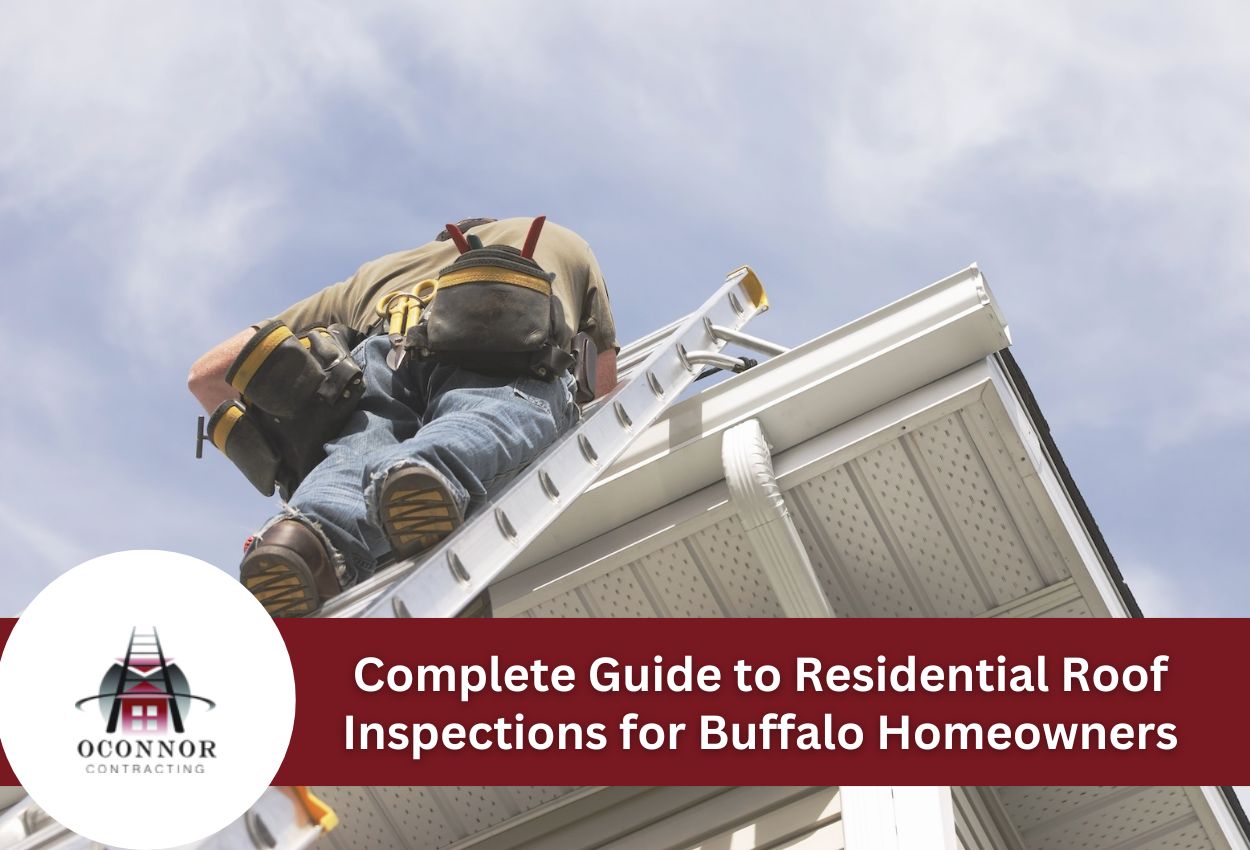 July 6, 2026Residential Roof Inspection in Buffalo, NY: What Homeowners Need to KnowIs your roof ready for Buffalo's harsh winters? Learn what a residential roof inspection covers, when to schedule one.
 -
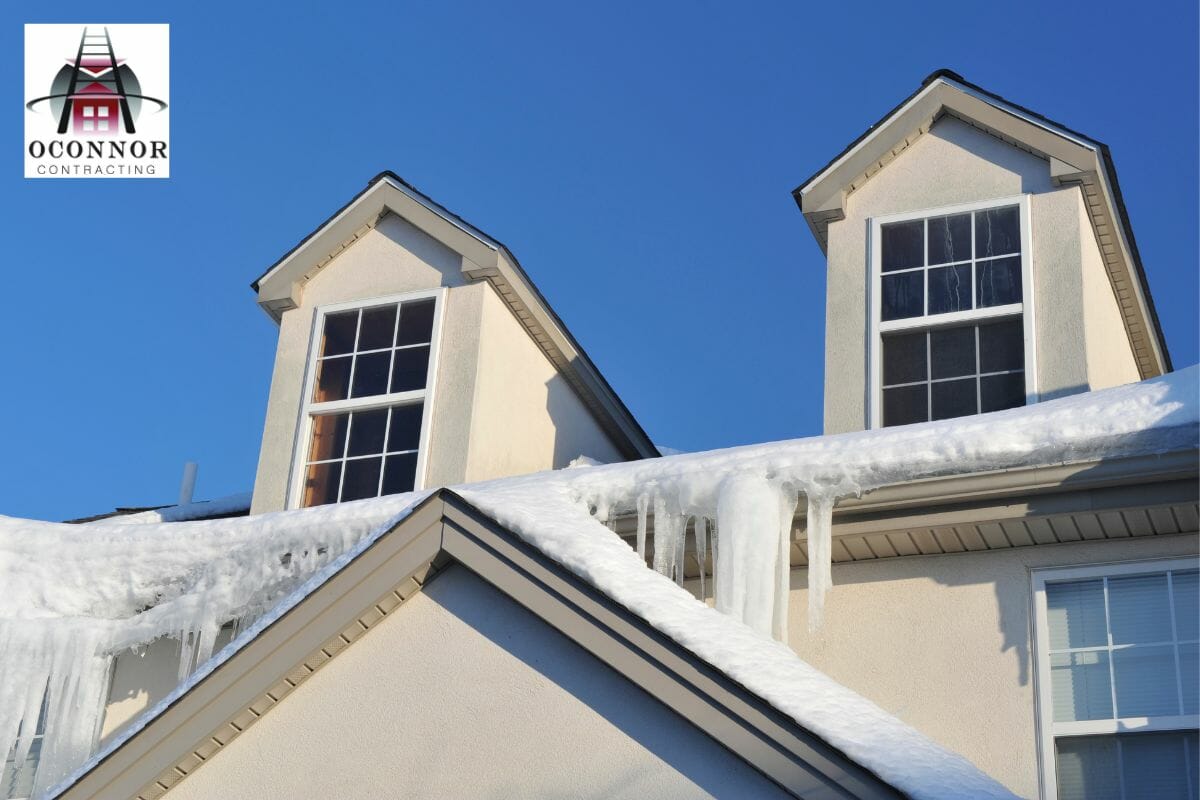 December 21, 2022Get Rid Of Ice Dams: Real Causes, Removal & PreventionIce dams can be a major headache for homeowners. Not only can they damage the roof of a home and cause leaks, but they can also be difficult and dangerous to remove. If you’re tired of dealing with ice dams on your roof and gutters, we are here with a helpful guide to help you […]
Protect Your Home with Expert Roofing
Don’t wait for leaks or storm damage to cause costly repairs. Our experienced roofing team provides fast, reliable service, high-quality materials, and lasting results. Ensure your home stays safe, secure, and looking great—contact us today for a free estimate.