
Home insulation does not require replacement on a fixed schedule. Unlike other home components that need routine maintenance at set intervals, insulation typically lasts for decades when properly installed and undisturbed. The question of when to upgrade home insulation depends on specific conditions rather than age alone.
Understanding how long insulation lasts requires examining several key factors. Different insulation materials have varying lifespans, with fiberglass batts often lasting 80 to 100 years, while spray foam can remain effective indefinitely. Environmental conditions play a significant role in insulation performance. Moisture damage, pest infestations, and physical disturbances can compromise insulation effectiveness long before the material reaches its theoretical lifespan.
Recognizing signs that insulation needs replacement helps homeowners make informed decisions about their property. Uneven temperatures between rooms, unexpectedly high energy bills, and visible deterioration all indicate potential problems. The benefits of new insulation include improved energy efficiency, enhanced comfort, and better home value. Proper assessment of existing insulation condition determines whether old insulation removal and replacement will deliver meaningful improvements to home performance.
Recognizing Warning Signs Your Insulation Is Failing
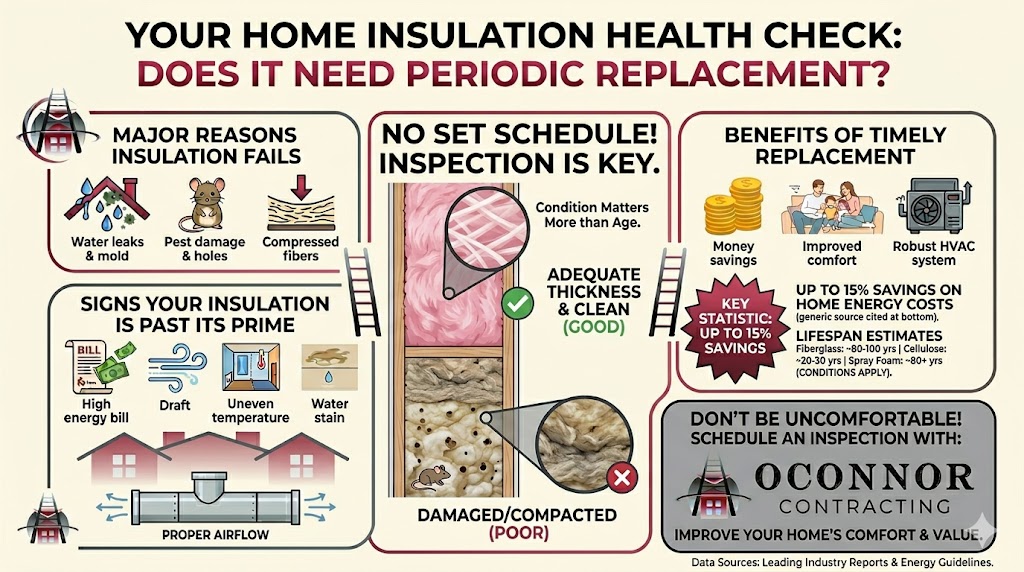
Identifying when insulation has lost its effectiveness requires attention to both visible damage and changes in home performance. Physical inspection of attic and wall spaces may reveal moisture stains, mold growth, or pest droppings that indicate compromised insulation. Rodents and insects often nest in insulation materials, compressing fibers and leaving contamination that reduces thermal resistance. Water damage from roof leaks or condensation creates ideal conditions for mold development while destroying the insulating properties of materials like fiberglass and cellulose.
Performance issues often become apparent through monthly utility bills and comfort levels throughout the home. Unexplained increases in heating and cooling costs suggest that insulation no longer maintains consistent indoor temperatures. Homeowners frequently notice cold spots in certain rooms, drafts near walls or ceilings, and difficulty maintaining comfortable conditions despite thermostat adjustments. Ice dams forming along roof edges during winter signal heat escaping through inadequate attic insulation. These signs that insulation needs replacement should prompt a professional assessment to determine whether old insulation removal and replacement will restore energy efficiency and comfort.
Expected Lifespan of Different Insulation Materials
Understanding how long insulation lasts depends largely on the material type installed in your home. Fiberglass batts and rolls represent the most common insulation and typically maintain effectiveness for 80 to 100 years under normal conditions. Cellulose insulation, made from recycled paper products, generally lasts 20 to 30 years before settling and losing R-value. Spray foam insulation offers exceptional longevity, often remaining effective for the entire lifespan of a structure when properly applied. Mineral wool insulation provides durability comparable to fiberglass, with expected performance lasting 80 years or more.
Environmental factors significantly impact these lifespan estimates regardless of material quality. Humidity exposure from poor attic ventilation causes cellulose to compact and fiberglass to sag, reducing thermal resistance. Roof leaks introduce moisture that promotes mold growth and destroys the insulation within months rather than decades. Inadequate ventilation traps heat and moisture in attic spaces, accelerating the deterioration of all insulation types. Homeowners who maintain proper ventilation, address roof damage quickly, and control moisture levels can maximize insulation performance and delay the need for old insulation removal and replacement.
Health Hazards in Aging Insulation
Older insulation materials can harbor serious health risks that develop over years of exposure to moisture, pests, and environmental contaminants. Homes built before 1990 may contain insulation with asbestos fibers, which pose severe respiratory dangers when disturbed or deteriorated. Even modern insulation materials accumulate health hazards over time as rodents leave droppings and urine throughout attic spaces, introducing bacteria and pathogens into the air circulation system. Mold colonies thrive in damp insulation, releasing spores that trigger allergies, asthma attacks, and respiratory infections in household occupants.
Professional old insulation removal becomes essential when contamination compromises indoor air quality and resident safety. Trained technicians use protective equipment and containment procedures to prevent harmful particles from spreading throughout the home during extraction. Signs that insulation needs replacement due to health concerns include musty odors, visible mold growth, evidence of animal activity, or family members experiencing unexplained respiratory symptoms. The benefits of new insulation extend beyond energy savings to include the elimination of contaminated materials and restoration of healthy indoor air quality that protects household members from long-term exposure to biological and chemical hazards.
Energy Efficiency Gains from Modern Insulation
Advancements in insulation technology have produced materials that significantly outperform products installed in previous decades. Modern insulation options feature higher R-values per inch, improved air sealing properties, and resistance to settling that maintains thermal performance over time. Spray foam insulation creates an airtight barrier that eliminates gaps responsible for substantial energy loss in older homes with traditional fiberglass batts. Advanced fiberglass products now incorporate denser fibers and improved binders that prevent the compression and sagging common in installations from the 1970s and 1980s.
Upgrading to contemporary insulation materials delivers measurable reductions in heating and cooling needs throughout the year. Homeowners typically experience 15% to 25% decreases in energy consumption after replacing outdated insulation with modern alternatives, translating to lower utility bills and reduced environmental impact. The benefits of new insulation include the elimination of temperature fluctuations between rooms, consistent comfort levels regardless of outdoor conditions, and reduced strain on HVAC systems. Professional installation techniques have also evolved to ensure complete coverage without gaps or compression, maximizing the thermal resistance that older installations often failed to achieve, even when materials were new.
The Best Times to Schedule Insulation Upgrades
Strategic timing for insulation replacement can reduce disruption and maximize the benefits of new insulation in your home. Coordinating insulation work with other renovation projects offers practical advantages, particularly during roof replacements or attic conversions when access to insulation areas is already exposed. Homeowners planning additions or major remodels should assess existing insulation conditions throughout the property, as construction activity provides convenient opportunities for full upgrades without additional demolition.
Purchasing an older home presents an ideal moment to evaluate whether existing insulation meets current energy efficiency standards. Many properties built before 1980 contain inadequate insulation by modern standards or materials showing signs that insulation needs replacement. Water damage from roof leaks, plumbing failures, or severe weather requires immediate attention to affected insulation, as compromised materials lose thermal resistance and promote mold growth. Addressing insulation concerns quickly after water exposure prevents long-term damage and maintains indoor air quality. Understanding when to upgrade home insulation based on these circumstances helps homeowners plan financially and schedule work during periods that minimize inconvenience while addressing efficiency problems before they escalate into more extensive issues.
Professional Assessment and Energy Audit Process
Determining whether existing insulation requires replacement begins with a full professional evaluation of current conditions and performance. Licensed insulation contractors conduct thorough inspections of attic spaces, wall cavities, and crawl areas to identify signs that insulation needs replacement, including compression, moisture damage, pest contamination, and inadequate coverage. These specialists measure existing R-values and compare them against current building codes to establish whether upgrades would deliver meaningful energy savings. Advanced diagnostic tools such as thermal imaging cameras reveal heat loss patterns invisible to the naked eye, pinpointing specific areas where insulation has failed or was never properly installed.
Energy audits provide objective data about whole-house performance that helps homeowners understand how long insulation lasts in their specific situation and whether replacement makes financial sense. Professional auditors perform blower door tests to measure air leakage rates and identify locations where inadequate insulation contributes to drafts and energy waste. These assessments generate detailed reports outlining current efficiency levels, projected savings from old insulation removal and upgrades, and prioritized recommendations based on return on investment. Homeowners gain clear information about when to upgrade home insulation and the benefits of new insulation specific to their property, rather than relying on general guidelines that may not apply to their circumstances.
Maximize Comfort with O’Connor Contracting Insulation Services
If you’ve noticed uneven temperatures, higher energy bills, or signs of mold and moisture in your home, it may be time to consider upgrading your insulation. O’Connor Contracting specializes in assessing and replacing outdated or damaged insulation, ensuring your home remains energy-efficient and comfortable. Our experts are equipped to handle all types of insulation materials and can guide you in choosing the best option for your specific needs.
Don’t let compromised insulation compromise your home’s comfort and safety. Call us today to schedule a professional inspection and to discuss your insulation needs. Make the smart choice to upgrade with O’Connor Contracting and enjoy a more consistent and cost-effective home environment year-round.