Key Points:
- Avoid critical mistakes, like poor surface preparation and incorrect weather timing, to prevent expensive failures.
- Ensure thorough surface cleaning and select the right type of coatings or your specific roofing material to guarantee proper adhesion and durability.
- Pay close attention to the correct application thickness, thorough mixing, and adequate drying times between coats for lasting protection.
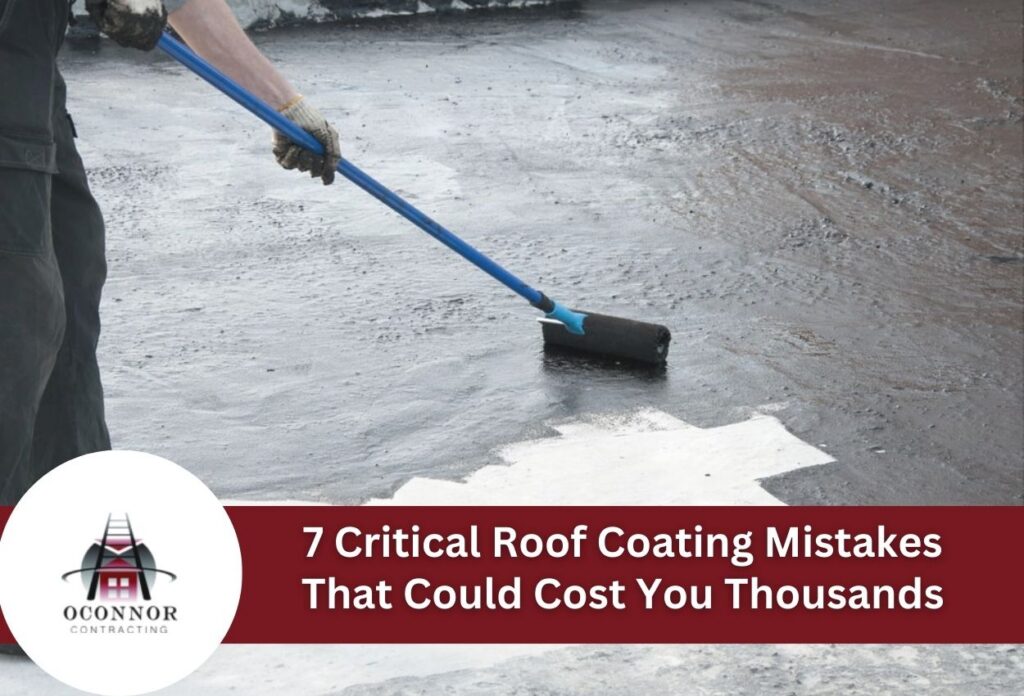
Roof coating application errors can transform an investment that’s meant to be protective into one that’s an expensive nightmare. Property owners and contractors who rush through the process or skip essential preparation steps often discover their mistakes when water damage appears or the coating fails prematurely. Understanding proper roof coating techniques before starting any project prevents expensive repairs and ensures maximum protection for your building.
Common roof coating problems stem from preparing the surface incorrectly, improper weather timing, and incorrect application methods. These roof coating failures create vulnerabilities that allow moisture in, reduce coating adhesion, and shorten the system’s lifespan significantly. Buffalo’s harsh weather conditions make proper application even more critical, as temperature fluctuations and precipitation can exploit any weaknesses in the coating system.
Mistake #1: Skipping Essential Surface Preparation
Surface preparation represents the foundation of successful roof coating application, yet many contractors rush through these critical roof coating preparation steps. Thoroughly cleaning debris, dirt, and existing coating residue before applying new materials ensures proper adhesion and prevents common roof coating problems from developing. Power washing, scraping loose material, and removing oil stains create the clean surface necessary for maximum coating performance.
Failing to repair cracks, holes, and damaged areas before coating the roof creates weak points that lead to premature system failure. These structural defects allow moisture underneath the coating, causing bubbling, peeling, and loss of adhesion. Proper roof coating techniques require addressing all issues on the surface first, including filling cracks with appropriate sealants and replacing deteriorated roofing materials.
Inadequate surface preparation ranks among the most serious mistakes to avoid when applying roof coatings because it undermines the entire system’s structural integrity. Even premium coating products cannot overcome poor material conditions, making thorough preparation essential for long-term success.
Mistake #2: Ignoring Weather Conditions During Application
Weather conditions directly impact a roof coating’s effectiveness, making timing an important factor, and one you don’t want to mess up on. High humidity levels prevent proper curing, while extreme temperatures cause application difficulties and adhesion problems. Applying coatings when precipitation is forecasted creates immediate failure as moisture interferes with the chemical bonding process essential for coating durability.
Temperature requirements typically range between 50 and 90 degrees Fahrenheit for optimal coating performance, with humidity levels below 85%. These roof coating preparation steps include monitoring weather forecasts for at least 24 hours after application to ensure it has enough time to set. Cold temperatures slow the curing process, while excessive heat causes rapid solvent evaporation that prevents proper film formation.
Proper roof coating techniques demand patience when weather conditions are unfavorable. Rushing its application during marginal weather increases the risk of failure that will show itself as poor adhesion, uneven coverage, and premature deterioration. Professional contractors understand that delaying application until ideal conditions exist prevents common roof coating problems and ensures maximum protection.
Mistake #3: Using Incorrect Application Thickness and Coverage
Application thickness significantly impacts coating performance, with both insufficient and excessive coverage creating serious roof coating application errors. Thin application reduces protective qualities by allowing moisture in through incomplete film coverage, while excessive thickness causes cracking, bubbling, and uneven curing that harms the entire system. Achieving manufacturer-specified thickness across the entire surface of the roof requires careful measurements and consistent application techniques.
Proper measurement techniques include using wet film thickness gauges during application and dry film thickness gauges after curing to verify coverage meets specifications. Most roof coatings require between 10 and 20 mils of dry film thickness, depending on the product and deck conditions.
Mistakes involved in incorrect roof coating thickness often result from inexperienced applicators who fail to maintain consistent spray patterns or roller pressure. Contractors who attempt to stretch material beyond the recommended coverage rates also cause problems, as the coating is too thin in areas.
Mistake #4: Choosing the Wrong Type of Coating for Your Roofing Material
| Coating Type | Ideal Material | Key Benefits | Surface Prep |
| Acrylic | • Granulated surfaces• Modified bitumen• Built-up roofing (BUR) systems | Provides excellent UV protection. | Ensure the surface is clean and sound. |
| Silicone | • Low-slope applications• EPDM membranes• TPO membranes | Offers superior resistance against ponding water | EPDM: Requires specific primers. TPO: Needs flame treatment or chemical etching for proper bonding. |
| Polyurethane | • High-traffic areas• Metal roofing systems | Delivers exceptional durability, flexibility, and impact resistance. | Metal Roofs: Must use coatings formulated to expand and contract with temperature changes without cracking. |
Mistake #5: Inadequate Mixing and Equipment Problems
Improperly mixed coatings create numerous errors that harm protective performance and lead to premature system failure. Many coating products require thorough mixing to achieve uniform consistency and proper chemical activation, yet contractors often skip this critical step or mix inadequately. Inconsistent coverage results from unmixed pigments and additives that settle during storage, creating areas with varying levels of protection across the roof’s surface.
Reduced durability occurs when coating components remain separated, preventing the chemical cross-linking necessary for long-term performance. These common roof coating problems show up as uneven color, texture variations, and premature deterioration in areas where improperly mixed materials were applied. Following the manufacturer’s mixing instructions precisely ensures uniform distribution of protective elements throughout the coating system.
Equipment-related errors significantly impact application quality and create mistakes to avoid when applying roof coatings. Worn brush bristles leave streaks and uneven coverage, while contaminated rollers transfer debris and foreign materials into the wet coating film. Incorrectly calibrated spray equipment produces inconsistent spray patterns, overspray waste, and thickness variations that compromise protection. Regular equipment maintenance and proper calibration prevent roof coating failure stemming from application tools rather than material defects, ensuring proper roof coating techniques achieve optimal results.
Mistake #6: Neglecting Proper Drying Time Between Coats
Rushing the recoating process before the first layer has fully cured ranks among the most damaging mistakes to avoid when applying roof coatings. When contractors apply continuous coats too quickly, the underlying material remains soft and chemically active, preventing proper adhesion between layers. This creates a weak lamination that separates under thermal stress and weather exposure, leading to widespread coating failure.
Trapped moisture within the coating system develops when fresh material seals uncured underlayers before complete solvent evaporation occurs. This moisture creates bubbles, blisters, and adhesion loss as it seeks escape routes through the coating film. These roof coating application errors cause premature deterioration and void manufacturer warranties because the system cannot perform as designed when installation procedures are violated.
Determining appropriate drying times requires understanding coating chemistry, weather conditions, and substrate temperatures. Most roof coatings need 4 to 6 hours between coats under ideal conditions, though high humidity, low temperatures, or thick application extend curing time significantly. Manufacturer specifications provide baseline timing, but experienced applicators verify readiness through touch tests and visual inspection. Proper roof coating techniques prioritize adequate curing over schedule pressure, preventing common roof coating problems that create expensive roof coating failure causes requiring complete system replacement.
Avoid Expensive Mistakes with Professional Roof Coatings from OConnor Contracting
Ensuring your roof coating is applied correctly can be the difference between a roof that lasts for decades and one that fails prematurely. The risks of ignoring essential preparation steps, choosing the wrong coating, or applying it under bad weather conditions can lead to severe consequences and hefty repair bills down the line. Don’t let common roof coating problems in the Buffalo area put your property at risk.
At OConnor Contracting, we specialize in applying high-quality roof coatings with precision and care. Our team is trained to avoid the typical mistakes that can compromise your roof’s integrity and performance. Whether you’re dealing with an EPDM, TPO, metal, or modified bitumen roof, we have the expertise to select and apply the ideal coating to enhance your roof’s durability and effectiveness.
Don’t take chances with your roof. Call us today at (716) 600-7663 to schedule a consultation and ensure your roof coating is applied right the first time!