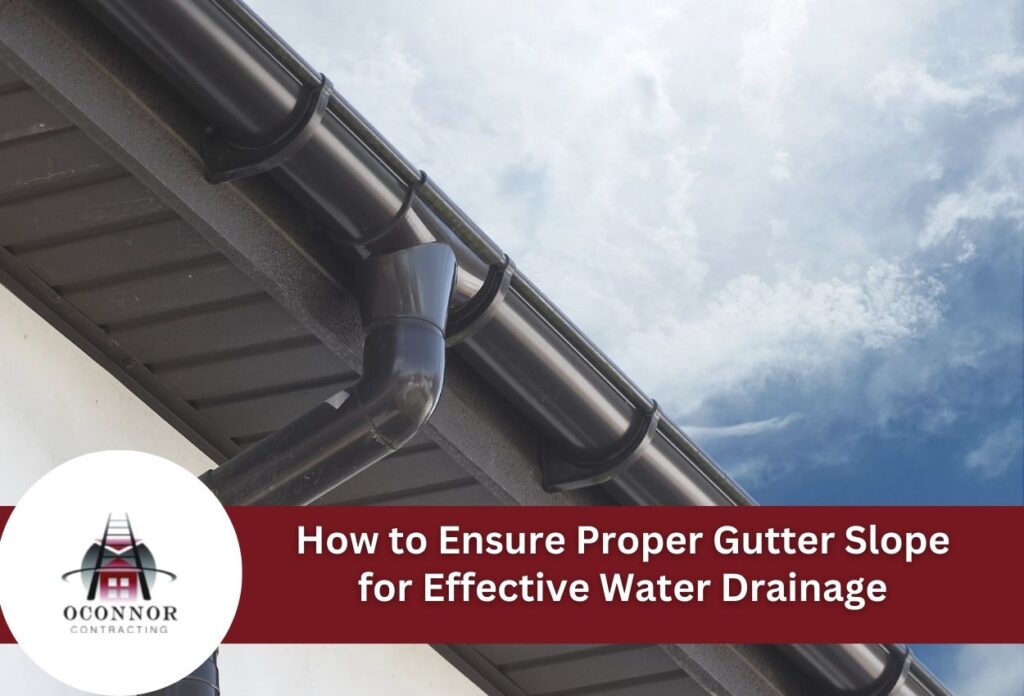
How to Ensure Proper Gutter Slope for Effective Water Drainage
Key Points:
- Proper gutter slope, ideally 1/4 inch per 10 feet, prevents expensive water damage by effectively draining water away from your home.
- Accurately measure your gutter’s current angle using a level and visual tests to identify any areas of incorrect pitch or pooling.
- Correct slope issues by repositioning hangers, adding downspouts, and maintaining gutters regularly to ensure lasting drainage performance.
Incorrect gutter pitch stands as one of the most overlooked yet destructive issues plaguing homeowners across the country. When gutters lack proper grading, water pools instead of flowing toward downspouts, creating a bunch of problems that extend far beyond simple drainage concerns. Foundation damage, basement flooding, and structural deterioration often trace back to an inadequate gutter installation slope that fails to direct water away from the home effectively.
The science behind effective gutter drainage systems revolves around achieving the best possible angle that balances water flow with curb appeal. Gutter pitch requirements dictate that every 10 feet of gutter length should drop between ¼ and ½ inch toward the nearest downspout. This seemingly minor adjustment determines whether rainwater flows smoothly away from the property or accumulates in low spots, eventually causing overflow and water damage. Understanding proper gutter angle principles empowers homeowners to identify existing drainage problems and take corrective action before expensive repairs become necessary.
Essential Gutter Pitch Requirements Every Homeowner Should Know
Understanding gutter pitch requirements begins with the industry standard quarter-inch per 10 feet rule, which provides the foundation for proper gutter drainage systems. This measurement ensures adequate water flow without creating an overly steep angle that compromises the gutter’s appearance or structural integrity. However, these specifications adapt based on roof size and local climate conditions, with larger rooflines requiring steeper slopes to handle increased water volume during heavy rainfall.
Different gutter materials have varying slope considerations to get the best performance. Aluminum gutters typically require less aggressive angles due to their smooth interior surfaces, while vinyl systems need slightly steeper gutter installation slope to compensate for potential sagging over time. Steel gutters fall between these requirements, offering durability that maintains proper gutter grading longer than other materials. The size of the gutter system also influences slope needs, with 6-inch gutters handling water flow more efficiently at gentler angles compared to standard 5-inch systems that require more precise pitch calculations to prevent gutter drainage problems.
The Process for Measuring Your Current Gutter Angle
Measuring existing gutter installation slope requires specific tools and systematic inspection techniques to accurately assess your current drainage system. Essential equipment includes a 4-foot level, measuring tape, chalk line, and ladder for safe roof access. Begin by placing the level against the gutter bottom at various points, checking for proper gutter grading by measuring the vertical distance between the level and gutter surface. Document these measurements every 10 feet along the gutter run to identify sections that deviate from standard gutter pitch requirements.
Identifying problem areas involves both visual inspection and practical water flow tests to pinpoint drainage inefficiencies. Look for standing water, rust stains, or debris accumulation that indicates improper slope angles. Pour water into different gutter sections and observe flow patterns toward downspouts, noting areas where water moves slowly or pools completely. These simple tests reveal whether your gutters meet proper gutter angle standards or require adjusting gutter angle to eliminate gutter drainage problems and restore effective water management throughout your roofing system.
Professional Installation Techniques for Achieving Perfect Gutter Slope
Professional gutter installation requires precise hanger placement strategies that maintain a consistent slope while providing adequate structural support. Hangers should be positioned every 2 feet along straight runs, with each mounting point carefully measured to preserve the quarter-inch drop per 10 feet standard. Advanced installers use string lines and laser levels to establish reference points before securing any hardware, ensuring proper gutter grading remains consistent throughout the entire system. The hanger type selection also impacts slope maintenance, with hidden hangers offering superior support for maintaining gutter pitch requirements over time compared to spike-and-ferrule systems.
Complex roof configurations present unique challenges that require specialized installation approaches to achieve the proper gutter angle. Corner installations require careful calculation to ensure water flows smoothly around bends without creating turbulence that leads to overflow. Long gutter runs exceeding 40 feet benefit from multiple downspouts positioned strategically to prevent excessive water accumulation in single sections. Multi-level homes need coordinated slope planning between different roof sections, with upper gutters directing water away from lower roof areas to prevent gutter drainage problems. These advanced techniques ensure the best pos performance regardless of architectural complexity, maintaining effective water management across diverse roofing configurations.
Adjusting Existing Gutters to Improve Drainage Performance
Repositioning gutter hangers offers a practical solution for correcting slope deficiencies without replacing entire gutter systems. Begin by identifying which hangers need adjustment through careful measurement of the existing gutter angle. Loosen hangers gradually, starting from the high end and working toward the downspouts to maintain structural support throughout the process. Remove hangers one at a time, reposition them at the correct height to achieve proper gutter grading, and secure them firmly to prevent future sagging. This methodical approach preserves the structural integrity of the roofline while restoring appropriate gutter pitch requirements.
Strategic downspout placement significantly impacts gutter drainage performance, particularly during intense storms. Consider adding downspouts when existing gutters exceed 30 feet in length or when water consistently overflows during moderate rainfall. Install additional drainage points at natural low spots along the roofline to reduce water accumulation and improve flow distribution. Modify existing downspout locations by extending underground drainage systems or redirecting water away from foundation areas. These adjustments get the most out of the water management system without requiring complete system replacement, addressing gutter drainage problems through targeted improvements that enhance overall performance during challenging weather conditions.
Common Gutter Slope Mistakes That Lead to Drainage Problems
Installation errors frequently create drainage nightmares that persist for years after initial gutter setup. Reverse slopes represent the most devastating mistake, where gutters actually tilt away from downspouts, causing water to flow backward and accumulate at the opposite end. Inconsistent angles throughout a single gutter run create multiple problem zones where water pools instead of maintaining a steady flow. These installation defects often result from rushed work or inexperienced contractors who fail to establish proper reference points before securing hangers, leading to gutter drainage problems that require extensive correction.
Maintenance neglect gradually undermines even properly installed gutter systems, creating slope disruptions that develop over time. Loose hangers allow gutter sections to sag, destroying the careful gutter pitch requirements established during installation. Heavy debris accumulation adds excessive weight that pulls gutters out of proper gutter grading alignment, while ice formation during winter can permanently deform sections. Foundation settling or roof movement also affects adjusting gutter angle calculations, requiring periodic reassessment to maintain the best drainage performance. These maintenance issues add up quickly, transforming minor slope variations into major water management failures that threaten home protection.
Maintaining the Best Gutter Performance Through Seasonal Care
Consistent maintenance schedules preserve proper gutter slope and prevent drainage deterioration that develops gradually over time. Monthly inspections should focus on the structural integrity of the hanger and debris removal, while seasonal assessments examine overall gutter pitch requirements following severe weather. After storms, check for loose or damaged hangers that allow sagging, disrupting the careful gutter installation slope established during initial setup. Clean gutters thoroughly at least twice yearly, removing leaves and debris that add excessive weight and strain mounting hardware, potentially compromising proper gutter grading.
Recognizing warning signs early prevents minor slope issues from becoming major drainage failures requiring extensive repairs. Standing water in gutter sections indicates insufficient angle, while water stains on exterior walls suggest overflow caused by inadequate gutter pitch requirements. Sagging gutter sections visible from ground level signal immediate need for hanger adjustment to restore proper gutter angle. Homeowners can handle basic cleaning and minor hanger tightening, but significant adjusting gutter angle work requires professional expertise. Contact experienced contractors when multiple sections show sagging, when water consistently overflows despite cleaning, or when gutter drainage problems persist after basic maintenance attempts.
Ensure the Best Water Drainage with OConnor Contracting
Protect your home from water damage by ensuring your gutters are properly sloped. Misaligned gutter slopes can lead to serious structural issues, foundation problems, and unnecessary repair costs. At OConnor Contracting, we specialize in professional gutter installation and adjustments tailored to meet the unique needs of your home and local climate conditions. Our experts follow the industry-standard quarter-inch per 10 feet rule, ensuring your gutter system effectively directs water away from your property.
Don’t wait for the next heavy storm to find out your gutters aren’t performing properly. Call us today at (716) 600-7663 to schedule a detailed inspection and adjustment service. Ensure your gutters are ready to handle whatever the Buffalo weather throws their way with OConnor Contracting.