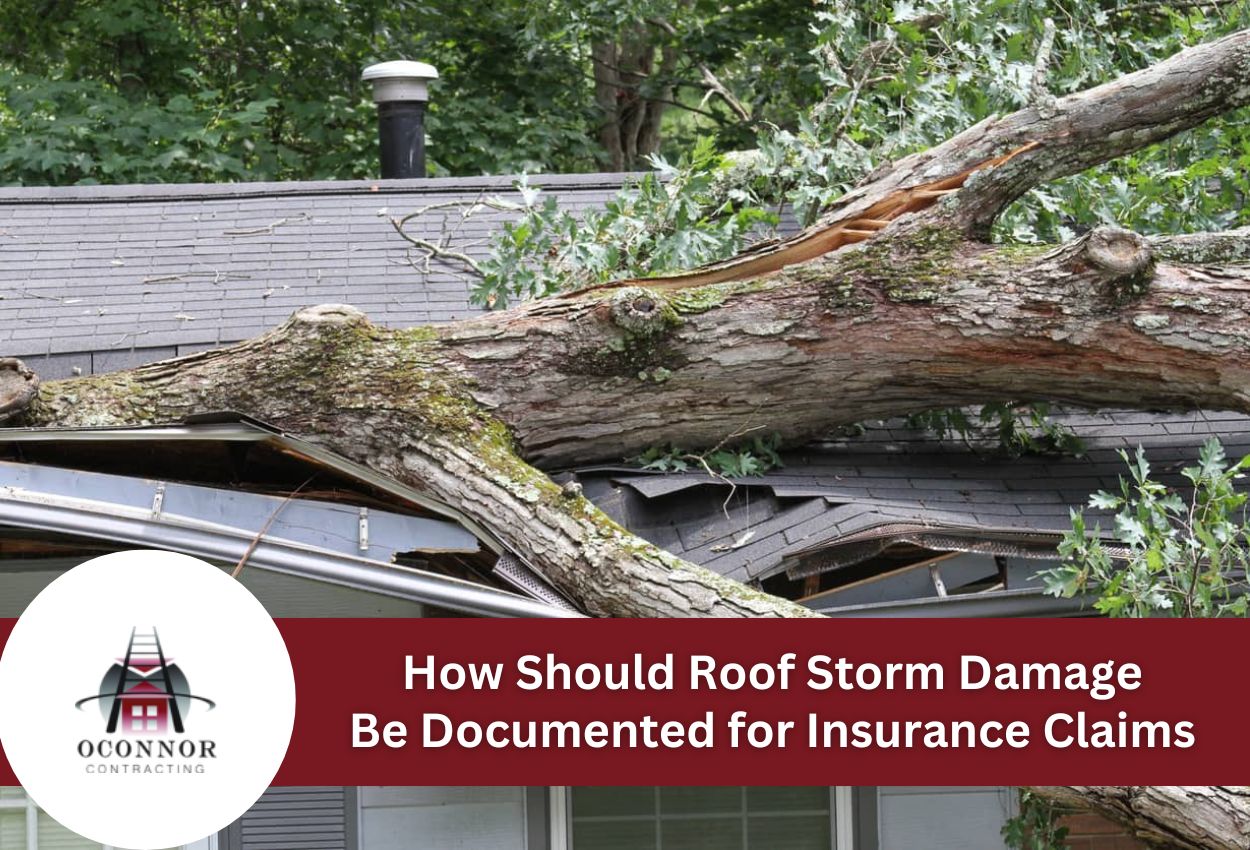
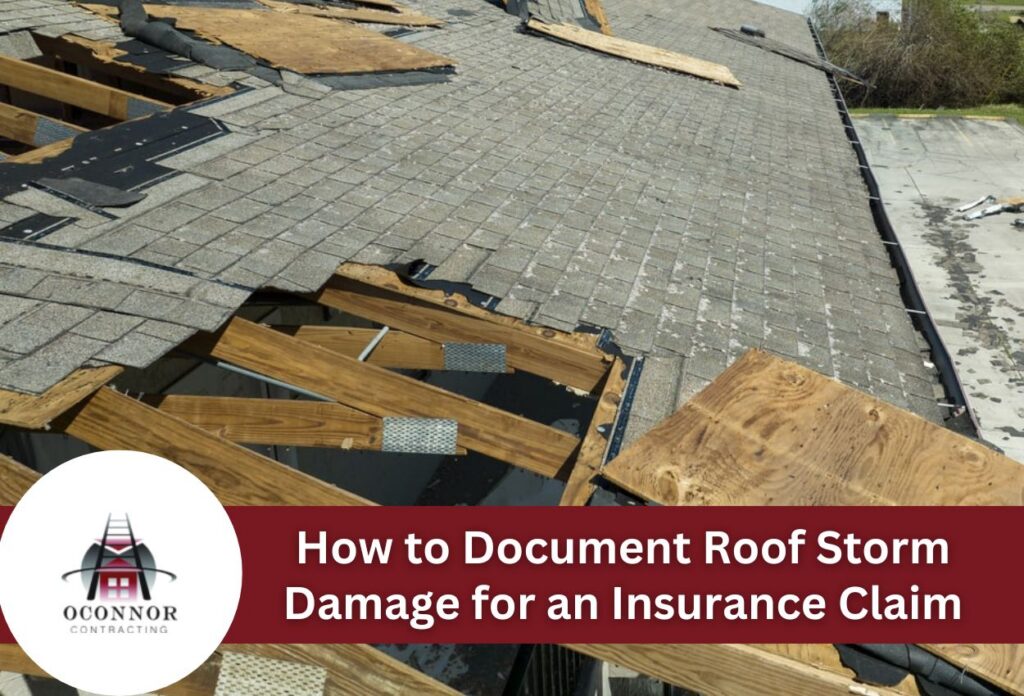

Buffalo averages 94 inches of snowfall annually, and lake-effect storms make roof damage one of the most common insurance events in Western New York, which means knowing how to document that damage correctly is something every local homeowner needs to understand before the next storm hits.
Most standard homeowners’ insurance policies require damage to be reported within 30 to 60 days of the storm. Missing that window can result in a denied claim. Incomplete documentation is the leading reason claims are delayed or underpaid, not the damage itself.
Whether damage came from heavy snow, ice dams, or high winds off Lake Erie, the right evidence package makes a real difference in what a homeowner recovers.
*Please note, price ranges listed in this article may not reflect the final cost of your project. Prices are subject to change based on various factors such as local labor rates, material quality, and more. All costs established in this article are rough estimates based on average industry rates.
What Should Be on Your Roof Storm Damage Insurance Claim Checklist Before You Do Anything Else?
Start your checklist within 24 to 72 hours of a storm; delays beyond that window can allow weather changes to alter or obscure evidence before an adjuster ever sees the roof.
- Photograph the exterior from ground level. Walk the full perimeter of the home and capture all four roof planes. Look for displaced shingles, damaged soffit, bent flashing, and debris patterns that point to wind direction.
- Check the attic immediately for moisture. Water stains, wet insulation, or frost buildup along the underside of the roof deck are early signs of leaks, even when the surface of the roof looks untouched from below.
- Document interior symptoms throughout the home. Ceiling stains, bubbling paint, and damp drywall are all visible signs to photograph when snow or ice makes the surface of the roof inaccessible.
- Save your weather records. Pull storm date, wind speed, and precipitation data from the National Weather Service Buffalo office at weather.gov/buf. Adjusters use this data to verify whether a qualifying storm occurred.
- Note any ice dam formation along eaves and gutters. In Buffalo, snow accumulation and ice dams can hide wind or hail damage for weeks. Photograph any ice buildup before it melts; it supports your timeline.
- Contact a licensed roofing contractor for a professional residential roof inspection. Schedule within the 48-to 72-hour window when possible. If snow cover prevents safe access, plan for spring or a 3- to 5-day dry period after conditions clear.
- Verify your contractor holds an active City of Buffalo contractor license. In Erie County, contractor licensing is handled at the municipal level; the City of Buffalo issues its own contractor license for home improvement and construction work, and this is the credential to confirm before signing any contract. Reports from unlicensed contractors may be rejected outright by insurance adjusters.
- Contact your insurance company to open a claim. Most policies require reporting within 30 to 60 days of the storm. Report early, even if the full inspection has not yet been completed.
OConnor Contracting holds the required state licensing and documents storm damage in Buffalo using photos, moisture testing, and written condition reports, giving homeowners the evidence package adjusters expect.
How Do You Photograph Roof Damage for an Insurance Claim the Right Way?
Most adjusters expect a minimum of 4 wide-angle shots (one per roof elevation), 8 to 12 close-up shots of individual damage points taken within 2 to 3 feet, and at least 2 reference photos showing the full roof slope with a measurement tool or marker for scale. That standard comes directly from industry documentation protocols used to support residential property claims. Falling short of that photo count is one of the fastest ways to have a claim delayed or underpaid.
Not all documentation methods carry the same weight with adjusters. The table below compares three common approaches across cost, adjuster acceptance, and performance on snow-covered or steep-pitch roofs, both of which are common conditions in Buffalo.
| Method | Average Cost | Adjuster Acceptance | Snow-Covered or Steep-Pitch Roofs |
|---|---|---|---|
| Smartphone photos only | $0 | Moderate | Limited |
| Drone photography | $150 to $300 | High | High |
| Contractor inspection with photo report | Included in the inspection fee of $200 to $500 | Highest | High |
Every photo should be geotagged and timestamped. Most smartphones do this automatically, but confirm the setting is active before shooting. Once photos are captured, cross-reference the image timestamps against the official storm date from NOAA or NWS Buffalo records to build a clear cause-and-effect link between the storm and the observed damage. OConnor Contracting provides photo reports formatted to meet the adjuster’s expectations, which takes the guesswork out of what to submit.
What Written Evidence Do You Need for a Roof Damage Insurance Claim Beyond Photos?
Five written documents consistently determine whether an insurance claim moves forward or stalls: a signed contractor damage assessment report, an itemized repair or replacement estimate, an official storm report, a completed roof damage documentation form, and a maintenance history showing the roof was reasonably cared for.
- Signed contractor damage assessment on company letterhead. This report must come from a licensed contractor and describe specific damage points, affected materials, and the probable cause. Reports without a company name, license number, or signature carry little weight with adjusters.
- Itemized repair or replacement estimate. Line-item costs for labor, materials, and disposal must appear separately. A single lump-sum number is not enough; adjusters compare your estimate against their own line-by-line calculations.
- Official storm report from NWS Buffalo or a third-party weather verification service. This document ties your damage directly to a qualifying storm. Pull it from the National Weather Service Buffalo office at weather.gov/buf and attach it to every claim submission.
- Completed roof damage documentation form or loss description. Use a roof damage documentation template to organize all evidence into a single file before the adjuster’s visit. Include a damage log with dates, observations, and any emergency tarping or temporary repair receipts. Mitigation costs are typically reimbursable under most NY homeowner policies.
- Maintenance history shows reasonable upkeep. Claims on roofs with deferred maintenance are frequently disputed or reduced. Receipts, contractor invoices, or inspection records from the past several years all support your case.
Buffalo homeowners with roofs aged 20 to 30 years, the dominant range across the region’s mid-century housing stock, face an additional risk: insurers may apply Actual Cash Value (ACV) depreciation instead of Replacement Cost Value (RCV), reducing payouts by 30% to 60% depending on the roof’s remaining useful life. Confirm your policy type before filing so you know exactly what recovery amount to expect.
What Does Roof Storm Damage Documentation and Repair Actually Cost in Buffalo?
Thorough documentation costs as little as $525 out of pocket, but can increase a claim payout by $2,500 to $6,000 on a mid-size Buffalo home, making it one of the highest-return steps a homeowner can take before an adjuster arrives.
| Cost Item | Buffalo-Area Cost Range | Reimbursable Under Standard NY Homeowner Policy? |
|---|---|---|
| Professional roof inspection | $200 to $500 | Partial |
| Drone damage assessment | $150 to $300 | Partial |
| Weather verification report (third-party service) | $75 to $150 | No |
| Public adjuster fee (if hired) | 10% to 15% of the claim settlement | No |
| Emergency tarping / temporary repair | $300 to $800 | Yes |
A full asphalt shingle roof replacement in Buffalo ranges from $8,500 to $18,000, depending on roof size, pitch, and material grade. The difference between a depreciated ACV settlement and a full RCV payout on a mid-size residential roof can run $2,500 to $6,000, often far more than the total cost of documentation. Emergency tarping is the one line item most likely to be reimbursed in full, so save every receipt from temporary repairs and submit them with the initial claim. OConnor Contracting provides itemized inspection reports and documented temporary repair records formatted to support that reimbursement request.
How Do You Know Whether to File a Roof Damage Claim or Pay Out of Pocket?
File a claim only when the estimated repair cost exceeds your deductible by at least $1,000 to $1,500; anything less, and out-of-pocket payment is almost always the smarter financial move. Use this 5-point checklist to decide.
- Compare the repair cost to your deductible. Get a contractor estimate first. If the damage totals less than $1,000 to $1,500 above your deductible, paying out of pocket protects your premium and claim history.
- Check how many claims you’ve filed in the past 3 years. Filing 2 or more claims within a 3-year window raises your premium risk and can trigger non-renewal by your insurer even if both claims were legitimate.
- Know your policy type and your roof’s age. ACV (Actual Cash Value) policies on roofs over 20 years old may pay out very little after depreciation is applied. Confirm whether your policy is ACV or RCV (Replacement Cost Value) before submitting anything.
- Identify the cause of damage carefully. Ice dam damage is frequently excluded or disputed under standard homeowner policies in New York. Do not assume it is covered without reading your policy language first.
- Only file if your documentation is solid. Filing without photos, a signed contractor report, and a storm record raises your denial risk. Incomplete claims are rejected far more often than complete ones.
In New York State, insurers must acknowledge a claim within 15 business days of receipt. Once a complete proof of loss is submitted, payment on undisputed claims is required within 15 additional business days, but New York law sets no hard deadline for a final coverage decision on disputed claims, so submitting complete documentation upfront remains the most effective way to accelerate resolution. Homeowners who submit complete documentation upfront tend to receive decisions at the faster end of that window. The formal filing sequence is straightforward: document damage first, get a contractor estimate, submit written notice to your insurer, schedule the adjuster visit, then compare the adjuster report against your contractor report and negotiate from there.
Ready to Document Your Roof Damage and File Your Claim? Here’s How We Can Help.
Most insurers require written notice within 30 to 60 days of a storm, and Buffalo’s lake-effect winters can hide damage long enough to push homeowners past that window before they realize it. A missing photo, an unsigned contractor report, or a delayed filing can reduce or eliminate a payout that should have covered the full repair.
OConnor Contracting offers free storm damage inspections for Buffalo-area homeowners. Each inspection includes a written damage report formatted for adjuster review, the same documentation that supports RCV versus ACV decisions and keeps claims from stalling. Learn more about our insurance claim support services.