Why Winter Commercial Roof Replacement Is More Achievable Than You Think
Key Points:
- Commercial winter roof replacement is achievable and often necessary, utilizing modern techniques and materials for urgent roofing needs.
- Advanced materials like TPO, EPDM, and modified bitumen, along with strategic planning, ensure successful cold-weather installations.
- Selecting qualified contractors with winter experience ensures proper installation, long-term performance, and critical safety during projects.
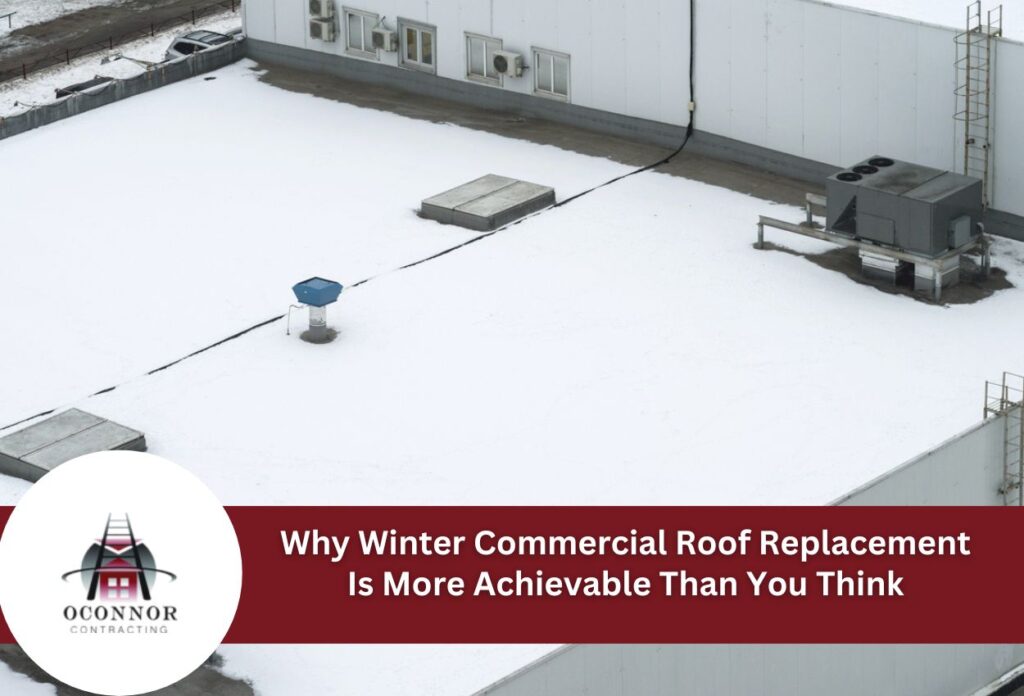
Many property managers and building owners believe that commercial roof replacement must wait until spring or summer, but this common misconception can leave buildings vulnerable to extensive damage and safety risks. Modern roofing techniques and advanced winter-rated materials have transformed cold-weather installations, making commercial winter roof replacement a viable solution for urgent roofing needs.
Several situations demand immediate action regardless of the season. Severe weather damage, structural compromises, and failing roofing systems cannot wait months for ideal conditions. Emergency commercial roof replacement becomes necessary when building integrity is at stake, tenant safety is compromised, or when delaying repairs would result in catastrophic interior damage.
Winter weather roofing contractors now utilize specialized equipment, modified installation methods, and commercial flat roof winter installation techniques that ensure quality results even in challenging conditions. Temperature-controlled materials and protective work environments allow professional teams to complete projects safely and effectively during winter, dispelling the myth that commercial roof replacement in winter is impossible or inadvisable.
Critical Signs Your Commercial Building Needs Immediate Roof Replacement
Certain roofing problems cannot wait for spring weather and require emergency commercial roof replacement regardless of the temperature. Structural damage presents the most serious concern, including sagging roof sections, compromised support beams, or visible deck deterioration that threatens building integrity. These conditions pose immediate safety risks to occupants and can lead to catastrophic failure if not addressed quickly.
Persistent leaks that continue despite multiple repair attempts indicate membrane failure requiring commercial winter roof replacement. When leaks occur through multiple points or affect electrical systems, heating equipment, or valuable inventory, temporary fixes become insufficient protection. Commercial flat roof winter installation becomes the only viable solution to prevent escalating damage costs.
Membrane deterioration showing extensive cracking, pooling water, or complete system failure cannot be effectively patched during the winter. Winter roofing materials for commercial buildings require replacement and offer superior protection compared to temporary repairs that may fail under heavy snow or ice formation. Professional assessment determines when full replacement becomes more cost-effective than continued emergency repairs throughout the winter season.
Weather Factors That Impact Winter Roofing Projects
Temperature fluctuations create unique challenges for commercial winter roof replacement projects, affecting both material performance and installation schedules. Extreme cold can make roofing membranes brittle and difficult to handle, while rapid temperature changes cause materials to expand and contract unpredictably. Winter weather roofing contractors must monitor daily temperature ranges to determine optimal installation windows and select appropriate winter roofing materials commercial buildings to ensure lasting performance.
Snow and precipitation significantly influence the timeline of the project and the safety protocols during commercial roof replacement in winter. Heavy snow accumulation requires removal before work can begin, while ice formation creates hazardous working conditions that may halt progress. Professional contractors plan commercial flat roof winter installation around weather forecasts, utilizing specialized equipment to maintain safe work environments and protect materials from moisture exposure.
Experienced winter roofing teams identify narrow weather windows between storms when conditions allow productive work. These periods of time typically occur during clear, dry days with minimal wind and stable temperatures. Emergency commercial roof replacement projects require flexible scheduling and rapid mobilization capabilities to maximize these favorable conditions and complete installations before the next weather system arrives.
Best Roofing Materials for Cold-Weather Commercial Installation
TPO membrane systems demonstrate excellent cold-weather performance during commercial winter roof replacement projects, maintaining flexibility and workability at lower temperatures compared to traditional materials. The thermoplastic composition allows TPO to expand and contract without cracking, while heat-welded seams create watertight bonds even when installed during winter conditions. Long-term durability remains consistent regardless of installation season, making TPO an ideal choice for emergency commercial roof replacement situations.
EPDM rubber membranes offer superior cold-temperature installation characteristics for winter roofing materials that commercial buildings require during urgent replacements. The synthetic rubber material remains pliable in freezing conditions and uses adhesive bonding methods that work effectively in cold weather. Modified bitumen systems provide excellent winter installation options through torch-applied or cold-process adhesive methods, creating reliable waterproofing barriers for commercial flat roof winter installation projects.
Insulation selection becomes critical during winter weather roofing contractor projects, with rigid foam boards and polyisocyanurate systems offering optimal thermal performance and moisture resistance. Vapor barrier placement requires careful attention in cold climates to prevent issues with condensation that compromise a home’s energy efficiency. Professional winter roofing materials commercial buildings installation ensures proper insulation integration that supports long-term building performance while addressing immediate waterproofing needs during commercial roof replacement in winter conditions.
Essential Preparation Steps Before Winter Roof Replacement Begins
Comprehensive building protection protocols form the foundation of successful commercial winter roof replacement projects. Interior safeguarding measures include covering equipment, furniture, and inventory with waterproof materials while establishing protective barriers around sensitive areas such as electrical panels and HVAC systems. Professional winter weather roofing contractors coordinate equipment staging in heated areas to prevent material degradation and ensure tools remain operational in cold conditions.
Maintaining business operations during emergency commercial roof replacement requires careful planning and clear communication with tenants or employees. Temporary heating solutions and noise management strategies help minimize disruptions while work progresses overhead. Commercial flat roof winter installation teams establish secure material storage areas and create protected work zones that allow continued building access through designated routes.
Winter project timelines extend beyond typical commercial roof replacement in winter schedules due to shorter daylight hours and potential weather delays. Contractors factor in additional time for snow removal, material warming, and extended curing periods that winter roofing materials in commercial buildings require for optimal performance. Effective crew coordination involves backup scheduling and rapid response capabilities to capitalize on favorable weather windows while ensuring project completion before severe weather systems arrive.
Selecting Qualified Contractors for Winter Commercial Roofing
Choosing the right contractor for commercial winter roof replacement requires evaluating specific qualifications that ensure successful cold-weather installations. Essential credentials include documented experience with winter roofing materials commercial buildings require, specialized cold-weather equipment, and comprehensive safety certifications for working in hazardous winter conditions. Qualified contractors maintain heated material storage facilities, possess temperature monitoring equipment, and have proven track records in completing commercial flat roof winter installation projects during challenging weather periods.
Professional winter weather roofing contractors should provide detailed explanations of their cold weather installation procedures, material handling protocols, and project management strategies during initial consultations. Key questions include their approach to weather monitoring, crew scheduling flexibility, and specific experience with emergency commercial roof replacements. Contractors must address material warranty coverage during winter installations and outline contingency plans for unexpected weather disruptions that could affect the timeline of the project.
Proper license verification, insurance coverage, and manufacturer certifications become especially important for commercial roof replacement in winter projects. Established contractors provide references from recent winter installations and demonstrate a comprehensive understanding of building code requirements specific to cold-climate roofing systems. Their project management approach should include clear communication protocols and realistic timeline expectations that account for winter weather variables while maintaining quality installation standards throughout the replacement process.
Long-Term Benefits and Performance of Winter-Installed Commercial Roofs
Commercial roofing systems installed during the winter demonstrate comparable long-term performance to warm-weather installations when proper techniques and materials are utilized. Studies indicate that winter-installed commercial roofs achieve identical lifespan expectations, typically ranging from 15 to 30 years depending on membrane type and maintenance protocols. The key factor determining longevity remains installation quality rather than seasonal timing, making commercial winter roof replacement a reliable solution for immediate roofing needs.
Winter roofing materials in commercial buildings often undergo enhanced quality control measures during cold-weather installation, as contractors implement additional testing protocols and extended curing times. Emergency commercial roof replacement systems installed during winter benefit from careful material selection specifically designed for cold-weather performance, ensuring optimal durability throughout all seasonal temperature variations.
Regular maintenance scheduling becomes essential for maximizing the performance of any commercial roof replacement in winter installation. Inspections performed twice a year should focus on membrane expansion joints, drainage system functionality, and the structural integrity of the sealant around gaps. Winter weather roofing contractors typically recommend increased monitoring during the first two years following commercial flat roof winter installation to verify proper system performance and address any minor adjustments needed as materials fully acclimate to the building structure and local climate conditions.
Ensure Your Commercial Property’s Safety with Winter Roof Replacement
Don’t let the cold weather stop you from addressing urgent roofing needs. OConnor Contracting specializes in commercial winter roof replacement, ensuring your business remains protected throughout the harshest months. Waiting until spring is not always feasible, especially when dealing with potential safety hazards or severe structural damage that winter weather can make worse. Immediate action can prevent further complications, including significant interior damage and increased repair costs.
Winter conditions in Buffalo require experienced handling, and our team is equipped with the right tools and materials to perform high-quality installations, even in colder temperatures. From selecting the best winter roofing materials for commercial buildings to executing efficient installation techniques, we ensure minimal disruption to your operations.
If you notice signs of wear or damage on your commercial roof, don’t hesitate to contact us. Call OConnor Contracting now at (716) 600-7663 to schedule a consultation and secure your roof against winter weather.