Don’t wait – secure your home with Buffalo’s leading roofers today!
 716-600-ROOF
×
716-600-ROOF
×
106 Hubbardston Pl, Buffalo NY
Open 24 Hours
Orchard Park commercial properties take a serious beating from the weather. Sitting close to Lake Erie means lake-effect snow hits hard here, and annual accumulations regularly reach around 80 inches. Add in the temperature swings between cold winters and warm summers, and flat or low-slope roofs, which are common on the warehouses, retail centers, and office parks throughout the area, are constantly expanding, contracting, and absorbing moisture. Over time, that kind of stress works against seams, flashing, and membrane surfaces until leaks develop and the underlying structure starts to pay the price.
A lot of the commercial buildings in this area were constructed during the development booms of the 1970s through the 1990s. Many of those original roofs are either at the end of their service life or already past it. When an aging built-up or metal roof starts failing, the damage rarely stays contained to the roof deck. Water finds its way into insulation, framing, and interior spaces, which creates bigger problems for tenants and business operations.
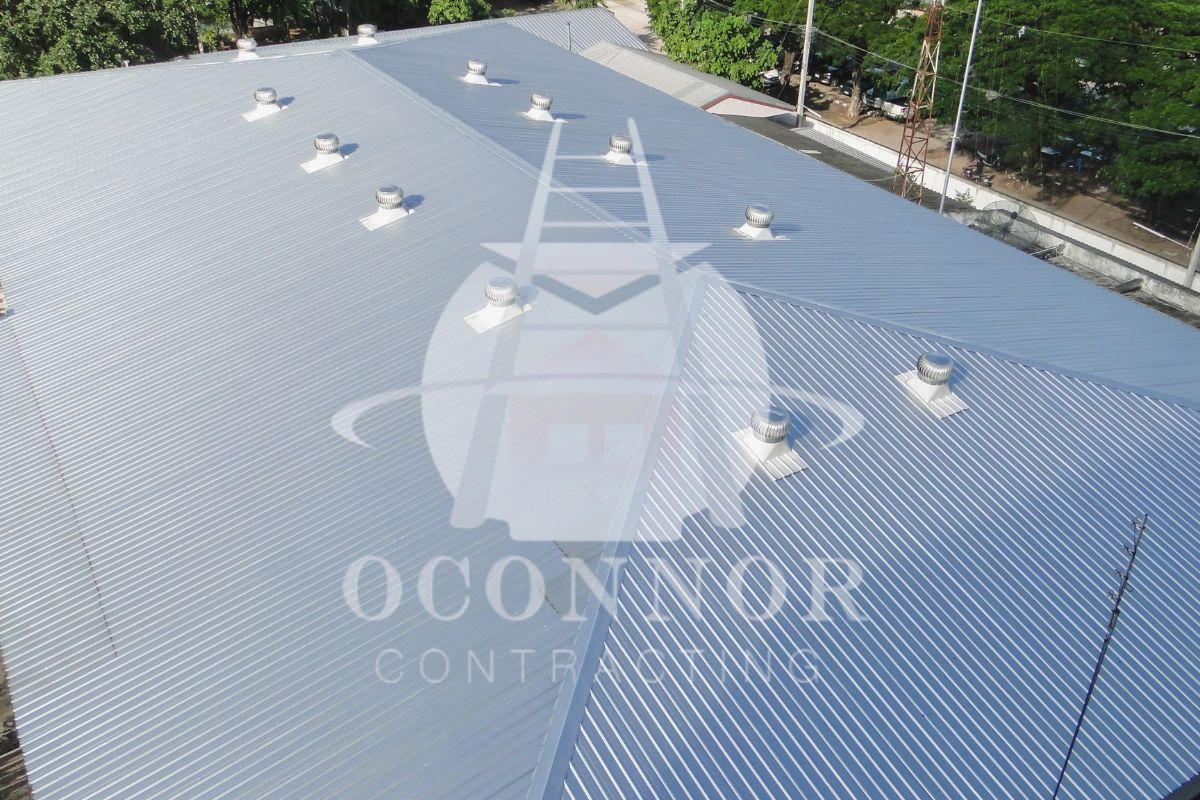
OConnor Contracting works with building owners and property managers across Orchard Park to replace aging commercial roofs with systems built for this specific climate. The work is done to meet local code requirements for wind and snow resistance, and replacements are typically scheduled from late spring through early fall to keep the project on track and avoid weather-related delays.
If you have not gone through a commercial roof replacement before, it is normal for the process to feel unclear. Here is how OConnor Contracting handles each phase so you know what to expect.
Choosing the right roofing system for your commercial property comes down to your building type, roof slope, and how the system will hold up against the weather conditions specific to this area. The table below breaks down the most common commercial roofing systems and how they perform for properties in Orchard Park.
| Roofing System | Best Suited For | Key Considerations for Orchard Park |
|---|---|---|
| TPO Membrane | Flat and low-slope commercial roofs | Handles temperature changes well: heat-welded seams resist moisture and standing water from heavy snow melt |
| EPDM Rubber Membrane | Flat roofs on warehouses and office buildings | Flexible in cold temperatures: performs reliably through repeated temperature changes without cracking |
| Modified Bitumen | Low-slope roofs on retail and industrial buildings | Layered construction adds durability under heavy snow accumulation and water pressure |
| Metal Roofing | Sloped commercial roofs and large facilities | Sheds snow efficiently: long service life with minimal maintenance in high-precipitation conditions |
Each system has trade-offs worth understanding before you commit. A building with a true flat deck has different needs than a facility with even a slight pitch, and the right match affects how the roof performs over the long term. OConnor Contracting will help you weigh the options based on your specific building before any work is scaled or quoted.
Before any new roofing system goes down, the old material comes off, and the deck underneath gets a thorough cleaning. Damaged roof decking is repaired or replaced at this stage, because installing over a compromised roof deck shortens the life of your new roof, regardless of how good the new material is.
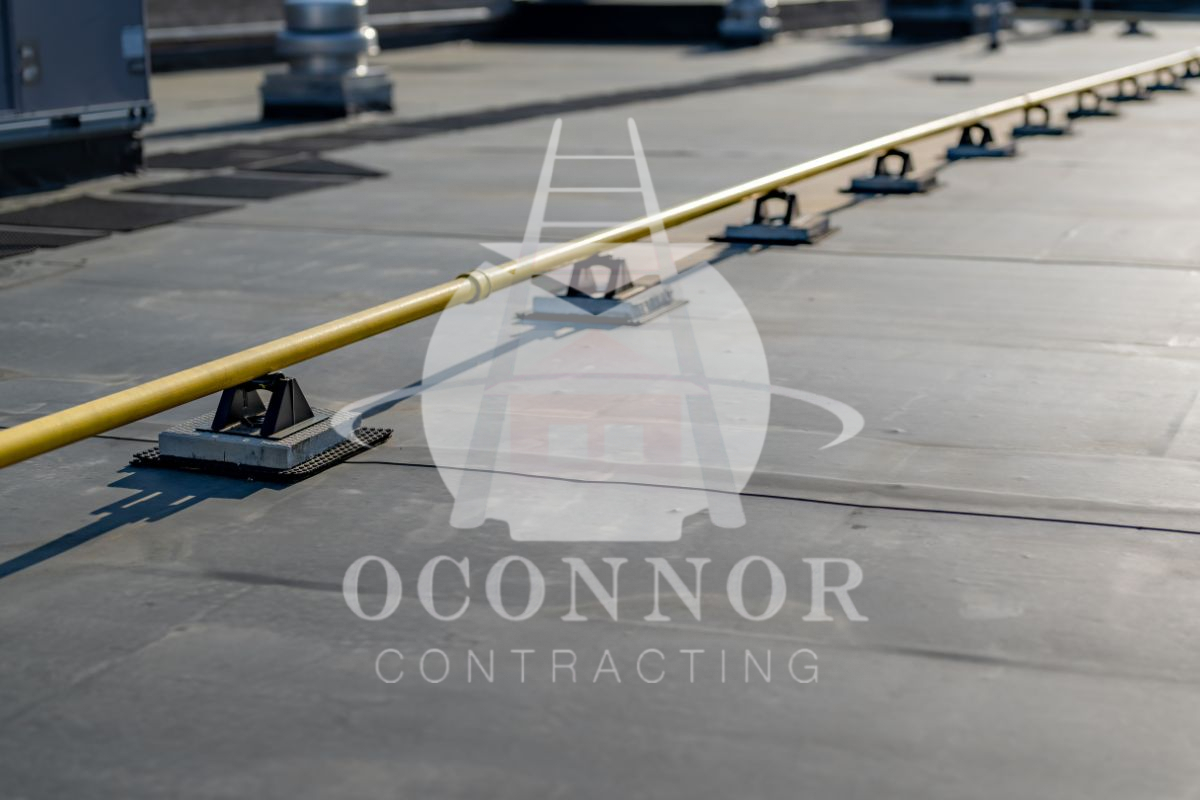
Every point where the roof meets a wall, curb, HVAC unit, drain, or vent gets new flashing as part of the replacement. These transition points are where most leaks originate on commercial roofs, and cutting corners here means problems show up well before the rest of the system wears out.
Replacement work is the right time to bring your roof's insulation up to current code requirements for energy performance and moisture control. Proper insulation also adds a layer of protection between the deck and the membrane, which matters on flat roofs that deal with standing water and temperature changes throughout the year.
Flat and low-slope roofs depend on drains, scuppers, and gutters to move water off the surface before it has a chance to pool and add weight. With around 80 inches of annual snowfall in Orchard Park, making sure drainage is functioning correctly during a replacement protects the new system from the start and keeps water from working back toward the building interior.
Western New York winters are hard on commercial roofs, and buildings that have been carrying aging systems through years of heavy snow, snowmelt, and shifting temperatures are often closer to the edge than they appear from the inside. A replacement done at the right time protects your property, keeps your tenants and operations from dealing with unexpected disruptions, and reduces the long-term costs that come with patching a system that's past its useful life. Timing the project for the warmer months also means the work moves forward without weather delays slowing things down.
If your facility's roof is aging or showing signs of wear, getting a professional inspection is a straightforward next step. OConnor Contracting works with building owners and property managers throughout Orchard Park to take an honest look at what's there and give you a clear picture of where things stand. Reach out when you're ready, and we'll help you figure out the right path forward.
Got questions about your roof? We’ve got answers. From maintenance tips to insurance claims and repair timelines, our FAQ section covers the most common concerns homeowners have. Get informed and make confident decisions about protecting your home.
It does, and it's one of the first things worth discussing before settling on a system. Properties in Orchard Park can see snow accumulate rapidly over short periods due to lake-effect patterns off Lake Erie, which puts more repeated stress on seams, membranes, and drainage points than gradual accumulation does. Systems with heat-welded seams or layered construction tend to hold up better under that kind of loading, and the right choice also depends on your roof's slope and how well your current drainage can keep up.
This is something building owners don't always think to ask, but it matters for both the project timeline and your operations. Rooftop equipment gets temporarily supported and protected during the tear-off and installation process so it stays functional and undamaged. Any curbs or supports for that equipment are inspected and rebuilt as needed, and all gaps get properly flashed into the new system before the project closes out.
In many cases, yes. For larger facilities or properties with tenants who can't absorb a significant disruption, the work can often be staged so only one section of the roof is open at a time. This takes more coordination upfront and may affect the overall project timeline, but it keeps your building protected and your occupants working throughout the process. It's worth raising this early so the scale and schedule can be built around your specific situation.
Don’t wait – secure your home with Buffalo’s leading roofers today!

Affordable
Pricing

Locally Owned & Operated

Quality Roofing Since 2014