Don’t wait – secure your home with Buffalo’s leading roofers today!
 716-600-ROOF
×
716-600-ROOF
×
106 Hubbardston Pl, Buffalo NY
Open 24 Hours
Western New York puts roofs through a serious workout every year. Between lake-effect snowfall that can pile up nearly 95 inches in a single season, summer storms that bring hail and high winds, and the repeated temperature changes that come with hard winters and humid summers, roofing materials take a beating here that most other regions never see. Asphalt shingles in this area typically last 20 to 25 years before the wear becomes too widespread to patch. Older homes with poor attic insulation and ventilation face even shorter timelines, because heat escaping through the roof deck creates ice dams that force water underneath the shingles and into the structure below.
When a roof reaches that point, repairs stop making sense. Water stains on ceilings, curling shingles, recurring leaks after snowmelt, or a roof that is simply past its prime are all signs that a full replacement is the right call. New York State code also limits asphalt roofs to two layers, which means most replacement projects require a complete tear-off before new materials go down. That is not a detail every contractor mentions upfront, but it matters for how the job gets done and how long the new roof holds up.
OConnor Contracting works with homeowners across the Western New York area on residential roof replacements built to handle exactly these conditions. The focus is always on doing the job right the first time, with proper material selection, code-compliant installation, and the kind of workmanship that holds up through whatever the next winter brings.
A roof replacement requires careful planning, and understanding each stage helps you stay informed throughout the project. OConnor Contracting evaluates the condition of your existing roof, explains the available options, and completes the installation with attention to the details that affect long-term performance.
Choosing the right time to replace your roof and selecting materials that can handle Western New York winters are two decisions that directly affect how long your new roof lasts. Getting either one wrong can mean problems sooner than you expect.
| Factor | What It Means for Your Roof | Newstead, NY Consideration |
|---|---|---|
| Best Replacement Window | Late spring through early fall offers stable conditions for proper material sealing | Scheduling before heavy snow arrives protects the investment in your property |
| Snow Weight Engineering | Roof structure must be designed to handle peak storm weights well above code minimums | Western NY storms can push weights far beyond standard design requirements |
| Attic Ventilation | Proper airflow reduces heat buildup that leads to ice dams and premature shingle wear | Code requires a 1:150 ventilation ratio; older homes often fall short of this |
| Insulation Requirements | Adequate insulation keeps heat from escaping through the roof deck and forming ice dams | New York State code calls for a minimum R-49 rating in this region |
When comparing bids for your replacement, watch for proposals that seem unusually low. Materials that cut corners on thickness or durability rarely hold up under the weight and moisture that come with a hard Western New York winter, and a roof that fails early costs far more in the long run than getting it right from the start.
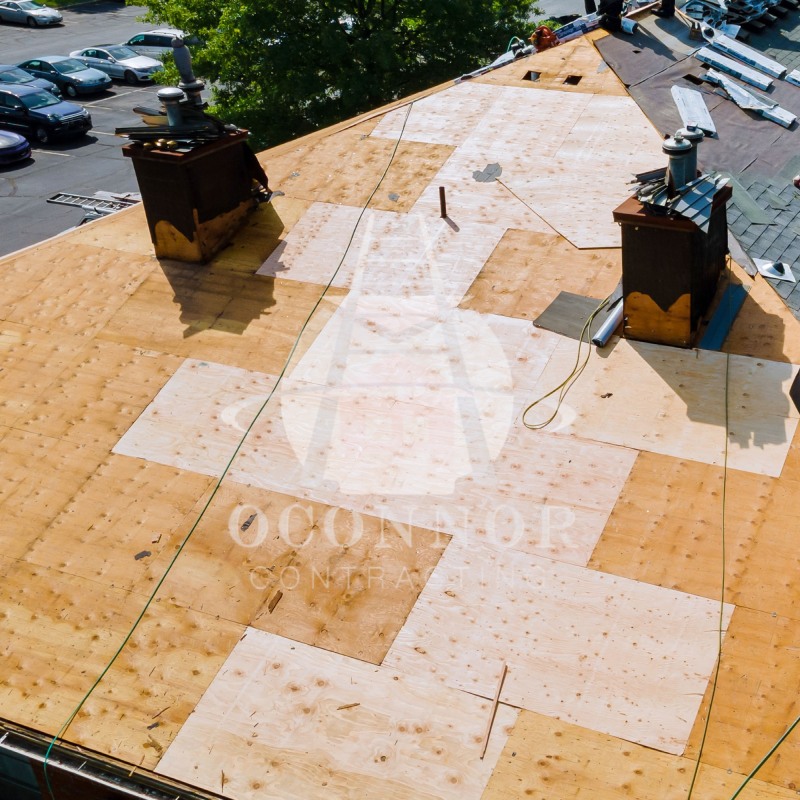
Every replacement starts with a complete removal of the old roofing material down to the bare roof deck, which New York State code requires before new shingles can be installed. This also gives us direct access to the roof decking so any soft spots, rot, or structural damage can be repaired before the new roof goes on.
A self-adhering ice and water shield membrane is applied along all eaves, extending at least 24 inches past the interior wall line to protect against water backup from ice dams. In a region where ice dams form regularly, this layer is one of the most important parts of a long-lasting roof replacement.
Old or deteriorating flashing around chimneys, vents, skylights, and roof valleys is replaced as part of the installation, not just resealed over. Worn flashing is one of the most common sources of leaks in Western New York homes, especially after repeated temperature changes work the metal loose over the years.
Before the job is complete, we verify that ridge venting and intake ventilation meet the code-required 1:150 ratio for your attic space. Proper airflow protects your new shingles from the inside out, reducing heat buildup in summer and the risk of ice dam formation every winter.
Western New York winters are hard on every part of a house, and the roof takes the worst of it year after year. A new roof installed correctly gives your home real protection against the snow, ice, and repeated temperature changes that wear materials down in this region. It also removes the guesswork of wondering whether another season of patches will hold, and it protects the investment in your property for the years ahead. If your roof is getting close to the end of its expected lifespan, or already showing signs of wear, getting ahead of the problem before winter arrives is always the better path.
OConnor Contracting serves homeowners in Newstead and the surrounding area, and we are ready to take a look and walk you through your options honestly, with no pressure to move forward before you feel confident. Reach out whenever you are ready, and we will help you figure out the right next step for your home.
Got questions about your roof? We’ve got answers. From maintenance tips to insurance claims and repair timelines, our FAQ section covers the most common concerns homeowners have. Get informed and make confident decisions about protecting your home.
It does, more than most homeowners expect. In Western New York, poor attic airflow allows heat to build up along the roof deck, which accelerates shingle wear from the underside and sets the stage for ice dams each winter. Getting ventilation right before the new shingles go down is not optional work, it is part of what separates a roof that lasts 25 years from one that starts failing at 15.
Any damaged roof decking gets repaired or replaced before the new roof goes on. Because the roof deck is fully exposed once the old material comes off, that is the best opportunity to catch problems that would otherwise stay hidden under the new shingles. Addressing roof deck damage at that stage keeps the repair cost manageable and protects the structural integrity of the new installation.
Age alone does not always drive the decision. In this region, a roof that has been hit with repeated ice dam damage, has failing flashing at multiple points, or shows widespread shingle deterioration may not be worth patching even at that age. If repair costs are adding up quickly or the underlying roof deck has taken water damage, a full replacement often makes more financial sense than continuing to chase leaks season after season.
Don’t wait – secure your home with Buffalo’s leading roofers today!

Affordable
Pricing

Locally Owned & Operated

Quality Roofing Since 2014