Don’t wait – secure your home with Buffalo’s leading roofers today!
 716-600-ROOF
×
716-600-ROOF
×
106 Hubbardston Pl, Buffalo NY
Open 24 Hours
Commercial roofs in Lancaster take a serious beating year after year. With roughly 90 inches of snowfall in a typical winter, flat roofs on warehouses, offices, and retail buildings carry heavy snow accumulation for months at a time. That weight, combined with rapid temperature changes in spring that cause membranes to expand and contract, leads to blistering, seam failures, and eventually leaks that can disrupt your tenants and shut down operations. Lake-effect weather rolling in from Buffalo makes conditions here more intense than in many parts of Western New York, and older commercial buildings in the area are especially vulnerable when their roofing systems are already past their useful life.
A proper commercial roof replacement addresses those vulnerabilities directly. The right membrane system, whether TPO, EPDM, or modified bitumen, is selected based on your building's specific drainage needs, slope design, and exposure to wind gusts that can exceed 50 mph. OConnor Contracting works with property owners and managers in Lancaster who need the job done correctly the first time, without unnecessary interruptions to daily business operations. Phased scheduling on larger facilities keeps your building functional while work progresses through each section of the roof.
Getting ahead of a failing roof before the next winter season is the most practical decision a building owner can make. Postponing replacement allows small seam failures and drainage problems to reach the structural level, turning a localized repair into a far more expensive project. Replacing the system on your timeline, rather than the roof's, keeps costs and disruptions under your control.
A roof replacement is a significant investment, and a clear process helps property owners and facility managers stay informed throughout the project.
Choosing the right membrane system for your facility depends on more than budget. Building shape, drainage design, and the kind of weather punishment your roof faces every season all factor into which system will actually hold up over time. In Lancaster, that means accounting for heavy snow accumulation, rapid spring temperature changes, and wind gusts that can push past 50 mph.
| Membrane System | Best Suited For | Key Advantage in Lancaster |
|---|---|---|
| TPO | Flat roofs on warehouses and retail buildings | Strong seam performance under temperature changes and ponding conditions |
| EPDM | Low-slope commercial structures with aging systems | Flexible in cold temperatures; accepts coatings to extend service life |
| Modified Bitumen | Flat roofs with high foot traffic or complex drainage | Reinforced seam strength suited to lake-effect precipitation patterns |
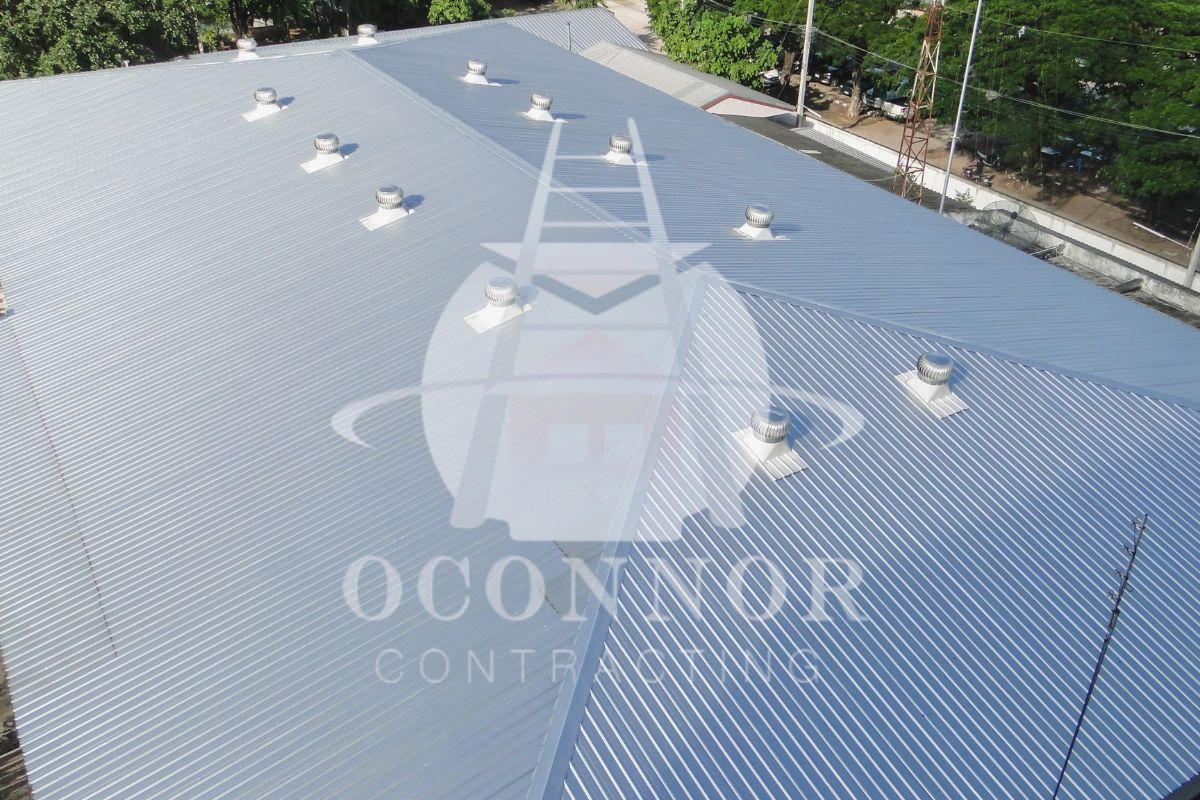
| Metal Roofing | Low-slope offices and multi-story buildings near high-traffic roads | Superior wind uplift resistance and reinforced edge performance |
Erie County regulations also shape replacement design, particularly around slope requirements for flat roofs. Tapered insulation under TPO or modified bitumen systems is often incorporated into the replacement plan to meet drainage standards and reduce ice buildup risk. Your building's specific layout will guide which system makes the most sense for your property.
Before any new membrane goes down, the underlying deck is cleaned, dried, and inspected for soft spots, rot, or structural damage that would compromise the new system. Skipping this step is one of the most common reasons commercial roof replacements fail early, and it's something OConnor Contracting treats as non-negotiable on every job.
On Lancaster's flat commercial roofs, a proper slope is built into the replacement through tapered insulation layers that direct water toward drains and away from low spots where ponding develops. This is especially important under Erie County code requirements and on older buildings where the original deck was designed with little to no pitch.
Every pipe, vent, HVAC curb, and parapet edge is properly flashed and sealed as part of the replacement, since these transition points are where most leaks originate on commercial flat roofs. Getting these details right during installation prevents the kind of localized failures that show up within the first year or two after a new membrane is in place.
Roof edges on commercial buildings near Lancaster's major roads take extra stress from wind uplift and vibration, so perimeter metal and edge terminations are reinforced to match the performance specs of the membrane system being installed. A well-secured perimeter keeps the entire roof from peeling back during the high winds that hit this part of Western New York.
A new roofing system on your commercial property is one of the more practical long-term investments you can make for a building in this region. The combination of prolonged freeze periods, heavy snow accumulation, and spring temperature changes that put real stress on membranes means the right system, installed correctly, pays for itself in reduced repair costs and fewer disruptions to your tenants and operations over time. Summer and early fall tend to be the best windows for scheduling replacement work, giving materials time to seal properly before winter conditions return.
OConnor Contracting works with property owners and facility managers across Lancaster and the surrounding area who want the job done right without unnecessary delays or surprises. If you're ready to get a closer look at your current roof or want to talk through your options, reach out to the team, and we'll help you figure out the right path forward for your building.
Got questions about your roof? We’ve got answers. From maintenance tips to insurance claims and repair timelines, our FAQ section covers the most common concerns homeowners have. Get informed and make confident decisions about protecting your home.
It does, more than most building owners expect. The heavier precipitation patterns that come with being in the lake-effect belt push contractors to pay close attention to drainage design, seam strength, and tapered insulation specs that might not be as critical further inland. A replacement plan built for Lancaster needs to account for the reality that your roof will carry significant snow accumulation for extended stretches each winter, not just occasional storms.
On most commercial facilities, daily operations continue throughout the replacement. Larger buildings are typically handled in phases, so only one section of the roof is open at a time, keeping the rest of the building protected and functional. Your crew will coordinate access points and work schedules with you in advance so there are no surprises during the project.
Transition points like pipe boots, HVAC curbs, parapet walls, and perimeter edges flex differently than the field of the membrane, especially during the rapid temperature changes Lancaster sees in spring and fall. That repeated movement breaks down seals over time, and those spots are almost always where leaks trace back to on older flat roofs. Proper detailing at every gap and a reinforced perimeter edge is what separates a replacement that holds up for decades from one that needs attention within a few years.
Don’t wait – secure your home with Buffalo’s leading roofers today!

Affordable
Pricing

Locally Owned & Operated

Quality Roofing Since 2014