Don’t wait – secure your home with Buffalo’s leading roofers today!
 716-600-ROOF
×
716-600-ROOF
×
106 Hubbardston Pl, Buffalo NY
Open 24 Hours
Grand Island sits between the Niagara and Tonawanda waterways, which means your roof takes a beating that most homeowners don't fully account for. Open-water winds accelerate shingle wear and put extra stress on flashing and roof edges, while Western New York's repeated temperature changes widen small gaps around seams, valleys, and gaps over time. Add in heavy snow, ice dams, and more than 150 days of precipitation a year across the region, and it becomes clear why roofs here age faster than the calendar might suggest. When that wear goes unaddressed, what starts as minor flashing separation or a few curled shingles can quietly turn into leaks that reach your attic, insulation, and interior ceilings before you ever notice a stain.
A full roof replacement gives your home a clean reset against all of that. New shingles, properly integrated flashing, and updated ventilation work together to handle the moisture and wind exposure that Grand Island properties face season after season. OConnor Contracting works throughout this market and understands the specific demands that come with the local weather patterns and the older housing stock common to this area. Homes with dormers, chimneys, and multiple roof planes need careful attention during replacement, and that kind of detail work is where experience matters most. Getting the installation right the first time protects your home and your investment in your property for years ahead.
A roof replacement carries a lot of moving parts, so having each stage laid out clearly helps keep the project easier to follow as a homeowner.
Choosing the right material for your roof replacement matters more when your home faces the kind of wind and moisture exposure that comes with living on an island between two waterways. The right choice depends on your budget, your home's age and architecture, and how long you want to go before thinking about your roof again.
| Material | Best For | Key Advantage in This Market |
|---|---|---|
| Architectural Asphalt Shingles | Most Grand Island homes, including older Northeast-style housing | Handles steep-slope roofs well and performs reliably through repeated temperature changes and heavy snow |
| Metal Roofing | Homeowners prioritizing long service life and wind resistance | Sheds snow effectively and holds up against the open-water wind exposure common to Grand Island properties |
Asphalt shingles remain the most common choice in this area for good reason. They install reliably on the multi-plane roofs typical of older homes here and hold up well through Western New York winters. Metal roofing is worth considering if you want a longer-lasting option that reduces how often you'll face this decision. Either way, flashing integration and attic ventilation matter just as much as the material itself, especially on homes with dormers, chimneys, and complex roof lines that are common throughout this community.
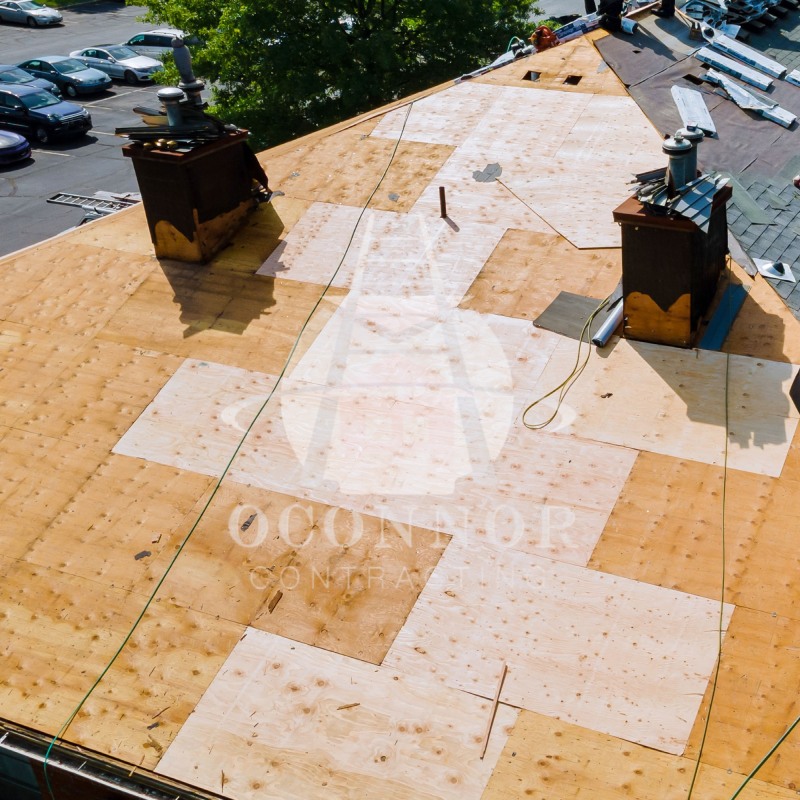
Once the old roofing is stripped away, the condition of your roof deck can finally be seen clearly, and damaged or soft sections get replaced before new materials go down. Skipping this step is where a lot of roofs fail early, because new shingles laid over compromised roof decking won't hold up the way they should.
Self-adhering ice and water barrier is installed along eaves, valleys, and other high-risk areas where ice dams and wind-driven moisture are most likely to cause problems. On Grand Island, where winter conditions put real stress on roof edges every season, this layer of protection is a standard part of a replacement done right.
Proper ventilation is built into the replacement so your attic can breathe correctly through the temperature swings that Western New York winters bring. Without it, heat and moisture can build up under your new roof and shorten its service life faster than the weather alone would.
Every chimney, dormer, pipe boot, and roof-to-wall connection gets new flashing as part of the replacement, not just patched or reused where possible. These transition points are where leaks almost always start on older homes, and new flashing integrated properly with new shingles is what keeps water out for the long run.
Living on an island between two waterways means your roof faces more than the average Western New York winter. Wind off the water, repeated temperature changes, and season after season of moisture exposure add up faster than most homeowners expect. A replacement done right gives your home a durable, well-integrated roof that handles those conditions without asking you to revisit the decision in a few years. Timing your project for late spring, summer, or early fall also means your crew can work in conditions where materials install and seal the way they should.
If your roof is showing its age or you've been dealing with recurring issues, OConnor Contracting is ready to take a closer look. We serve homeowners across Grand Island and the surrounding area and will give you a straight answer on what your home needs and walk you through your options without pressure. Reach out when you're ready, and we'll get started.
Got questions about your roof? We’ve got answers. From maintenance tips to insurance claims and repair timelines, our FAQ section covers the most common concerns homeowners have. Get informed and make confident decisions about protecting your home.
It does. The open-water exposure on Grand Island means wind hits your roof from directions and at speeds that inland homes don't experience the same way. That constant movement works on shingles, flashing, and sealed edges over time, and combined with the moisture in the air from the surrounding waterways, you can see roofs here age noticeably faster than the material's rated lifespan might suggest.
Soft or rotted roof decking is the most common surprise, especially on older homes where a slow leak went unnoticed for a season or two. You can also find inadequate ventilation setups, deteriorated pipe boot flashings, and damaged sheathing around valley areas that looked fine from the outside. These issues only become visible once the roof is open, which is exactly why inspecting the deck before new materials go down is a non-negotiable part of a replacement done correctly.
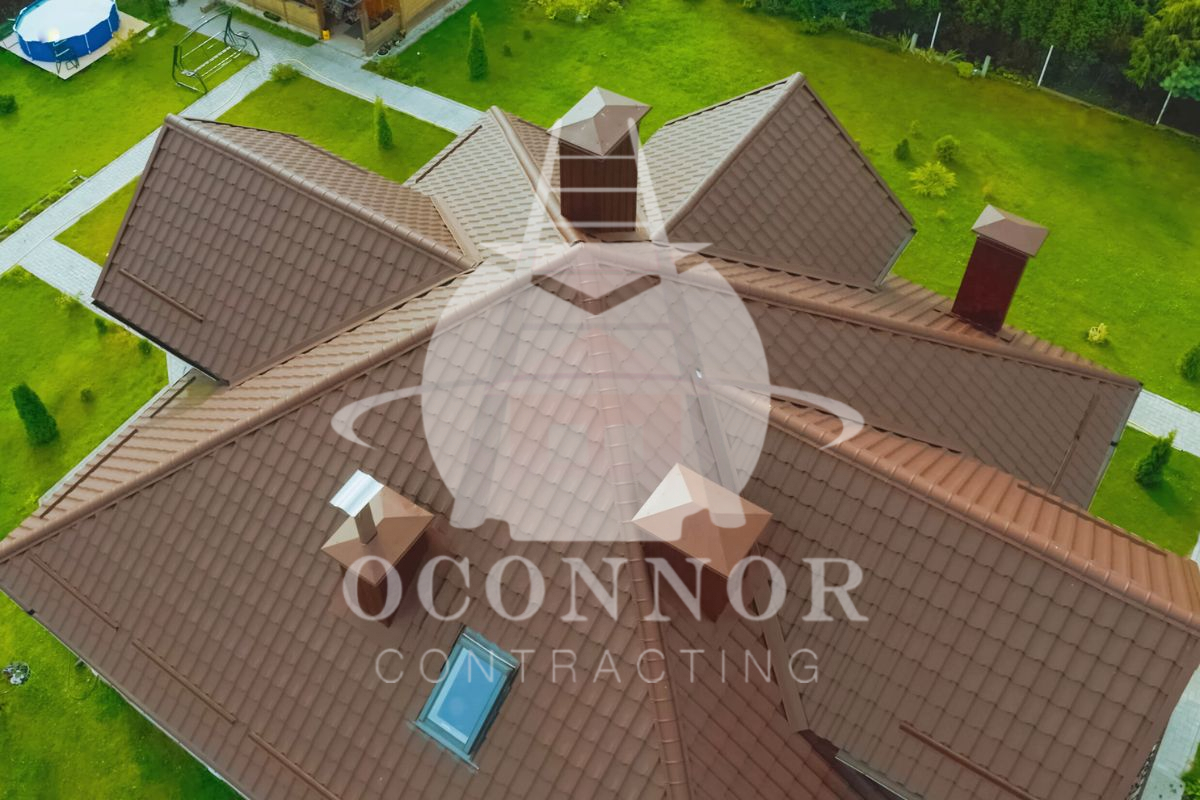
If wind durability and a longer service life are priorities for you, metal roofing is worth a serious look in this market. It sheds snow more easily than shingles, which reduces the stress that builds up along eaves and roof edges during a heavy Western New York winter. For homeowners who want to replace their roof once and not revisit that decision for several decades, the added upfront investment often makes sense given the exposure conditions here.
Don’t wait – secure your home with Buffalo’s leading roofers today!

Affordable
Pricing

Locally Owned & Operated

Quality Roofing Since 2014