Don’t wait – secure your home with Buffalo’s leading roofers today!
 716-600-ROOF
×
716-600-ROOF
×
106 Hubbardston Pl, Buffalo NY
Open 24 Hours
Living near Lake Erie means your roof takes a beating that most homeowners don't fully appreciate until something goes wrong. Evans gets hit with lake-effect storms that drive wind gusts past 40 mph, dump heavy snow through the winter, and cycle through enough temperature changes each year to stress even well-installed roofing materials. Add in humid summers, salt-laden air blowing off the lake, and more than 50 rainy days annually, and it becomes clear why roofs here wear out faster than the national average. Older homes in the area, many built with wood-based framing and roof decking, are especially vulnerable. When humidity works its way into the structure and sits there, rot follows, and what starts as a few missing shingles can quietly become a much larger and more expensive problem.
A full residential roof replacement done right addresses all of that at once. It's not just about putting new shingles on top of old ones. It means stripping everything back, inspecting the roof decking and framing for damage that's only visible once the old roof is off, and rebuilding with materials rated to handle the conditions Evans actually throws at your home. OConnor Contracting works specifically in this market and understands the local weather patterns, code requirements, and older housing well enough to give homeowners a straight answer about what their roof needs and why.
A roof replacement involves several important stages, and understanding what happens during each one helps you stay informed throughout the project. OConnor Contracting evaluates the existing roof, explains the available solutions, and completes the installation with attention to the details that affect performance.
Choosing the right roofing material for a home in Evans is not a one-size-fits-all decision. The lake-effect wind patterns, repeated temperature changes, and salt-laden air here put specific demands on whatever goes over your head. Understanding how different options hold up under those conditions helps you make a smarter long-term investment in your property.
| Local Condition | What It Affects | What to Look For |
|---|---|---|
| High-speed wind gusts | Shingle adhesion and granule loss | Impact-resistant shingles with Class 4 ratings |
| Heavy snow and ice dams | Roof eaves and the roof deck’s structural integrity | Ice barrier extending at least 24 inches past exterior walls |
| Salt-filled air from Lake Erie | Metal flashing and fastener corrosion | Galvanized or stainless steel flashing and fasteners |
| Older wooden roof decking | Hidden rot beneath existing shingles | Complete structural inspection while the roof is open |
| Hotter summers | Shortened lifespan of standard asphalt | Cool-roof or aluminized shingle variants that reflect UV |
Permit requirements are another factor worth planning around. Full replacements in New York typically require a building permit, and approval timelines can range from a couple of weeks to a month depending on your municipality. If your home falls within a historic overlay district, material changes may need zoning board approval before work begins. Getting this sorted early keeps your project on schedule and avoids delays once your crew is ready to start.
New York code requires ice barriers to extend at least 24 inches past your exterior walls, but the wind patterns off Lake Erie can push snow up onto your eaves in ways that make the bare minimum fall short. OConnor Contracting installs ice barriers with the actual storm behavior in this area in mind, not just what the code requires on paper.
Salt-laden air blowing in from Lake Erie corrodes standard metal flashing and fasteners faster than you might expect, and failing flashing is one of the most common sources of leaks in Evans homes. Every replacement includes corrosion-resistant metal at all important points to protect your roof over the long haul.
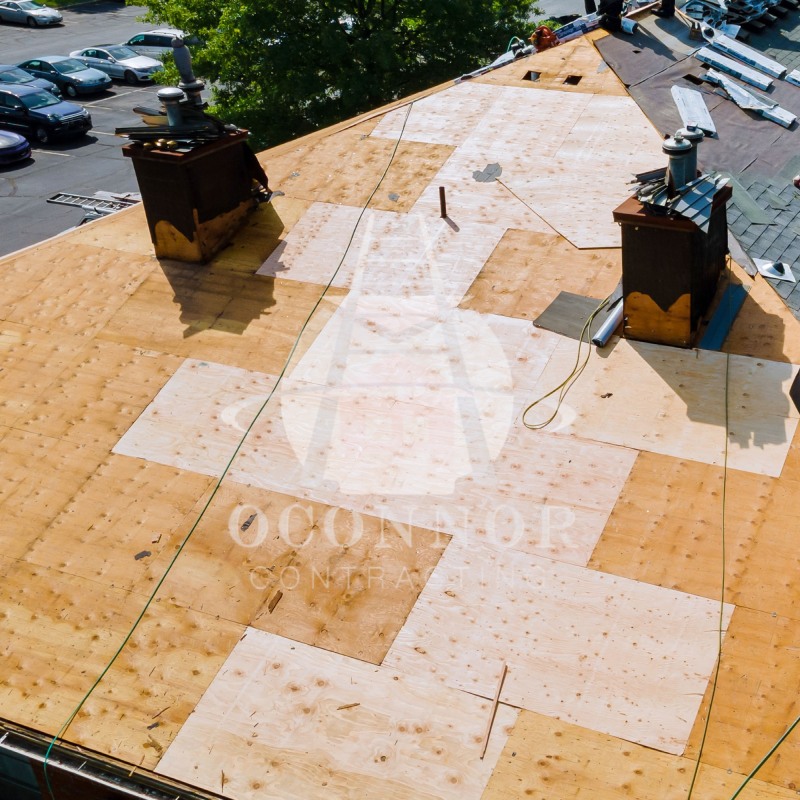
Wood-based roof decking in older Evans homes often absorbs moisture over decades of high humidity, and the rot that results is not visible until the old shingles come off. Any sections of roof decking that show damage are replaced before new materials go down, so your new roof is built on a solid, dry foundation.
Not every shingle performs the same way in a climate that delivers heavy lake-effect snow, gusts above 40 mph, and summer heat in the 90s all in the same year. OConnor Contracting helps you choose between impact-resistant shingles, cool-roof asphalt variants, and other options rated to hold up specifically under the conditions your home faces here.
Homes in Evans deal with a combination of weather conditions that few roofs handle indefinitely. The heavy snowfall, persistent humidity, and wind off the lake shorten roof lifespans here faster than in many other parts of the state. Putting off a replacement when your roof is past its useful life tends to lead to bigger problems inside the home, and the repair costs that follow are rarely small. Getting ahead of that protects your home, your family, and the value of your property before the damage works its way deeper into the building.
OConnor Contracting is ready to walk you through the whole process, from the initial inspection to the final walkthrough, with honest answers at every step. If you are starting to notice signs of wear or just want a clear picture of where your roof stands, reaching out is a simple first step with no pressure attached.
Got questions about your roof? We’ve got answers. From maintenance tips to insurance claims and repair timelines, our FAQ section covers the most common concerns homeowners have. Get informed and make confident decisions about protecting your home.
Yes, and it matters more than most homeowners realize. The wind-driven snow that comes off Lake Erie does not just sit on your roof. It gets pushed up under shingle edges and around flashing, which puts more stress on adhesion and sealing than standard weather conditions would. Shingles with a Class 4 impact rating hold up better under those repeated forces and resist granule loss when gusts push ice pellets across the surface during winter storms.
It can, and this is something worth knowing before work begins. Older homes in Evans were often built with wood-based roof decks that has been absorbing humidity for decades, and the extent of any rot is only fully visible once the old shingles are stripped off. If damaged sections are found while the roof is open, they need to be replaced before new materials go down, which can add time to the project. Flagging this possibility upfront helps you plan rather than be caught off guard mid-job.
Once temperatures drop below 40 degrees Fahrenheit, adhesives and ice barriers cannot activate and seal correctly, which means installations scheduled too late in the fall or during winter carry real risk of poor performance. The best window in this area tends to fall in late spring or early fall, when conditions stay dry and temperatures are steady enough for materials to set properly. Rain and snow can also pause work for a couple of days at a time to allow roof decking to dry, so your contractor's scheduling approach to weather matters as much as the season itself.
Don’t wait – secure your home with Buffalo’s leading roofers today!

Affordable
Pricing

Locally Owned & Operated

Quality Roofing Since 2014