Don’t wait – secure your home with Buffalo’s leading roofers today!
 716-600-ROOF
×
106 Hubbardston Pl, Buffalo NY
Open 24 Hours
Living along the Lake Erie shoreline in Evans means your roof takes a beating that most people outside western New York never have to think about. Lake-effect weather can drop heavy snow fast, and when temperatures swing up and down in the same week, that snowpack starts melting and refreezing at the edges of your roof. Water backs up under shingles, flashing pulls away, and what looked like a minor issue after a storm can open up into an active leak inside your home before you realize what happened. The region's exposure to wind-driven rain and blowing snow only adds to the pressure, making roof failures here less of a seasonal exception and more of a recurring concern for homeowners.
When your roof is damaged and water is getting in, the window to act is short. OConnor Contracting works with homeowners in Evans, NY who need fast help containing a leak, protecting exposed roof decking, or getting a full inspection done after a storm. Whether your shingles have been displaced by wind, an ice dam has forced moisture into your attic, or you are seeing ceiling stains after a heavy snowfall, the goal is to stop the damage from spreading and get your home protected as quickly as possible. Understanding the local weather patterns here is not just background knowledge. It shapes how emergency roofing work gets done right in this area.
When a roof leak is allowing water into your home, the immediate priority is controlling the exposure and protecting the affected areas. OConnor Contracting addresses the active problem first, then determines the permanent repair based on the conditions found during the inspection.
Not every roof emergency looks the same, and in Evans, the weather patterns here create some very specific problems that homeowners run into more often than in other parts of the state. Knowing what you are dealing with helps you explain it clearly when you call and helps a roofing crew arrive ready to act.
| Issue Type | Common Cause in Evans | Typical Urgency |
|---|---|---|
| Ice dam leaks | Snow melts and refreezes at eaves, forcing water under shingles | High: active water entry likely |
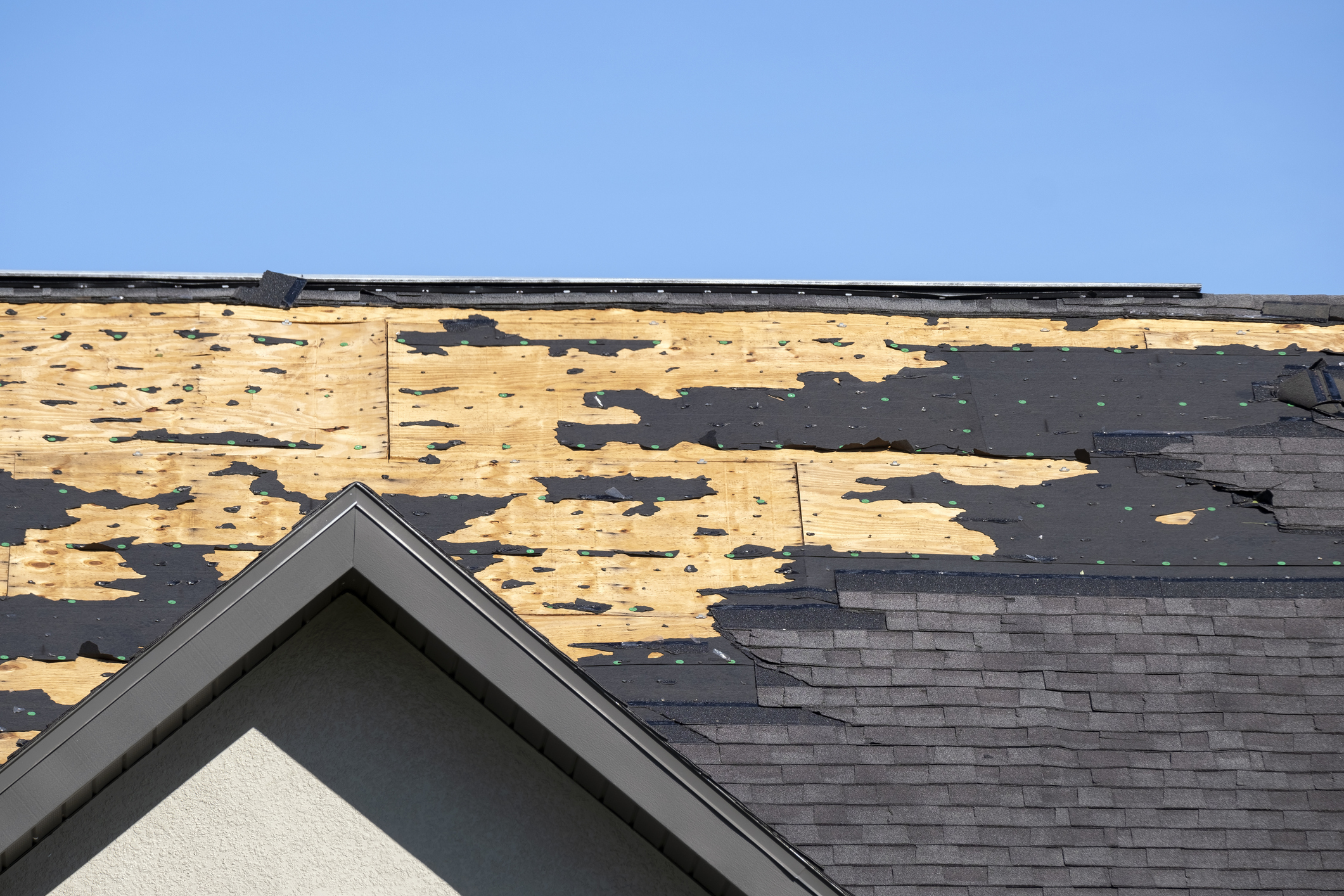
| Displaced or missing shingles | Wind-driven storms off Lake Erie pulling shingles loose | High: exposed roof decking needs protection fast |
| Flashing failures | Repeated temperature changes loosening seals around gaps and valleys | Moderate to high: depending on leak activity |
| Soffit and eave leaks | Gutter backup and snowmelt finding gaps at roof edges | Moderate: can get worse quickly in heavy snow |
| Roof deck moisture damage | Prolonged exposure after storm damage or shingle loss | High: if left unprotected |
These problems tend to build on each other, especially after a storm that brings rain, wind, and rapid temperature changes in the same stretch of days. Catching them early and getting temporary protection in place can be the difference between a repair that takes a few hours and one that involves far more of your roof than you expected.
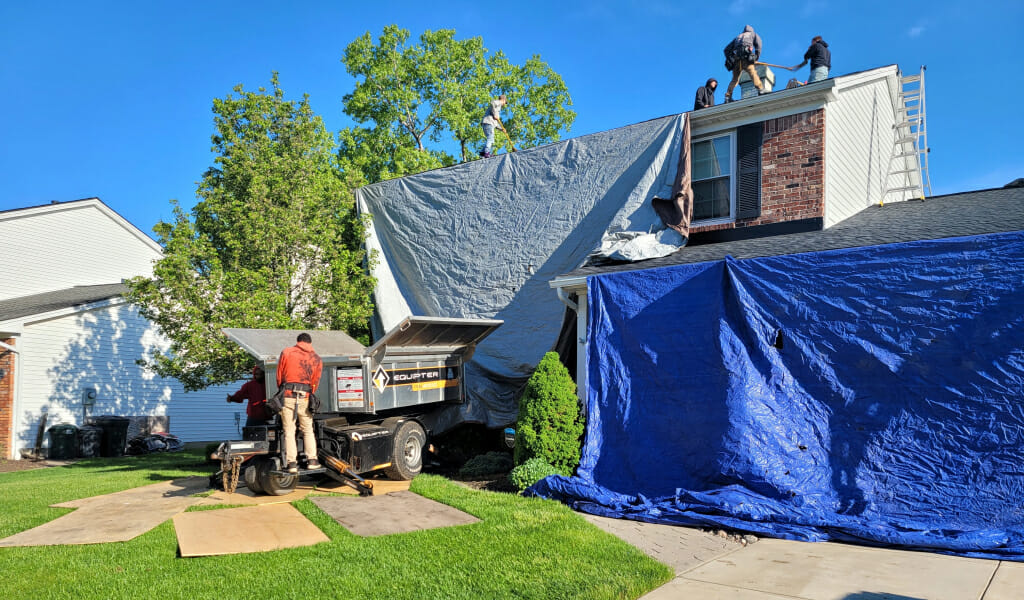
When roof decking is exposed, or shingles are missing, a properly secured tarp keeps rain and blowing snow from reaching the interior of your home until permanent repairs can be made. The tarps used in emergency situations are weighted and anchored to hold up under the kind of wind gusts that come off Lake Erie, not just draped loosely over the damage.
Chimneys, vents, skylights, and roof valleys are common entry points for water, especially after temperature swings loosen the seals around them. Emergency sealing of these areas helps contain the leak to one spot and keeps moisture from traveling into wall cavities or attic spaces while longer-term repairs are planned.
When ice dams have forced water under your shingles, the visible ceiling stain is often just part of the story. Emergency work addresses the active moisture path at the eave line to stop ongoing water entry, since continued freeze and thaw cycles will keep pushing water further in if the opening is left unaddressed.
Storm damage and ice buildup can block or disrupt attic ventilation, which affects how quickly moisture dries out after a leak and how likely ice dams are to return. Checking ventilation conditions after an emergency repair helps your roof dry properly and reduces the chance that the same area becomes a problem again after the next round of lake-effect weather.
Lake Erie weather does not wait for a convenient time, and neither does a roof that is letting water in. Winters here can pile on snow fast, and the repeated warming and cooling that follows puts real stress on shingles, flashing, and roof edges. Getting emergency repairs done quickly protects your home from the kind of damage that starts small and spreads into your attic, walls, or ceiling before you realize how far it has gone.
OConnor Contracting is ready to help homeowners in Evans who need fast, reliable emergency roofing work. If you are seeing signs of a leak, noticing ceiling stains, or dealing with visible roof damage after a storm, reaching out sooner rather than later makes a real difference in what the repair involves. Give us a call or use the contact form on this page, and we will get someone out to you quickly.
Got questions about your roof? We’ve got answers. From maintenance tips to insurance claims and repair timelines, our FAQ section covers the most common concerns homeowners have. Get informed and make confident decisions about protecting your home.
It depends on what the repair involves. Temporary stabilization like tarping or sealing an active leak can happen right away without a permit. If the damage turns out to be structural or requires replacing your roof covering, Evans town code requires a permit before that work begins, so OConnor Contracting handles the permitting process correctly from the start to keep things moving without cutting corners.
Often, yes. When temperatures rise after heavy snowfall, snowmelt travels down the roof and can refreeze at the eaves before it drains. That backup can push water under your shingles in ways that do not show up immediately on the ceiling. By the time you see a stain, moisture may have already moved into your attic insulation or framing, so getting a roof inspection done quickly gives you a clearer picture of how far the water actually traveled.
Flashing is sealed with materials that expand and contract with temperature changes, and in this area, those shifts can happen multiple times in a single week during winter. Each cycle works the sealant a little more, and over time those seals around chimneys, vents, and valleys start to separate. Because flashing sits at the joints where two surfaces meet, even a small gap gives wind-driven rain or snowmelt a direct path into your home faster than a damaged shingle would.
Don’t wait – secure your home with Buffalo’s leading roofers today!

Affordable
Pricing

Locally Owned & Operated

Quality Roofing Since 2014

