Don’t wait – secure your home with Buffalo’s leading roofers today!
 716-600-ROOF
×
716-600-ROOF
×
106 Hubbardston Pl, Buffalo NY
Open 24 Hours
Colden sits in Erie County, where winters are long, snowfall runs deep, and roofs take a beating year after year. With around 90 to 100 inches of snow annually and temperatures that swing well below freezing, the repeated cycle of snow accumulation, partial melting, and refreezing puts serious stress on roofing materials. Ice dams are a common result, forming at the eaves when heat escapes through the attic and causes snow to melt unevenly. That water backs up under shingles and causes leaks that can work their way into your ceilings, walls, and insulation before you ever notice a problem. For older homes in the area, many of which were built between the 1940s and 1970s, roofs that are already past their expected lifespan have very little margin left to absorb that kind of punishment.
A complete roof replacement done right addresses more than just worn shingles. It allows you to correct ventilation problems, reinforce the roof deck, and install materials suited to the weather conditions your home faces every winter. OConnor Contracting works with homeowners across Colden and the surrounding Erie County area, and that local experience shapes every project. Knowing how these homes are built, how the weather behaves, and what tends to fail first means the work gets done in a way that holds up, not just for one winter, but for the long run.
A residential roof replacement requires careful evaluation before installation begins. OConnor Contracting reviews your existing roof, explains the recommended approach, and completes the project with a structured process from inspection through final review.
Scheduling your roof replacement at the right time of year can make a real difference in how smoothly the project goes. Asphalt shingles need temperatures warm enough to activate their adhesive strips and seal down properly, which makes certain seasons far better suited to replacement work than others.
| Season | Conditions | What to Know |
|---|---|---|
| Early Summer (June to July) | Stable temps, low frost risk | Ideal window for shingle adhesion and efficient scheduling |
| Fall (September to October) | Mild temps, less rain | Strong option, but work should finish before heavy snowfall begins |
| Winter | Cold, snow, frost | Possible with cold-weather adhesives and heated material storage |
| Spring | Variable temps, wet conditions | Rain delays can push timelines: roof deck must dry fully before installation |
If your roof is over 20 years old or you are seeing curling shingles, granule loss, or recurring leaks every winter, waiting for a convenient season can work against you. In severe ice dam areas like Colden, ice and water shield should extend 36 to 48 inches past the exterior walls to give your home proper protection. Getting an inspection done before winter arrives lets you catch soft roof decking or other structural concerns early, when your options are still wide open.
In Erie County's ice dam territory, standard membrane coverage is not enough. For homes in Colden, ice and water shield should run 36 to 48 inches past the exterior walls, giving your roof a strong barrier against the backed-up meltwater that commonly forces its way under shingles during winter.
Many older Colden homes were built with attic ventilation that no longer meets current standards, and that gap drives ice dam formation and shortens roof life. When your roof is replaced, it is the right time to bring ventilation up to the recommended ratio, so heat stays out of the roof deck and your new materials last as long as they should.
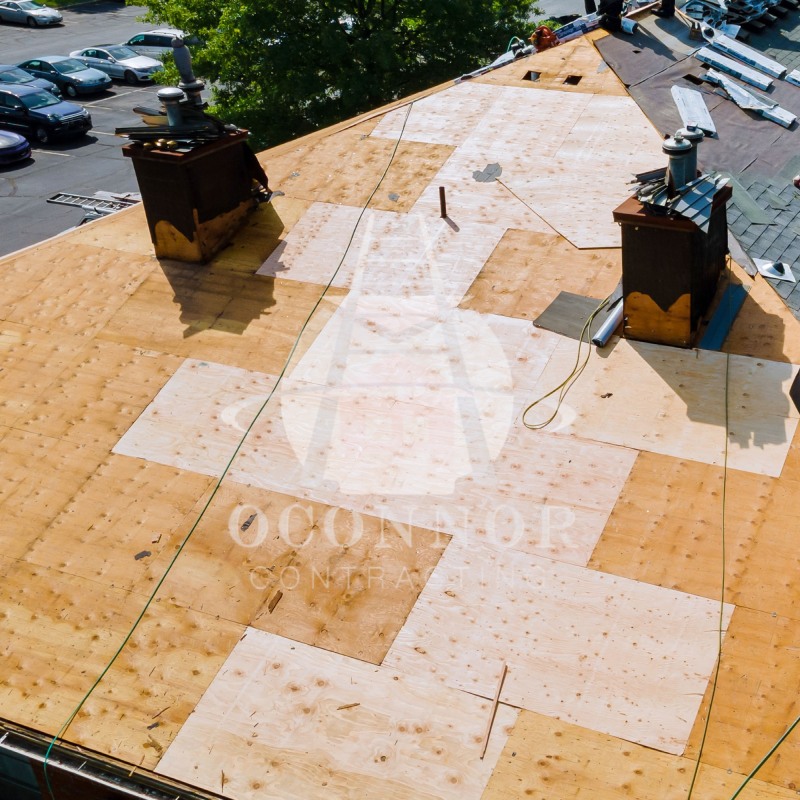
Once the old shingles are stripped away, any soft, rotted, or sagging roof decking is removed and replaced before underlayment goes down. Skipping this step traps existing damage beneath new materials, which leads to failures that are far more expensive to correct later.
Chimneys, vents, skylights, and roof edges are the spots most likely to develop leaks if flashing is worn, improperly sealed, or left over from the previous roof. New flashing installed during replacement closes off those entry points and keeps your new roof performing the way it should for years to come.
Erie County winters are hard on roofs, and homes in this area have the wear patterns to prove it. Between the weight of accumulated snow, repeated temperature changes, and the moisture exposure that comes with months of freeze and thaw, a roof that has reached the end of its service life is not going to improve on its own. Replacing it before conditions force your hand protects your home, keeps repair costs from piling up, and gives you confidence in the structure that covers everything underneath it.
OConnor Contracting has the local knowledge to do this work the right way for Colden homes. If you have been putting off an inspection or have questions about whether your roof is ready for replacement, reaching out is a simple first step. There is no pressure to commit to anything before you have the information you need to make a good decision for your home.
Got questions about your roof? We’ve got answers. From maintenance tips to insurance claims and repair timelines, our FAQ section covers the most common concerns homeowners have. Get informed and make confident decisions about protecting your home.
You can technically remain in the home, but it’s not ideal. The tear-off process is loud and can send vibrations through the structure, and fumes from adhesives and underlayment materials can enter through attic spaces or air intakes. If you have young children, pets, or anyone sensitive to noise or fumes, making other arrangements for a few days is worth considering.
Experienced crews in this region plan for exactly that situation. If snow or heavy rain moves in while the roof is open, materials get secured and covered until conditions allow work to resume. The roof decking needs to dry out fully before installation continues, which can add a couple of days to the timeline, but rushing that step leads to trapped moisture and rot under the new materials.
Yes, and it matters more in this region than many homeowners realize. Steeper pitches shed snow more readily, which reduces ice dam risk, while low-slope sections hold snow longer and require different underlayment specifications to handle that sustained moisture exposure. Your roof's pitch also affects how crews can move safely during installation, which factors into scheduling and the time needed to complete the work properly.
Don’t wait – secure your home with Buffalo’s leading roofers today!

Affordable
Pricing

Locally Owned & Operated

Quality Roofing Since 2014