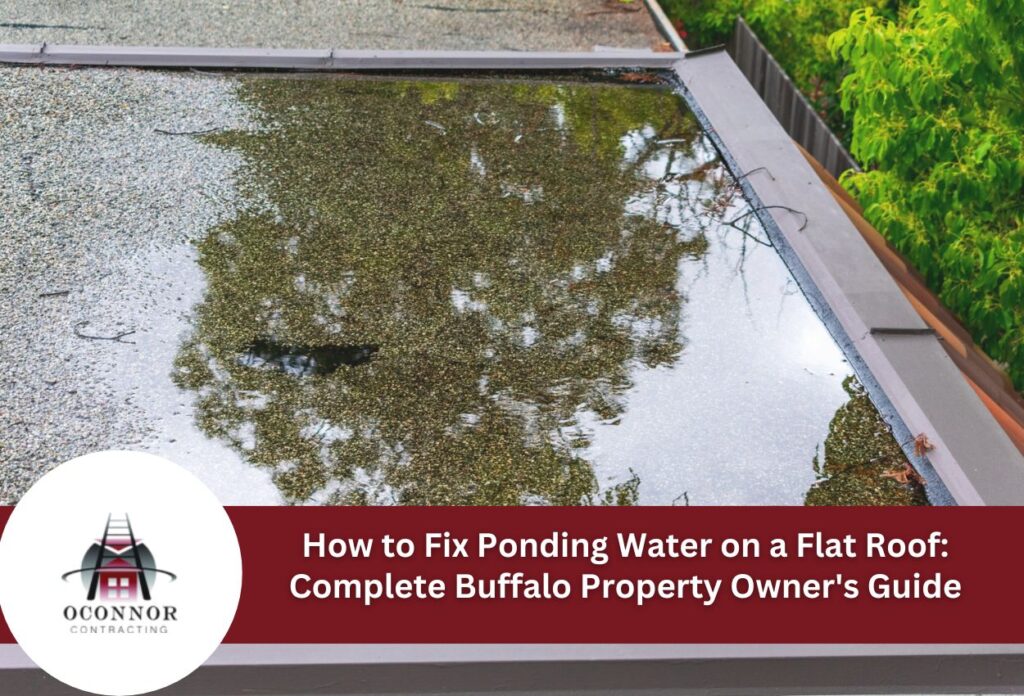

Water ponding on flat roofs is a serious challenge for Buffalo property owners, where heavy snowfall, spring thaws, and summer thunderstorms create perfect conditions for water accumulation. When rainwater or melted snow collects on a flat roof surface without proper drainage, it creates pools of water that can weigh thousands of pounds, threatening the structural integrity of the entire building. This standing water then accelerates the deterioration of the roofing material, promotes mold growth, and can lead to expensive leaks if it’s not addressed promptly.
Buffalo’s freeze-thaw cycles make ponding water particularly destructive as trapped moisture expands during freezing temperatures, creating cracks that worsen with each weather cycle. Effective flat roof drainage solutions range from simple maintenance practices to professional structural modifications designed to eliminate water pooling completely. Property owners need to understand both immediate fixes for existing ponding issues and long-term prevention strategies to protect their investment.
Identifying the root cause of flat roof water accumulation is essential before implementing any repair method. Problems may stem from improper installation, aging materials, structural settling, or clogged drainage systems. Each scenario requires specific approaches to repair to ensure water moves efficiently off the roof’s surface rather than collecting in problematic areas.
Understanding Why Water Ponds on Flat Roofs
Flat roofs, despite their name, should always incorporate a slight slope to direct water toward drainage points. When ponding occurs, knowing what’s causing it helps you find the most effective solution. Several structural issues commonly contribute to water accumulation on commercial roofs throughout Buffalo.
Poor initial design or installation can result in inadequate slope, creating low spots where water naturally collects. Over time, the weight of existing ponding water can cause structural deflection, creating even deeper depressions that trap more water in a worsening cycle. Compressed or water-damaged insulation boards beneath the membrane also create uneven surfaces where water pools rather than flowing to drains.
Buffalo’s climate only makes issues with ponding water worse. The region’s heavy snowfall creates substantial weight that can compress insulation and strain structural components. When this snow melts, it creates large volumes of water that must drain all at once, backing up systems. The frequent freeze-thaw cycles experienced in Western New York force water remaining on the roof into tiny cracks, which expand during freezing and create larger openings for future water infiltration.
Additionally, Buffalo’s rainfall patterns, particularly during spring and fall, can overwhelm drainage systems that might function adequately in regions with more moderate precipitation. This combination of structural vulnerabilities and challenging weather conditions makes roof ponding water elimination particularly important for Buffalo property owners.
Temporary Fixes to Address Immediate Ponding Issues
When you discover standing water on your flat roof, you’ll want to take immediate action in order to prevent further damage while you plan for permanent solutions. For Buffalo building owners facing urgent ponding situations, especially after heavy rainfall or rapid snowmelt, several emergency measures can provide quick relief.
Roof pumps offer an effective temporary solution for removing large volumes of standing water. Submersible pumps can be placed directly in ponding areas to safely transfer water off the roof and away from the building. For smaller accumulations, wet/dry shop vacuums can effectively remove standing water without damaging the roof membrane.
Installing temporary drains or scuppers at low points creates additional drainage paths for water to escape. While not permanent solutions, these emergency outlets can prevent the weight of water from causing structural damage until professional repairs can be completed. Carefully clearing debris from existing drains, gutters, and downspouts often resolves minor ponding issues immediately. Use gloved hands or gentle tools to remove leaves, twigs, and sediment without damaging drainage components.
Remember that these quick fixes address symptoms rather than the underlying causes of roof ponding water. Any temporary repairs that are made should be followed by a professional assessment to identify and correct the root issues causing water accumulation. Buffalo’s extreme weather conditions make temporary solutions particularly valuable during emergency situations, but permanent flat roof drainage solutions are essential for long-term protection.
Long-Term Solutions To Improve Flat Roof Drainage
Permanently resolving issues with ponding water requires strategic modifications to your flat roof’s drainage system. For Buffalo property owners facing recurring water accumulation, several professional solutions can provide lasting relief from this damaging problem.
Tapered insulation systems represent one of the most effective solutions for eliminating flat roof ponding. These custom-designed systems create positive drainage slopes across the entire roofing surface, directing water toward drainage points. The insulation boards are manufactured with a gradual slope, one that’s hard to detect, but that corrects low spots and creates proper watershed areas, effectively eliminating areas where water can collect.
Interior drains strategically installed at low points provide direct pathways for water removal. These systems connect to the building’s plumbing infrastructure, channeling water safely away from the roof. For buildings with parapet walls, scuppers create lateral drainage points that allow water to exit through the side of the building, preventing accumulation during heavy rainfall or snow melts common in Buffalo’s climate.
Retrofitting existing buildings requires careful planning and professional expertise. Buffalo’s building codes mandate specific drainage requirements based on roof size and configuration. Local roofing contractors familiar with Western New York’s unique weather patterns can design drainage solutions that address both summer thunderstorms and winter ice dam formation. When implemented correctly, these drainage improvements not only eliminate standing water but also extend the life of your roofing system substantially, protecting your commercial or residential property investment.
Professional Repair Techniques for Water-Damaged Flat Roofs
When ponding water has already caused significant damage to your flat roof, professional repair services offer specialized techniques that go beyond DIY solutions. Professional roofers begin with comprehensive moisture detection using infrared scanning and core sampling to assess the full extent of water infiltration beneath the visible surface. This diagnostic approach ensures that all damaged areas are identified before repairs begin.
For membrane damage, professionals typically employ partial or complete replacement using commercial-grade materials designed specifically for Buffalo’s harsh climate conditions. Modern TPO and EPDM membranes provide superior water resistance and can withstand extreme temperature fluctuations from summer heat to winter cold. When membrane damage is discovered, contractors will remove saturated insulation and reinforcement boards, replacing them with high-density materials that resist compression and future ponding.
Structural corrections often involve reinforcing the roof deck and support systems to eliminate sagging areas where water collects. Buffalo roofing specialists utilize specialized leveling compounds and structural foam injections to restore proper slope without the expense of complete roof replacement. These techniques are particularly valuable for historical buildings throughout Western New York, where it’s just as crucial to preserve original architecture as it is to solve drainage issues requiring specialized expertise.
Advanced polymer-modified repair materials provide superior adhesion and flexibility in our region’s freeze-thaw conditions, ensuring repairs maintain their integrity throughout Buffalo’s seasonal weather cycles. When properly implemented by experienced professionals, these repair techniques not only fix existing damage but also significantly extend the service life of your entire roofing system.
Preventative Maintenance to Avoid Future Ponding Problems
Implementing a regular maintenance schedule is crucial for preventing ponding water issues on your flat roof. Buffalo’s extreme seasonal weather patterns demand a proactive approach to roof care. We recommend conducting thorough inspections at least twice a year, with additional checks after major storms. During these inspections, look for early signs of drainage problems such as small water accumulations, minor depressions, or slow-draining areas that could eventually develop into serious ponding situations.
Keeping drainage systems clear is essential in preventing water from ponding on the surface of the roof. Schedule regular gutter cleanings, downspouts, and roof drains to remove leaves, twigs, and debris before they cause blockages. In Buffalo, special attention should be paid to drainage paths during fall when tree debris is prevalent and early spring when winter accumulation begins to clear. Address minor roof depressions promptly by applying approved leveling compounds before they collect enough water to cause structural damage.
Protective coatings provide an additional defense against ponding water damage. Silicone and acrylic roof coatings create seamless, waterproof barriers that resist UV damage while providing additional protection against standing water. For Buffalo buildings, elastomeric coatings offer particular advantages as they maintain flexibility during winter freeze-thaw cycles. These coatings can extend roof life by 5 to 10 years while improving water resistance. Professional coating application of these reflective coatings also reduces summer heat absorption, minimizing thermal expansion and contraction that can create future low spots where water might collect.
When to Call Buffalo Roofing Professionals for Your Ponding Issues
While minor ponding issues might seem manageable, certain warning signs indicate it’s time to call experienced Buffalo roofing professionals. If standing water remains on your roof for more than 48 hours after precipitation ends, this indicates a significant drainage problem that requires expert assessment. Similarly, recurring ponding that returns despite your DIY efforts signals underlying structural issues that need professional attention.
Watch for interior warning signs like water stains on ceilings, musty odors, or increased humidity levels inside your building, as these indicate water has already entered your roofing system. If you notice your flat roof sagging or deflecting under the weight of ponding water, this represents an urgent structural concern requiring immediate professional intervention to prevent potential collapse, especially during Buffalo’s heavy snow season.
When selecting a flat roof specialist in Buffalo, look for contractors with specific experience addressing ponding water problems on commercial and residential properties. Qualified professionals should understand Western New York’s unique weather challenges and have documented success implementing drainage solutions that withstand our freeze-thaw cycles. Ask potential contractors about their approach to fixing roof water accumulation and request references from similar projects they’ve completed in the Buffalo area. A commercial roof inspection can also help identify drainage deficiencies and other issues before they lead to more extensive damage.
Professional roofers bring specialized equipment with them that allows them to properly diagnose and repair issues that the average property owner does not have. Their expertise in identifying the root causes of water pooling ensures that repairs address the underlying problems rather than just treating symptoms, providing long-term protection for your building investment. For properties with flat or low-slope systems, TPO roofing services may also provide a durable solution when a replacement is necessary.
Expert Flat Roof Ponding Solutions in Buffalo
If you’re struggling with water ponding on your flat roof, don’t wait for the problem to get worse. OConnor Contracting specializes in solving complex drainage issues, particularly those common in Buffalo’s challenging climate.
Whether you need emergency repairs or are considering a complete drainage system replacement, our team is equipped to handle all aspects of ponding water elimination. Call OConnor Contracting today at (716) 600-7663 to schedule a consultation and protect your property from the risks of water damage.