Key Points:
- Selecting the right roof underlayment is vital for protecting Buffalo homes from harsh weather, especially ice and snow.
- Compare synthetic, felt, and rubberized asphalt options for water resistance and durability in your specific climate.
- Ensure proper installation and strategic use of ice and water shields for the best, long-term roof protection.
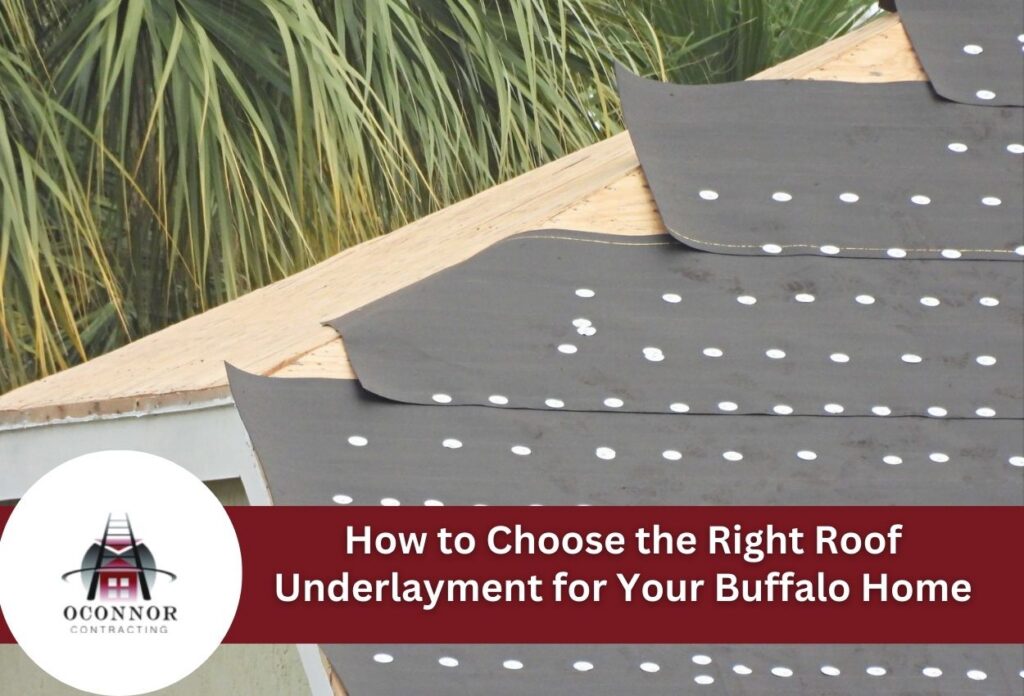
Roof underlayment acts as an important secondary defense system that protects homes from leaks when harsh weather reaches the primary roofing material. This waterproof barrier sits directly on the roof deck beneath shingles, creating an essential shield against Buffalo’s tough climate conditions, including heavy snow, ice dams, and driving rain.
Understanding the types of roof underlayment available helps homeowners make informed decisions about their roofing system’s long-term performance. The choice between synthetic and felt underlayment depends on several factors, including roof pitch, local building code requirements, and expected weather exposure. Properties in Western New York particularly benefit from ice and water shields in vulnerable areas where a leak poses the greatest risk.
Proper underlayment selection significantly impacts roof membrane protection and overall system durability. Different materials offer varying levels of tear resistance, breathability, and temperature tolerance. Modern synthetic options provide enhanced performance compared to traditional felt products, while specialized underlayment installation methods ensure maximum effectiveness across different roof configurations and climate challenges.
Essential Types of Roof Underlayment Materials
Three primary categories dominate the roof underlayment market, each offering distinct advantages for different roofing applications. Asphalt-saturated felt represents the traditional choice, manufactured by saturating organic or fiberglass mats with asphalt for basic water resistance. Rubberized asphalt underlayments feature self-sealing properties that create watertight seals around fasteners, making them ideal for ice and water shields in important areas. Synthetic polymer options utilize advanced materials like polypropylene or polyethylene to deliver superior tear resistance and UV stability.
Performance differences between traditional and modern materials become apparent when comparing water resistance, breathability, and durability factors. Traditional felt underlayments absorb moisture over time and can deteriorate when exposed to extended weather conditions during construction. Synthetic and felt underlayment comparisons reveal that modern synthetic materials resist moisture absorption while maintaining dimensional stability. These advanced products also offer improved walkability and installation ease, reducing labor time during roof membrane protection installation. The enhanced durability of synthetic options provides longer-lasting performance, particularly important for homes experiencing frequent temperature fluctuations and severe weather conditions.
Synthetic vs. Felt Underlayment: Making the Right Material Choice
Synthetic underlayment delivers exceptional performance through advanced polymer construction that resists tearing during installation and throughout its service life. These materials provide superior UV protection, allowing extended exposure during construction without degradation. The lightweight design reduces installation fatigue while maintaining excellent dimensional stability in changing temperatures. Buffalo’s variable weather conditions particularly benefit from the synthetic underlayment’s ability to withstand thermal cycling without cracking or shrinking.
Felt underlayment remains a viable option for specific roofing applications, offering proven reliability in traditional installations. Organic felt provides adequate protection for standard residential applications, while fiberglass felt delivers enhanced tear resistance compared to organic versions. Cost considerations often favor felt products for budget-conscious projects where premium performance characteristics are not essential. Steep-slope roofs with proper ventilation and limited weather exposure may perform adequately with quality felt underlayment when properly installed according to manufacturer specifications.
Material selection depends on roof complexity, expected weather exposure, and long-term performance requirements. Synthetic options excel in challenging installations, including low-slope applications and areas prone to ice dam formation. The decision between synthetic and felt underlayment should consider factors such as roof pitch, local climate severity, and building code requirements to ensure the best roof membrane protection for each specific application.
Ice and Water Shield Protection: Critical Installation Areas
Ice and water shields provide enhanced protection in specific roof areas where the risk of a leak is highest. These self-adhering membrane products become essential along eaves where ice dams commonly form during the winter. Valley installations require ice and water shields because these areas channel large volumes of water runoff from multiple roof planes. Chimney gaps, vent pipes, and skylight installations also require specialized membrane protection to prevent leaks around these vulnerable roof openings.
Selection criteria for ice and water shields focus on temperature ratings, adhesive strength, and material compatibility with existing roof components. Products must withstand extreme temperature fluctuations while maintaining secure adhesion to different deck types, including plywood, OSB, and planking. The adhesive backing should create reliable bonds without requiring excessive heat activation, ensuring proper installation across various weather conditions. Compatibility testing becomes important when installing over different roof membrane protection systems or when using synthetic and felt underlayment combinations. Quality ice and water shields feature reinforced construction that resists tearing during installation while providing long-term durability against weather exposure and thermal cycling.
Climate Considerations for Buffalo Area Roofs
Western New York’s harsh climate patterns create unique challenges that directly impact underlayment performance and material selection decisions. Freeze-thaw cycles occurring throughout winter cause roof materials to expand and contract repeatedly, placing stress on underlayment systems. Heavy snow common to the Buffalo region adds significant weight that can shift roof structures slightly, requiring underlayments with superior flexibility and tear resistance to maintain protective features.
Temperature fluctuations ranging from sub-zero winter conditions to hot summer temperatures require underlayment materials that perform consistently across extreme ranges. Traditional felt products can become brittle in cold weather and soften excessively during hot periods, compromising their protective capabilities. Modern synthetic materials demonstrate superior thermal stability, maintaining their physical properties regardless of seasonal temperature swings that characterize the Great Lakes climate zone.
Matching underlayment properties to local weather patterns involves considering moisture management capabilities alongside thermal expansion characteristics. High humidity levels during the summer require breathable underlayments that allow vapor transmission while blocking leaks. Installation timing becomes important since extended exposure periods during construction can damage certain underlayment types. Synthetic options provide extended weather exposure ratings, accommodating construction delays that might occur during unpredictable weather conditions common to the region.
Installation Methods and Best Practices
Proper underlayment installation techniques require specific overlap requirements and fastening patterns that ensure maximum protection and warranty compliance. Horizontal laps must maintain a minimum 4-inch overlap, while end laps require 6-inch coverage to prevent leaks. Fastening patterns follow manufacturer specifications with plastic cap nails spaced every 12 inches along edges and 24 inches in field areas for most synthetic materials.
Deck preparation becomes important before beginning any underlayment installation methods. The surface of the roof must remain clean, dry, and free from debris or protruding nails that could compromise the membrane barrier. Weather considerations include avoiding installation during wet conditions or when temperatures fall below the manufacturer’s minimum requirements. Integration with other roofing components requires careful planning around gaps, valleys, and ridge areas where multiple materials intersect.
Common installation mistakes include insufficient overlap coverage, improper fastener placement, and inadequate sealing around roof gaps. Professional contractors avoid these issues by following systematic installation sequences that begin at the eaves and progress upward. Proper sealing methods utilize compatible sealants at all termination points while maintaining continuous protection across the entire roof deck. Quality installation practices ensure the best possible roof membrane protection performance and maintain manufacturer warranty coverage throughout the system’s service life.
Evaluating Performance and Value for Long-Term Protection
Assessing underlayment warranties and performance standards requires a close look at manufacturer guarantees alongside expected service life projections. Premium synthetic materials typically offer warranties ranging from 25 to 50 years, while traditional felt products provide shorter coverage periods. Performance standards established by ASTM International define specific testing criteria for tear strength, water resistance, and UV exposure tolerance that help determine long-term value propositions.
Expected lifespan varies significantly between different types of roof underlayment materials and directly correlates with upfront investment costs. Synthetic and felt underlayment comparisons reveal that advanced materials often provide superior longevity despite higher initial expenses. Quality indicators include manufacturer certifications from recognized testing laboratories and compliance with local building code requirements. Professional contractor recommendations based on real-world installation experience offer valuable insights into product performance under actual weather conditions.
Red flags when evaluating underlayment options include unusually low pricing, limited warranty coverage, and a lack of proper certifications from established testing organizations. Reputable manufacturers maintain consistent product availability and provide technical support throughout the installation process. Ice and water shields from quality producers feature reliable adhesive systems and reinforced construction that maintains protective integrity over extended service periods, ensuring the best roof membrane protection for decades of reliable performance.
Trust OConnor Contracting for Expert Roof Underlayment Installation in Buffalo
Choosing the right roof underlayment is important for the longevity and protection of your home, especially in the challenging weather conditions of Buffalo. Whether you’re considering synthetic, felt, or a specialized ice and water shield, OConnor Contracting has the expertise to guide you through your options and ensure your roof is prepared to withstand Buffalo’s harsh winters and variable climate. Don’t compromise on the quality of your home’s protection. Call us today at (716) 600-7663 to discuss your roofing needs and learn more about our reliable underlayment solutions. Make the right choice for your home’s future with OConnor Contracting.