NFVA Rule stands for Net Free Vent Area rule. It is the building-code standard used to determine how much attic ventilation a home needs to move air properly.
Attic Ventilation Sizing (NFVA Rule)
| Item | Calculation |
|---|---|
| Standard ventilation rule | 1 sq ft NFVA per 150 sq ft of attic |
| Total NFVA formula | Attic sq ft ÷ 150 |
| Convert to square inches | Total sq ft × 144 |
| Intake vs exhaust split | 50% intake / 50% exhaust |
Example Ventilation Calculation
| Description | Value |
|---|---|
| Attic size | 1,500 sq ft |
| Total NFVA required | 10 sq ft |
| Total NFVA (sq inches) | 1,440 sq in |
| Intake required (soffits – 50%) | 720 sq in |
| Exhaust required (ridge/roof – 50%) | 720 sq in |
Common Soffit Vent Net Free Area (NFVA)
| Vent Type | Typical NFVA per Unit |
|---|---|
| 4-inch round soffit vent | ~28 sq in |
| 6-inch round soffit vent | ~50 sq in |
| 8-inch round soffit vent | ~65 sq in |
| Continuous soffit vent | ~9–18 sq in per linear foot |
Soffit Vent Quantity Examples (Individual Vents)
| Vent Size | Intake Needed (sq in) | Vents Required |
|---|---|---|
| 4-inch round | 720 | 26 |
| 6-inch round | 720 | 15 |
| 8-inch round | 720 | 12 |
Soffit Vent Quantity Examples (Continuous Vent)
| NFVA per Linear Foot | Intake Needed (sq in) | Linear Feet Required |
|---|---|---|
| 9 sq in per ft | 720 | 80 ft |
| 10 sq in per ft | 720 | 72 ft |
| 18 sq in per ft | 720 | 40 ft |
Quick Soffit Vent Calculator (6-inch Round Vents)
| Attic Size (sq ft) | Intake Required (sq in) | 6-inch Vents Needed |
|---|---|---|
| 1,000 | 480 | 10 |
| 1,500 | 720 | 15 |
| 2,000 | 960 | 19 |
| 2,500 | 1,200 | 24 |
Installation and Design Checks
| Item to Verify | Why It Matters |
|---|---|
| Even vent spacing | Prevents dead air zones |
| Vents on both eaves | Balanced airflow |
| Insulation baffles installed | Prevents blocked intake |
| Intake matches exhaust | Avoids negative pressure |
| No mixed exhaust types | Prevents airflow short-circuiting |
What Is A Soffit Vent, And Why Do I Need Them?
Let’s dive into the world of soffit vents and why they’re a valuable addition to your home.
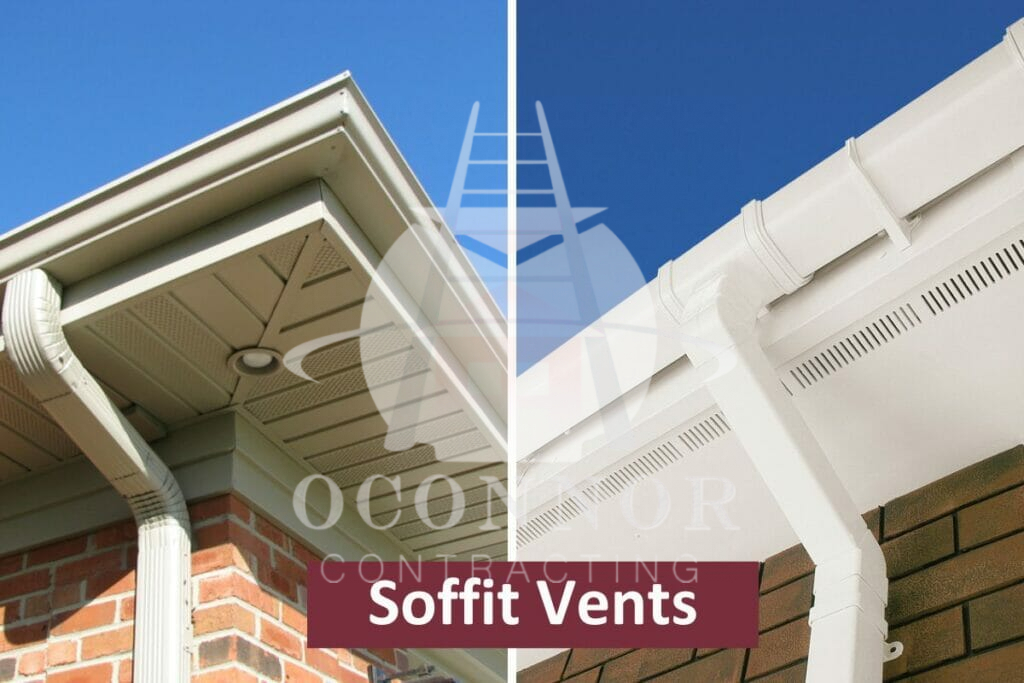
In simple terms, soffit vents are those inconspicuous little openings you find along the underside of your roof’s overhang. They might not catch your eye, but they play a big role in maintaining a healthy and efficient home environment.
Now, you might be wondering, why exactly do you need these vents?
Picture this: your home’s attic can sometimes resemble an oven during hot summer days. Without proper ventilation, all that heat gets trapped up there, turning your attic into a sauna. Enter soffit vents – your attic’s trusty companion. These vents are like windows to the outside world for your attic. They allow fresh air to flow in, replacing the stuffy, hot air that would otherwise be lurking up there.
But it’s not just about temperature control. Soffit vents team up with other ventilation players in your home, like ridge vents and gable vents, to ensure a consistent exchange of air. This exchange serves a dual purpose – cooling down your attic and preventing moisture buildup. Moisture is not your attic’s ally, it can lead to mold growth, warped wood, and all sorts of problems you’d rather avoid.
How Many Soffit Vents Do I Need? A Simple Calculation Guide
Let’s delve into the straightforward method of calculating soffit vents using a commonly followed rule of thumb.
#1 The Perfect Soffit Ventilation Ratio
To determine the optimal number of soffit vents, many professionals swear by the ventilation ratio rule. This rule suggests having one square foot of ventilation for every 150 square feet of attic space. It’s a simple yet effective starting point that ensures your attic receives the necessary airflow to prevent moisture buildup and temperature imbalances.
#2 Applying the Ratio: A Quick Calculation
To put this rule into action, first, measure the total square footage of your attic. Let’s say your attic space is 1,800 square feet.
Now, divide this square footage by the recommended ventilation ratio (1:150):
1,800 square feet / 150 = 12 square feet
According to the rule, you’ll need a total of 12 square feet of ventilation for your attic.
#3 Soffit Vents: A Popular Choice
Soffit vents are an excellent way to facilitate proper attic ventilation. They’re installed in the underside of the eaves, allowing fresh air to enter the attic space while expelling warm, moist air. Now that you know the total vent area required (12 square feet), you can determine the number of soffit vents needed based on the size of each vent.
#4 Calculating the Number of Soffit Vents
Standard soffit vents typically cover around 0.89 square feet each. To find out how many vents you need, divide the total vent area required by the area covered by each vent:
12 square feet / 0.89 square feet = 13.48 vents
Rounding up, you’ll need approximately 14 standard soffit vents to meet the recommended ventilation ratio for your 1,800-square-foot attic.
Local Building Codes for Installing Soffit Vents
According to the building codes in Buffalo, NY, soffit vents are required in all attics that are not ventilated by other means, such as by ridge vents or gable vents. The soffit vents must be a minimum of 1 square foot for every 300 square feet of attic space. They can be either screened or unscreened, but they must be installed so that they allow for airflow.
Here are some additional tips for installing soffit vents in Buffalo, NY:
- Install the vents at least 12 inches below the eaves
- Space the vents evenly across the soffit
- Make sure the vents are not blocked by insulation or other materials
- If you are using screened vents, make sure the screen is fine enough to prevent insects from entering the attic
How Soffit Vents Work Their Magic
- Letting A Cool Breeze In: Soffit vents act as the entry points for fresh air. Imagine a cool breeze sneaking into your attic through these vents, keeping the temperature in check.
- Hot Air Out: As the fresh air comes in through the soffit vents, it pushes the hot air that’s accumulated at the top of your attic, out of exhaust vents. This natural flow of air prevents hotspots and helps maintain a more balanced temperature.
- Balance is Key: Achieving the right balance of air circulation helps regulate moisture levels. This is especially important because excess moisture can lead to those unwelcome issues we mentioned earlier.
- Energy Savings: Here’s a bonus – a well-ventilated attic doesn’t turn into a sauna. That means your cooling system won’t have to work overtime, potentially saving you some money on your energy bills.
Now, looking ahead, the need for effective home ventilation is only going to grow. With a greater emphasis on sustainable living and energy efficiency, having a properly ventilated attic becomes even more crucial. So, consider soffit vents as an investment in the comfort, longevity, and value of your home. For deeper insights, explore our guide on “6 Ways Soffit Vents Improve Your Home’s Energy Efficiency” and take a proactive step toward a more efficient and eco-friendly living space.
Conclusion
At OConnor Contracting, your satisfaction is our priority. With insights from our expert guide and calculations, you’re now equipped to make well-informed decisions about how many soffit vents you need for optimal attic ventilation. While the rule of thumb of one square foot of ventilation for every 150 square feet of attic space serves as a reliable starting point, remember to account for local building codes and unique factors specific to your home. In Buffalo, NY, we offer comprehensive fascia and soffit services catering to a wide array of residential, commercial, and industrial structures. Our services are designed to not only enhance the curb appeal of your building but also guarantee its durability and lasting quality.
Proper attic ventilation isn’t just about numbers, it’s about cultivating an environment where your home can breathe effortlessly. This endeavor contributes to the overall health and longevity of your dwelling. So, whether you’re in the process of calculating soffit vents or ensuring compliance with codes, you’re actively enhancing your living space. As your trusted partner in roofing, we’re here to assist you every step of the way. Contact us today at (716)-600-7663 if you need soffit vent installation or repair or your soffits.