Do Commercial Roofs Need Insulation? A Guide for Business Owners
Key Points:
- Commercial roofs need insulation to ensure energy efficiency, achieve significant cost savings, and maintain consistent indoor comfort.
- Compliance with New York State building codes and R-value requirements is essential to avoid penalties and ensure legal protection.
- Various insulation materials, including rigid foam boards and spray foam, offer structural protection, moisture control, and extended roof lifespan.
Commercial roofs absolutely need insulation to function properly and protect business investments. Without adequate insulation, commercial buildings experience significant energy loss, temperature fluctuations, and increased operational costs that directly impact profitability.
The benefits of commercial roof insulation go beyond basic temperature control. Proper insulation creates a thermal barrier that prevents heat transfer, reducing the workload on HVAC systems throughout the year. This energy efficiency improvement translates to lower utility bills and enhanced comfort for employees and customers.
The types of commercial roof insulation will vary based on the building and climate requirements. Flat roof insulation options include rigid foam boards, spray foam, and reflective barriers, each designed to meet specific performance standards. These materials must comply with commercial roof insulation requirements established by local building codes and energy efficiency standards.
The necessity of insulation becomes even more important in regions with extreme weather conditions, where uninsulated roofs can lead to ice dams, condensation problems, and structural damage. Modern building standards recognize insulation as a fundamental component of commercial construction, not an optional upgrade.
Energy Efficiency Benefits That Transform Your Bottom Line
Proper commercial roof insulation dramatically reduces heating and cooling costs by creating an effective thermal barrier that maintains consistent indoor temperatures year-round. Energy efficiency in commercial buildings improves significantly when quality insulation prevents conditioned air from escaping through the roofing system. This thermal protection reduces the workload on HVAC systems, leading to utility bill reductions and extended equipment lifespan.
The environmental impact reduction achieved through effective insulation supports sustainability initiatives and corporate responsibility goals. Commercial buildings with proper insulation consume less energy, reducing carbon footprints and contributing to green building certifications such as LEED and ENERGY STAR ratings. These certifications enhance property values and attract environmentally conscious tenants and customers.
Flat roof insulation options like polyiso boards and spray foam systems provide excellent thermal resistance while meeting commercial roof insulation requirements. The investment in quality insulation materials pays off through consistent temperature control, reduced energy consumption, and improved building performance that supports long-term operational efficiency and environmental stewardship objectives.
Building Code Requirements and Regulatory Standards
New York State building codes have specific commercial roof insulation requirements that property owners must meet to ensure safety and energy efficiency compliance. The New York State Energy Conservation Construction Code establishes minimum R-value standards for commercial roofing systems, with requirements varying based on the building type and climate zone classifications.
Commercial roof insulation requirements in New York typically need an R-value of R-30 for most commercial applications, depending on the building’s use and construction. These standards ensure energy efficiency in commercial buildings while protecting property owners from potential code violations and associated penalties.
Flat roof insulation options must meet both thermal performance standards and fire safety ratings specified in current building codes. Professional roofing contractors should ensure that installations comply with all applicable regulations, protecting businesses from legal issues while maximizing the benefits of commercial roof insulation through proper material selection and installation techniques.
Commercial Roof Insulation Material Options and Performance
Rigid foam boards represent the most common types of commercial roof insulation due to their excellent thermal performance and moisture resistance. Polyisocyanurate and extruded polystyrene boards provide superior R-values while maintaining structural integrity under heavy foot traffic and equipment loads. These materials excel in flat roof insulation applications where dimensional stability and long-term performance are critical.
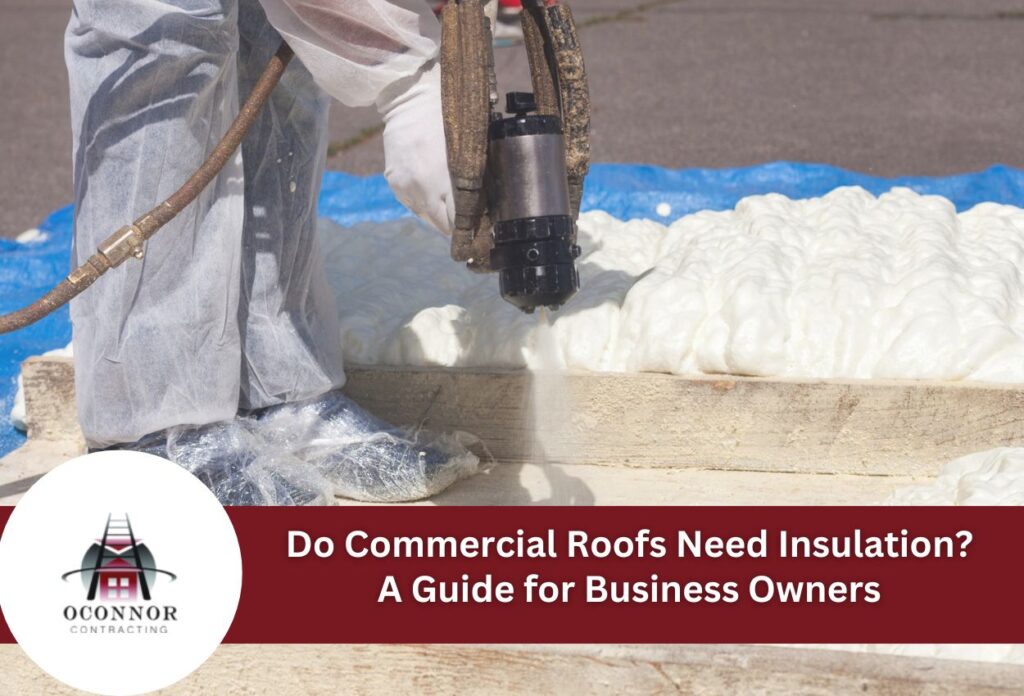
Spray foam insulation offers seamless coverage that eliminates thermal bridging and air infiltration common with board systems. This application method creates a continuous barrier that conforms to irregular roof surfaces and penetrations, making it ideal for retrofitting existing commercial buildings. The closed-cell structure provides excellent moisture control while delivering the outstanding energy efficiency that commercial buildings require.
Mineral wool insulation provides exceptional fire resistance ratings that meet stringent commercial safety standards. This material dries quickly and is generally water-resistant, offering superior durability in harsh weather conditions. The combination of fire safety, moisture control, and thermal performance makes mineral wool an excellent choice for commercial roof insulation systems where safety regulations are paramount.
Flat Roof Insulation Solutions for Commercial Applications
Above-deck and below-deck installation methods provide commercial buildings with flexible options to achieve the best possible thermal performance. Above-deck systems place insulation materials directly on the roof deck beneath the membrane, while below-deck installations position insulation between structural elements inside the building. Above-deck methods offer superior moisture control and easier access for maintenance, making them the preferred choice for most flat roof applications.
Below-deck insulation works well in existing buildings where roof membrane replacement is not planned, allowing property owners to improve energy efficiency without major roofing work. These installation approaches accommodate different building configurations and budgets while delivering the commercial roof insulation benefits essential for operational efficiency.
Tapered insulation systems combine thermal protection with improved drainage performance on flat and low-slope commercial roofs. These engineered systems create precise slopes that direct water toward drains and scuppers, eliminating ponding water that can damage membrane roofing systems.
Tapered systems utilize varying thicknesses of rigid foam boards to create the desired slope while maintaining consistent R-values across the entire surface of the roof, ensuring uniform thermal protection throughout the building.
Benefits of Thermal, Moisture, and Structural Protection
Proper commercial roof insulation prevents ice dams from forming by maintaining a consistent roof surface temperature that eliminates the freeze-thaw cycles responsible for structural damage. When hot air escapes through uninsulated roofs, it melts snow that refreezes at the edges of a roof, creating ice dams that force water under roofing materials and damage building components.
Thermal bridging occurs when structural elements conduct heat through the building, creating weak points that compromise its energy efficiency and allow leaks to form. The benefits of commercial roof insulation include eliminating these thermal bridges by creating continuous barriers that prevent heat transfer through metal decking, structural supports, and fastening systems.
Moisture control represents a critical advantage of quality insulation systems that can extend the lifespan of building components significantly. Proper vapor barriers and insulation placement prevent condensation within roof assemblies, which leads to mold growth, material degradation, and expensive repairs. This moisture management protects structural elements, roofing membranes, and interior building materials from water damage.
The combination of thermal protection and moisture control creates building envelopes that resist weather-related deterioration while maintaining structural integrity. These flat roof insulation options provide comprehensive protection that preserves property investments through enhanced durability and reduced maintenance requirements over time.
Making the Right Insulation Decision for Your Commercial Property
Selecting appropriate insulation for commercial properties requires a close look at building-specific factors that can influence thermal performance and long-term effectiveness. Building size directly impacts insulation requirements, as larger structures typically need higher R-values to achieve the best energy efficiency required in commercial buildings.
Climate considerations play a crucial role in determining commercial roof insulation requirements for Western New York properties. The region’s harsh winters and humid summers need insulation systems that provide consistent thermal protection while managing moisture infiltration effectively. Flat roof insulation options must withstand freeze-thaw cycles, heavy snow, and temperature extremes common to the Buffalo area climate.
Working with qualified roofing contractors ensures that an assessment of the current insulation is thorough and detailed, and that any necessary upgrades are identified and could maximize the benefits of commercial roof insulation. Professional evaluations include thermal imaging inspections, R-value measurements, and moisture detection that reveal performance deficiencies requiring attention. These assessments guide the development of targeted improvement strategies that address specific building needs while complying with current energy codes and performance standards.
Experienced contractors provide material recommendations based on building usage patterns, structural limitations, and budget parameters that influence decision-making processes for property owners seeking optimal insulation solutions.
Explore Top Commercial Roof Insulation Services with OConnor Contracting
Understanding the critical importance of proper insulation for your commercial property in Buffalo isn’t just about compliance, it’s about making smart, cost-effective decisions that impact your bottom line. At OConnor Contracting, we specialize in delivering tailored insulation solutions that meet Buffalo’s specific climate needs, ensuring your building stays warm in winter and cool in summer without excessive energy costs.
Our expert team is ready to guide you through the selection of insulation options suitable for your commercial roof, from rigid foam boards to advanced spray foam applications. We understand the nuances of Buffalo’s weather patterns and building regulations, making us your ideal partner in maintaining and enhancing your property’s energy efficiency.
Don’t let inadequate insulation cause unnecessary strain on your heating and cooling systems. Contact OConnor Contracting today at (716) 600-7663 to schedule a consultation and see how we can help transform your commercial space into a model of efficiency and compliance.